Steve,

I sent a reply to your latest post about 10 hour ago, and then an
hour after that, but neither showed up. Take 3:

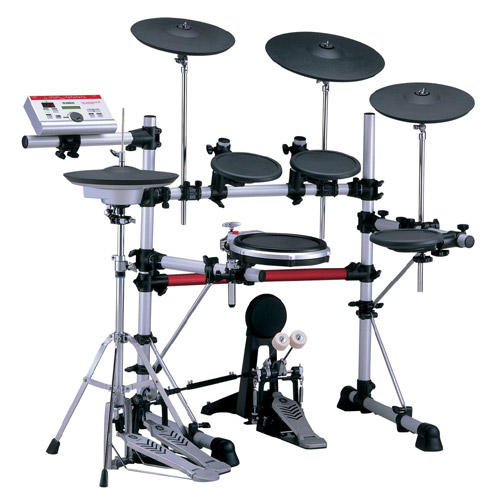
Crosstalk is the result of vibration along the rack. The rejection
parameters in a module or interface don't eliminate vibration; they
simply mute a pad, for a split second, to protect it from
sympathetic reaction when another one is hit--provided both triggers
are connected to the same unit. In other words, crosstalk doesn't
occur inside the module, even though the remedy for it does. That's
why crosstalk between pads connected to the dtx and the PM-16 is so
problematical; the triggers have no electronic common denominator to
ensure their independence. If you place your cymbal on a separate
stand, you will thereby solve the problem, at the cost of
complicating your physical setup a little. For example, many of us
place our snares on a separate stand, to allow, among other things,
ultra-sensitive trigger parameters completely oblivious to the
threat of crosstalk. As I said before, the best, or most economical,
defense, however, would be to group triggers on the dtx and the PM-
16 according to their crosstalk susceptibility.

Ed


--- In DTXpress@yahoogroups.com, "Steve Parker" <stepar@a...> wrote:
> Ed,
> Thanks for your persistence.  I definately am not hitting
something else on the DTX.  If I disconnect the cymbol cable, I get
a pure sound on the toms.  I also don't get the crosstalk all the
time, usually when I first strike the pad.  Also, I am not having
this problem with other toms connected to the PM-16, just the ones
that are connected to the rack right next to the cymbols, that's why
I thought it might be a vibration thing going on.  If it truly was
crosstalk and I connected the cymbols to a floor cymbol stand then I
should still have the problem, correct?  If the problem went away,
then it is vibration and not crosstalk, correct?  Unfortunately, I
just practiced with my band last night, so my drums are not
currently set up.
>
> Steve
>   ----- Original Message -----
>   From: liberatusvirus <liberatusvirus@y...>
>   To: DTXpress@yahoogroups.com
>   Sent: Saturday, March 01, 2003 4:38 PM
>   Subject: [DTXpress] Re: reducing vibration
>
>
>   Steve,
>
>   I'm on the road, but I wanted to make one thing clear. Rejection
>   proper is also a local phenomenon on the dtx. In principle, it,
like
>   specific rejection, won't work on crosstalk emanating from pads
>   connected to another interface either. But the longshot is that
when
>   you hit the tom on the PM-16, you may also be hitting something
on
>   the dtx, like the kick--at least some of the time--that will
activate
>   rejection and protect the cymbal. Like I said, it's a longshot.
In
>   general, the PM-16 and the dtx have to take care of their own.
>
>   Ed
>
>   --- In DTXpress@yahoogroups.com, "liberatusvirus
>   <liberatusvirus@y...>" <liberatusvirus@y...> wrote:
>   > Steve,
>   >
>   > That can be trouble. When trying to keep crosstalk down in a
case
>   > like that, it's best to have triggers that are susceptible to
each
>   > other connected to the same interface whenever possible, just
so
>   > that you can target them specifically if the interface lets
you. I
>   > don't recall what provisions the PM-16 makes for isolating
>   > particular triggers from each other, but UNH or Walt should be
able
>   > to tell you. Until they show up, if the cymbal on the dtx is
>   > reacting to the toms on the PM-16, you might be able to find a
>   > general rejection setting for the cymbal on the dtx that
eliminates
>   > the crosstalk from vibration (remember to keep the value as
low as
>   > you can; rejection essentially mutes the protected pad for a
brief
>   > interval when other triggers are hit at a force within the
range of
>   > the rejection setting; you can see how that might create other
>   > difficulties). Unfortunately, because the dtx's specific
rejection
>   > works only on local pads, it is irrelevant in this case. But
you
>   can
>   > also try reducing the cymbal's gain and raising its min. vel.
a
>   > touch, if you can afford it.
>   >
>   > Ed
>   >  --- In DTXpress@yahoogroups.com, "Steve Parker" <stepar@a...>
>   wrote:
>   > > Ed,
>   > > Thanks for the education.  One thing I forgot to mention was
that
>   > the crosstalk is coming from pads plugged into my PM-16, where
the
>   > cymbols are plugged into the DTX.  Does that change anything?
>   > >
>   > > Steve
>   > >   ----- Original Message -----
>   > >   From: liberatusvirus <liberatusvirus@y...>
>   > >   To: DTXpress@yahoogroups.com
>   > >   Sent: Saturday, March 01, 2003 10:50 AM
>   > >   Subject: [DTXpress] Re: reducing vibration
>   > >
>   > >
>   > >   Hi Steve,
>   > >
>   > >   The official term for that kind of vibration interference
is
>   > >   crosstalk, and the module's cure for it comes under
various
>   > forms of
>   > >   rejection in the trigger menu. If a particular cymbal is
>   > reacting to
>   > >   a particular tom when struck, go into the trigger menu for
that
>   > >   cymbal and toggle pages until you get to the specific
rejection
>   > >   page. Set that particular cymbal/input--which I assume is
on
>   > either
>   > >   input 6 or input 7--to specifically reject that tom, but
only
>   as
>   > >   high a value as necessary to do the trick. Rejection
reduces
>   the
>   > >   responsiveness of the pad that's protected. If you're
having
>   > more
>   > >   general trouble protecting that cymbal from crosstalk,
then
>   > access
>   > >   the rejection page--rather than, or in addition to,
specific
>   > >   rejection--to set a number just high enough to stop the
>   > crosstalk.
>   > >
>   > >   As if that weren't enough, sometimes gain and/or
min.velocity
>   > >   settings can affect crosstalk as well. If your gain on
that
>   > cymbal
>   > >   is very high, it will be more susceptible to external
>   > interference.
>   > >   Likewise, if its min.vel. setting is very low, it may also
>   > attract
>   > >   crosstalk more easily.  The trick is find gain, min.
velociy,
>   > and
>   > >   rej. settings that will allow you to get the sensitivity
that
>   > you
>   > >   want without triggering the wrong pads in the process.
>   > >
>   > >   Ed
>   > >
>   > >   --- In DTXpress@yahoogroups.com, "pinachee <stepar@a...>"
>   > >   <stepar@a...> wrote:
>   > >   > Hi folks,
>   > >   > I've been having a problem with hearing a cymbol sound
when I
>   > hit
>   > >   my
>   > >   > toms that are attached to the same piece of pipe and the
>   > vibration
>   > >   > from hitting the tom is setting off the cymbol.  Has
anyone
>   > done
>   > >   > anything to prevent this problem, like put tape on the
pipe
>   > under
>   > >   the
>   > >   > cymbol clamp.  If I can't find a solution, I might have
to
>   > just
>   > >   attach
>   > >   > the cymbols to cymbol stands instead of directly on the
bar.
>   > Any
>   > >   > ideas or thoughts would be appreciated.  At 46, I'm not
quite
>   > as
>   > >   old
>   > >   > as some of you old timers, but I'm no kid
either....lol.  OK,
>   > I
>   > >   guess
>   > >   > we are all still kids.
>   > >   >
>   > >   > Steve
>   > >
>   > >
>   > >         Yahoo! Groups Sponsor
>   > >               ADVERTISEMENT
>   > >
>   > >
>   > >
>   > >
>   > >   Community email addresses:
>   > >     Post message: DTXpress@onelist.com
>   > >     Subscribe:    DTXpress-subscribe@onelist.com
>   > >     Unsubscribe:  DTXpress-unsubscribe@onelist.com
>   > >     List owner:   DTXpress-owner@onelist.com
>   > >
>   > >   Shortcut URL to this page:
>   > >     http://www.onelist.com/community/DTXpress
>   > >
>   > >   Your use of Yahoo! Groups is subject to the Yahoo! Terms
of
>   > Service.
>
>
>         Yahoo! Groups Sponsor
>               ADVERTISEMENT
>
>
>
>
>   Community email addresses:
>     Post message: DTXpress@onelist.com
>     Subscribe:    DTXpress-subscribe@onelist.com
>     Unsubscribe:  DTXpress-unsubscribe@onelist.com
>     List owner:   DTXpress-owner@onelist.com
>
>   Shortcut URL to this page:
>     http://www.onelist.com/community/DTXpress
>
>   Your use of Yahoo! Groups is subject to the Yahoo! Terms of
Service.
Message
Re: reducing vibration
2003-03-02 by liberatusvirus <liberatusvirus@yahoo.com>
Attachments
- No local attachments were found for this message.