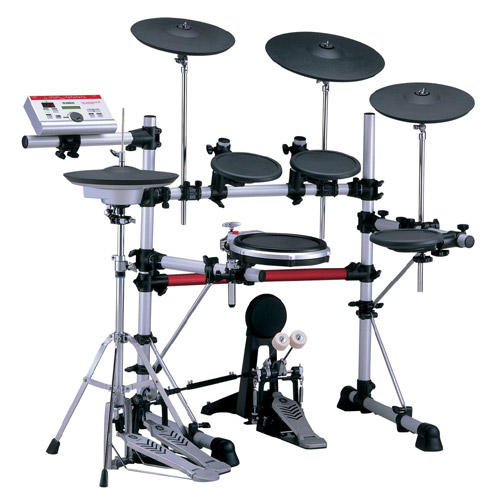
Yamaha DTXpress/DTXplorer/DTXtreme group photo

Yahoo Groups archive

Yamaha DTXpress/DTXplorer/DTXtreme

Index last updated: 2026-04-28 22:44 UTC

Thread

DTEXPRESS Trigger Problem

DTEXPRESS Trigger Problem

2005-03-12 by daddykingcool

Hi

I have just purcahsed a Yamaha DTEXPRESS (not II or III) electronic 
drum kit.  The kit is 2nd hand but looks new and has hardly been 
used by the previous owner.

The kit sound fine however:-

When I hit 2 or more pads at the same time very often one pad will 
not sound. 

Even when playing simple beats the snare or hi-hat sometime does not 
sound when they are hit at exactly the same time.

Any help here would be greatly appreciated.  Is there a simple 
setting I can change on the brain?

Many thanks

Re: DTEXPRESS Trigger Problem

2005-03-12 by emf

--- In DTXpress@yahoogroups.com, "daddykingcool" <daddykingcool@y...> 
wrote:
> 
> 
> Hi
> 
> I have just purcahsed a Yamaha DTEXPRESS (not II or III) electronic 
> drum kit.  The kit is 2nd hand but looks new and has hardly been 
> used by the previous owner.
> 
> The kit sound fine however:-
> 
> When I hit 2 or more pads at the same time very often one pad will 
> not sound. 
> 
> Even when playing simple beats the snare or hi-hat sometime does 
not 
> sound when they are hit at exactly the same time.
> 
> Any help here would be greatly appreciated.  Is there a simple 
> setting I can change on the brain?

Welcome to the group. I'm a little pressed for time. But I imagine 
that you bought your DTXpress used. You might want to do a factory 
reset to get rid of any problematical programming; getting you back 
to square one should correct the immediate problem, but you should 
understand what happened to cause it. Check the section in the manual 
about "rejection" and "specific rejection," which you will find in 
the Trigger Mode chapter (or see the index). Vibrations along the 
rack when you hit one pad can cause another pad to trigger; this is 
called "crosstalk." The module has rejection settings for each pad to 
minimize the effect. However, when settings aimed at keeping a 
particular pad in check are too high, that pad will refuse to play at 
all under certain conditions. Usually, this pad will be the target 
of "specific rejection" from another pad--for example, the snare 
trigger's menu specifically rejecting the hi hat from voicing when 
the snare is hit. You would do yourself a favor to run a search 
of "specific rejection" in our archives to get a sense of what it 
means and does, as well as consult the manual. We'll be here to 
answer any more questions that you might have, and you will have them.

Ed

Re: DTEXPRESS Trigger Problem

2005-03-12 by daddykingcool

--- In DTXpress@yahoogroups.com, "emf" <liberatusvirus@y...> wrote:
> 
> --- In DTXpress@yahoogroups.com, "daddykingcool" 
<daddykingcool@y...> 
> wrote:
> > 
> > 
> > Hi
> > 
> > I have just purcahsed a Yamaha DTEXPRESS (not II or III) 
electronic 
> > drum kit.  The kit is 2nd hand but looks new and has hardly been 
> > used by the previous owner.
> > 
> > The kit sound fine however:-
> > 
> > When I hit 2 or more pads at the same time very often one pad 
will 
> > not sound. 
> > 
> > Even when playing simple beats the snare or hi-hat sometime does 
> not 
> > sound when they are hit at exactly the same time.
> > 
> > Any help here would be greatly appreciated.  Is there a simple 
> > setting I can change on the brain?
> 
> Welcome to the group. I'm a little pressed for time. But I imagine 
> that you bought your DTXpress used. You might want to do a factory 
> reset to get rid of any problematical programming; getting you 
back 
> to square one should correct the immediate problem, but you should 
> understand what happened to cause it. Check the section in the 
manual 
> about "rejection" and "specific rejection," which you will find in 
> the Trigger Mode chapter (or see the index). Vibrations along the 
> rack when you hit one pad can cause another pad to trigger; this 
is 
> called "crosstalk." The module has rejection settings for each pad 
to 
> minimize the effect. However, when settings aimed at keeping a 
> particular pad in check are too high, that pad will refuse to play 
at 
> all under certain conditions. Usually, this pad will be the target 
> of "specific rejection" from another pad--for example, the snare 
> trigger's menu specifically rejecting the hi hat from voicing when 
> the snare is hit. You would do yourself a favor to run a search 
> of "specific rejection" in our archives to get a sense of what it 
> means and does, as well as consult the manual. We'll be here to 
> answer any more questions that you might have, and you will have 
them.
> 
> Ed

Wow, what a great forum, I never expeted a response so soon.

I have done a factory reset and this did not make any difference - I 
will study the rejection info in the manual - I must admit though 
I'm hopeless at understanding mannuals.

Has anyone else had this problem on a DTEXPRESS kit - if so how 
exactly did you cure it?

Many thanks

Darrell

Re: DTEXPRESS Trigger Problem

2005-03-13 by emf

--- In DTXpress@yahoogroups.com, "daddykingcool" <daddykingcool@y...> 
wrote:
> Has anyone else had this problem on a DTEXPRESS kit - if so how 
> exactly did you cure it?

Darrell,

It's a very common problem. If the factory reset didn't have any 
effect, chances are the hi hat and snare are located on the same 
plane, and the specific-rejection setting between the two, or the 
plain rejection setting, is still too high for both to fire at the 
same time. Try moving the hi hat pad to the higher arm. Then please 
do take a look at some of the posts that have dealt with "crosstalk" 
and the "rejection" parameters, as well as the manual (confounding as 
it might be in places). Once you get grounded on the basics, ou can 
try adjusting the numbers yourself, and it will be easier for us to 
delve more deeply into the situation if necessary.

Ed

Re: DTEXPRESS Trigger Problem

2005-03-13 by daddykingcool

--- In DTXpress@yahoogroups.com, "emf" <liberatusvirus@y...> wrote:
> 
> --- In DTXpress@yahoogroups.com, "daddykingcool" 
<daddykingcool@y...> 
> wrote:
> > Has anyone else had this problem on a DTEXPRESS kit - if so how 
> > exactly did you cure it?
> 
> Darrell,
> 
> It's a very common problem. If the factory reset didn't have any 
> effect, chances are the hi hat and snare are located on the same 
> plane, and the specific-rejection setting between the two, or the 
> plain rejection setting, is still too high for both to fire at the 
> same time. Try moving the hi hat pad to the higher arm. Then 
please 
> do take a look at some of the posts that have dealt 
with "crosstalk" 
> and the "rejection" parameters, as well as the manual (confounding 
as 
> it might be in places). Once you get grounded on the basics, ou 
can 
> try adjusting the numbers yourself, and it will be easier for us 
to 
> delve more deeply into the situation if necessary.
> 
> Ed

Cheers Ed

Will do and thnaks again.  Out of interest when a drummer moves from 
an acoustic kit to electronic does he/she need to drastically adjust 
their technique?  When I explained to the person I purcahsed the kit 
from about the problem of pads not sounding his reply was:

"You appear to be having difficulty with the kit, i can assure you 
that all electronic kits except top of the range ones function in 
this way. There is an expectation you would change your drumming 
style to suit the kit, as they are not as responsive as real drums.  
You would need to have bought a kit with mesh heads. Also when 
playing live most drummers use the kit to trigger samples rather 
than rely on the on board sounds. May i suggest you go to a music 
shop and try another kit which will hopefully reassure you that i 
have not sold you a defective unit" 

Is this a fair reply?

Cheers again.

Re: DTEXPRESS Trigger Problem

2005-03-13 by emf

--- In DTXpress@yahoogroups.com, "daddykingcool" <daddykingcool@y...> 
wrote:
 
> Will do and thnaks again.  Out of interest when a drummer moves 
from 
> an acoustic kit to electronic does he/she need to drastically 
adjust 
> their technique?  When I explained to the person I purcahsed the 
kit 
> from about the problem of pads not sounding his reply was:
> 
> "You appear to be having difficulty with the kit, i can assure you 
> that all electronic kits except top of the range ones function in 
> this way. There is an expectation you would change your drumming 
> style to suit the kit, as they are not as responsive as real 
drums.  
> You would need to have bought a kit with mesh heads. Also when 
> playing live most drummers use the kit to trigger samples rather 
> than rely on the on board sounds. May i suggest you go to a music 
> shop and try another kit which will hopefully reassure you that i 
> have not sold you a defective unit" 
> 
> Is this a fair reply?
> 

Darrell,

There is an element of truth in what your seller told you. Problems 
like crosstalk and the machine-gun effect come with the territory, 
and they require an adjustment in expectations and technique--and 
sometimes, as he says, in the particular electronic kit that you 
ultimately choose. Electronic drums are instruments in their own 
right, not simply approximations of their acoustic counterparts. 
There have been many discussions, on this board and others, about the 
extent to which people should consider e-drums and acoustics as 
overlapping media. They are unquestionably variations on a similar 
theme, but they diverge enough in their capacities to merit genuine 
distinction, even though certain people (I being one of them) are 
more interested in creating good acoustic-like sounds than in mining 
the electronic side. 

Part of the difference is how you play them. When it comes to 
physical exertion, electronic drums show the law of diminishing 
returns far more quickly. Beyond a certain threshold, hitting them 
any harder won't have any value. Not only do you court physical 
injury when overplaying rubber pads; you can also mis-hit in a way 
that causes dropouts in the sound or false triggers of one sort or 
another or damage your equipment. And you won't get any louder for 
your trouble (the difference in dynamic range and sensitivity between 
acoustics and electronics is well in favor the former--no matter what 
kit you play). You learn to let the module do the work. For example, 
we've often advised newcomers having trouble with the performance of 
their Yamaha cymbals to crash with more of a glancing blow than a 
direct hit. Whenever a stick maintains contact with a cymbal for too 
long, it risks having the cymbal behave in a contrary manner--either 
choking itself or voicing inopportunely. The same is true of, say, a 
kick drum. If you're used to holding your pedal against your acoustic 
bass drum and bring the same tendency to your elecronics, you're 
courting unwanted double triggers. Learning how to program and play 
your electronics over time pays huge dividends; it will become second 
nature, without interfering with your acoustic technique. These are 
just some examples of what playing a rubber kit entails. You trade a 
certain kind of sensitivity, tonality, and subtlety for extraordinary 
versatility when moving from acoustics to electronics.

High-end e-kits behave, feel, and sound differently from the entry 
level, more like acoustic kits in certain respects, though still only 
approximately. Mesh head pads are built with shells like acoustic 
drums, and the mesh heads look and feel (some more than others) like 
mylar heads. They encourage the illusion of playing acoustics, but 
many people find these woven heads, particularly those from Roland, 
Pintech, and a few other companies, too bouncy. Mesh heads, however, 
have represented a higher order of e-drum for a long time, though 
some people prefer rubber. The Yamaha DTXtremeIIS uses a certain kind 
of textured rubber that feels far superior to that on any other kit--
whether a Yamaha, a Roland, a Pintech, et al.--but it cannot be 
classified as entry-level. To its everlasting credit, it costs far 
less than the Roland' top of the line TD-20 and gives Yamaha's 
characteristic bang for the buck. 

Cymbals also show a hierarchy based on how well they simulate the 
appearance and response of acoustics. Companies like Hart, 
Smartrigger, and Pintech offer high-quality cymbals that often, but 
not always, mate well with Yamaha modules. Mix and match is fun, but 
it must be done with care. Not everything will work smoothly and 
effectively in a Yamaha context. Most after-market equipment is 
manufactured to meet Roland specifications, since Roland is the 
market leader by far. But some companies have shown a willingness to 
design specifically for Yamaha--a couple of them, Visu-lite and 
Pintech (now linked) in direct response to us. Smartrigger has also 
been working with a couple of us to produce Yamaha versions of their 
attractive products; it remains to be seen how successful they will 
be.

The statement that e-drummers who play live tend to trigger samples 
rather than use the stock voices in modules also has an element of 
truth. Creating and triggering your own samples, or choosing them 
from the countless offerings in computer software, can bring more 
control to your sound. But it comes at great cost, in money, time, 
and convenience. Drum modules are simply easier to use than 
combinations of samplers, trigger interfaces, and computers. Also, a 
few modules at this point have a limited sampling capacity of their 
own (DTXtremeIIS, ddrum4, and Alessis Pro). Many drummers use their 
modules unembellished for stage work, whether a DTXpress or something 
more expensive. They can sound really stunning live--their warts, 
like the machine-gun effect, often effectively disguised by effects, 
room ambience, programming, and judicious playing. Nothing in the 
world dictates that you can't like the voices on your module. Look 
closely and you'll see the ddrum modules in Peter Gabriel's stage 
arsenal; Tony Verderosa and Akira Jimbo use Yamaha, Neil Pert Roland--
well, you get the idea.  You'll be able to appreciate what you have--
until you have the cash, need, or desire to move to something else 
(upgrading, or simply changing, is an occupational hazard among e-
drummers, not unlike what audiophiles do).

I've run my mouth, er fingers, off more than I intended, and I've 
barely scratched the surface about e-drums. Hopefully, I've helped a 
little bit.

Ed

Re: DTEXPRESS Trigger Problem

2005-03-17 by daddykingcool

--- In DTXpress@yahoogroups.com, "emf" <liberatusvirus@y...> wrote:
> 
> --- In DTXpress@yahoogroups.com, "daddykingcool" 
<daddykingcool@y...> 
> wrote:
>  
> > Will do and thnaks again.  Out of interest when a drummer moves 
> from 
> > an acoustic kit to electronic does he/she need to drastically 
> adjust 
> > their technique?  When I explained to the person I purcahsed the 
> kit 
> > from about the problem of pads not sounding his reply was:
> > 
> > "You appear to be having difficulty with the kit, i can assure 
you 
> > that all electronic kits except top of the range ones function 
in 
> > this way. There is an expectation you would change your drumming 
> > style to suit the kit, as they are not as responsive as real 
> drums.  
> > You would need to have bought a kit with mesh heads. Also when 
> > playing live most drummers use the kit to trigger samples rather 
> > than rely on the on board sounds. May i suggest you go to a 
music 
> > shop and try another kit which will hopefully reassure you that 
i 
> > have not sold you a defective unit" 
> > 
> > Is this a fair reply?
> > 
> 
> Darrell,
> 
> There is an element of truth in what your seller told you. 
Problems 
> like crosstalk and the machine-gun effect come with the territory, 
> and they require an adjustment in expectations and technique--and 
> sometimes, as he says, in the particular electronic kit that you 
> ultimately choose. Electronic drums are instruments in their own 
> right, not simply approximations of their acoustic counterparts. 
> There have been many discussions, on this board and others, about 
the 
> extent to which people should consider e-drums and acoustics as 
> overlapping media. They are unquestionably variations on a similar 
> theme, but they diverge enough in their capacities to merit 
genuine 
> distinction, even though certain people (I being one of them) are 
> more interested in creating good acoustic-like sounds than in 
mining 
> the electronic side. 
> 
> Part of the difference is how you play them. When it comes to 
> physical exertion, electronic drums show the law of diminishing 
> returns far more quickly. Beyond a certain threshold, hitting them 
> any harder won't have any value. Not only do you court physical 
> injury when overplaying rubber pads; you can also mis-hit in a way 
> that causes dropouts in the sound or false triggers of one sort or 
> another or damage your equipment. And you won't get any louder for 
> your trouble (the difference in dynamic range and sensitivity 
between 
> acoustics and electronics is well in favor the former--no matter 
what 
> kit you play). You learn to let the module do the work. For 
example, 
> we've often advised newcomers having trouble with the performance 
of 
> their Yamaha cymbals to crash with more of a glancing blow than a 
> direct hit. Whenever a stick maintains contact with a cymbal for 
too 
> long, it risks having the cymbal behave in a contrary manner--
either 
> choking itself or voicing inopportunely. The same is true of, say, 
a 
> kick drum. If you're used to holding your pedal against your 
acoustic 
> bass drum and bring the same tendency to your elecronics, you're 
> courting unwanted double triggers. Learning how to program and 
play 
> your electronics over time pays huge dividends; it will become 
second 
> nature, without interfering with your acoustic technique. These 
are 
> just some examples of what playing a rubber kit entails. You trade 
a 
> certain kind of sensitivity, tonality, and subtlety for 
extraordinary 
> versatility when moving from acoustics to electronics.
> 
> High-end e-kits behave, feel, and sound differently from the entry 
> level, more like acoustic kits in certain respects, though still 
only 
> approximately. Mesh head pads are built with shells like acoustic 
> drums, and the mesh heads look and feel (some more than others) 
like 
> mylar heads. They encourage the illusion of playing acoustics, but 
> many people find these woven heads, particularly those from 
Roland, 
> Pintech, and a few other companies, too bouncy. Mesh heads, 
however, 
> have represented a higher order of e-drum for a long time, though 
> some people prefer rubber. The Yamaha DTXtremeIIS uses a certain 
kind 
> of textured rubber that feels far superior to that on any other 
kit--
> whether a Yamaha, a Roland, a Pintech, et al.--but it cannot be 
> classified as entry-level. To its everlasting credit, it costs far 
> less than the Roland' top of the line TD-20 and gives Yamaha's 
> characteristic bang for the buck. 
> 
> Cymbals also show a hierarchy based on how well they simulate the 
> appearance and response of acoustics. Companies like Hart, 
> Smartrigger, and Pintech offer high-quality cymbals that often, 
but 
> not always, mate well with Yamaha modules. Mix and match is fun, 
but 
> it must be done with care. Not everything will work smoothly and 
> effectively in a Yamaha context. Most after-market equipment is 
> manufactured to meet Roland specifications, since Roland is the 
> market leader by far. But some companies have shown a willingness 
to 
> design specifically for Yamaha--a couple of them, Visu-lite and 
> Pintech (now linked) in direct response to us. Smartrigger has 
also 
> been working with a couple of us to produce Yamaha versions of 
their 
> attractive products; it remains to be seen how successful they 
will 
> be.
> 
> The statement that e-drummers who play live tend to trigger 
samples 
> rather than use the stock voices in modules also has an element of 
> truth. Creating and triggering your own samples, or choosing them 
> from the countless offerings in computer software, can bring more 
> control to your sound. But it comes at great cost, in money, time, 
> and convenience. Drum modules are simply easier to use than 
> combinations of samplers, trigger interfaces, and computers. Also, 
a 
> few modules at this point have a limited sampling capacity of 
their 
> own (DTXtremeIIS, ddrum4, and Alessis Pro). Many drummers use 
their 
> modules unembellished for stage work, whether a DTXpress or 
something 
> more expensive. They can sound really stunning live--their warts, 
> like the machine-gun effect, often effectively disguised by 
effects, 
> room ambience, programming, and judicious playing. Nothing in the 
> world dictates that you can't like the voices on your module. Look 
> closely and you'll see the ddrum modules in Peter Gabriel's stage 
> arsenal; Tony Verderosa and Akira Jimbo use Yamaha, Neil Pert 
Roland--
> well, you get the idea.  You'll be able to appreciate what you 
have--
> until you have the cash, need, or desire to move to something else 
> (upgrading, or simply changing, is an occupational hazard among e-
> drummers, not unlike what audiophiles do).
> 
> I've run my mouth, er fingers, off more than I intended, and I've 
> barely scratched the surface about e-drums. Hopefully, I've helped 
a 
> little bit.

Hi Ed

OK, I have now spent many hours playing around with settings and 
have managed to improve the kit.  The problem of missing sounds is 
almost gone.

I experimented with the Rejection settings, the gain, and set the 
pads to poly mode.

The main setting that made a difference was the rejection settings.  
This took quite a bit of experimenting - if set very low solved my 
problem but then I got double triggers instead - so I had to tweak 
for a compromise.

Everything else about the kit (sound, feel etc) I think is great but 
still don't really understand why this problem exists.  

I really cannot see how changeing my drumming style will make a 
difference.  For example I sat just hitting the Hi Hat and snare 
together and the snare missed quite a few beats - I did the same 
with a tom and the Hi Hat and the Tom then missed odd beats. 

I notice that many people selling these kits on E-bay have built a 
custom snare stand.  I guess this is so that they can turn the 
rejection down to avoid missed snare beats but yet still not get 
double triggers - does this make sense.  It must be a common problem.

I was wondering if the DTEXPRESS I is more prone to this than the 
version II or III - has this problem been addressed.

Many thanks for your help.

Darrell
> 
> Ed
Re: DTEXPRESS Trigger Problem

2005-03-18 by emf

--- In DTXpress@yahoogroups.com, "daddykingcool" <daddykingcool@y...> 
wrote:

> I really cannot see how changeing my drumming style will make a 
> difference.  For example I sat just hitting the Hi Hat and snare 
> together and the snare missed quite a few beats - I did the same 
> with a tom and the Hi Hat and the Tom then missed odd beats. 
> 
> I notice that many people selling these kits on E-bay have built a 
> custom snare stand.  I guess this is so that they can turn the 
> rejection down to avoid missed snare beats but yet still not get 
> double triggers - does this make sense.  It must be a common 
problem.
> 
> I was wondering if the DTEXPRESS I is more prone to this than the 
> version II or III - has this problem been addressed.

All electronic kits are subject to crosstalk from somewhere or 
something. The DTXpress kits do not differ from each other in this 
respect.  Putting the snare on a Separate stand is a popular and 
effective way to eliminate it from the crosstalk equation. Releasing 
it thus from the rejection settings guarantees that nothing within 
the module will interfere with its sensitivity. Usually, people go to 
a stand when they buy a mesh pad, the smallest mesh snare being 10", 
which some stands will accommodate. 

You may not have have exhausted the reasons for the dropout problem 
yet. Check the specific rejection settings between the various pads 
and the hi hat. Don't forget self-rejection, too, when you 
investigate double triggers. If a pad is running too hot--that is, 
its gain is too high and its minimum velocity too low--it runs an 
increased risk of going off like gangbusters. All of the adjustments 
mentioned are interactive. Finding the balance takes some patience. 
Remember, too, that if a pad's minimum velocity is too high and/or 
its gain too low, its window for making a noise becomes smaller. 
Also, one ironic thing that sometimes happen with a pad that suffers 
from hot trigger settings is that it will sometimes refuse to respond 
to fast hard playing. I suspect that the module may have a recovery 
time that's compromised the harder the pads are pushed physically and 
electronically. Maybe Keith or OGD can comment on that. Keep posting 
as you advance so that we know how your're doing.

Ed

Move to quarantaine

This moves the raw source file on disk only. The archive index is not changed automatically, so you still need to run a manual refresh afterward.