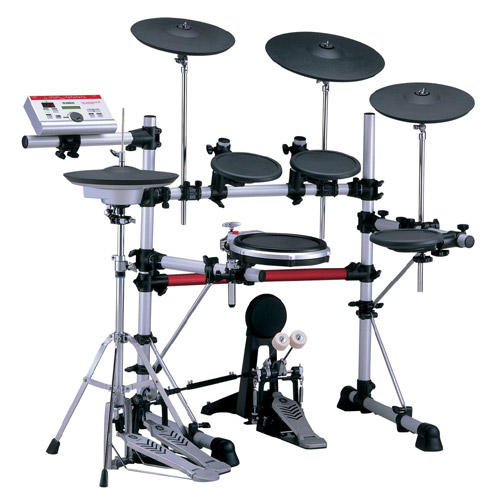
Yamaha DTXpress/DTXplorer/DTXtreme group photo

Yahoo Groups archive

Yamaha DTXpress/DTXplorer/DTXtreme

Index last updated: 2026-04-28 22:44 UTC

Thread

What do you guys think?

What do you guys think?

2005-05-02 by Ernie Vega

I've been trying different reasons each different type of drum
triggers(including reg. acoustic drums)absorb the striking of the
pad/drum and how to change it. Keep in mind, I have a double math
bachelors degree. So that's why I have the inkling to figure some of
these things out.

First off, the Yamaha rubber drum triggers aren't the best designed
pad. They left out one important factor, or they didn;t think how, in
the long run, it's effect the drummer in general. Don't get me wrong,
I like the Yamaha pads best. Although, I haven't really played the
mesh one's too much. The yamaha triggers lack any vibration
absorbtion. They didn't put any vibration isolation absorbers in the
pad. When we strike the pads, the rubber absorbs maybe 20-25% of the
vibration. Where does the rest go? Well since the rest of the pad is
essentially made of hard plastic, the plastic will only absorb another
15%. The
vibration then has to find a way to distribute the pad hit. 5-10% to
the rack becuase it is metal and won't absorb much of the vibration,
which is then transfered into the ground. That leaves us with the
remaining 50-60%
of the vibration to go to our hands and arms. As opposed to 15-25% on
a regular acoustic or mesh drum head. The rubber pad drummer will
obviously feel the vibration resulting in us geting pains and cramps,
and overall we'll only be able to play so long at one time. 

So, what's the solution? Well, it seems pretty simple to diagnose.
Create some sort of vibration absorbtion isolator. Or something that
will absorb more of the vibration. What needs to be done is putting a
simple pad, neoprene or something of that sort, between the rubber on
the pad and the plastic within the pad. This would absorb 3/4 of the
50-60% of the shock we absorb. Resulting in a more comfortable playing
experience. 

Well, I have ordered different type's of absorbing materials, and I'm
going to find out which one works best without affecting the way the
trigger performs. I might even be able to send some samplers out to
people who don't mind putting these pads in. Give me a few months to
figure it out. Once I find out which one works best, whoever wants to
try them out can give me some feedback.

Why am I attempting to figure this out(if anyone really cares!)? Well,
in math and physics, we are taught, where there's a problem, there's a
solution. Wish me luck. :)

Ern

Re: What do you guys think?

2005-05-02 by emf

--- In DTXpress@yahoogroups.com, "Ernie Vega" <sternern@y...> wrote:
> 
> I've been trying different reasons each different type of drum
> triggers(including reg. acoustic drums)absorb the striking of the
> pad/drum and how to change it. Keep in mind, I have a double math
> bachelors degree. So that's why I have the inkling to figure some of
> these things out.
> 
> First off, the Yamaha rubber drum triggers aren't the best designed
> pad. They left out one important factor, or they didn;t think how, 
in
> the long run, it's effect the drummer in general. Don't get me 
wrong,
> I like the Yamaha pads best. Although, I haven't really played the
> mesh one's too much. The yamaha triggers lack any vibration
> absorbtion. They didn't put any vibration isolation absorbers in the
> pad. When we strike the pads, the rubber absorbs maybe 20-25% of the
> vibration. Where does the rest go? Well since the rest of the pad is
> essentially made of hard plastic, the plastic will only absorb 
another
> 15%. The
> vibration then has to find a way to distribute the pad hit. 5-10% to
> the rack becuase it is metal and won't absorb much of the vibration,
> which is then transfered into the ground. That leaves us with the
> remaining 50-60%
> of the vibration to go to our hands and arms. As opposed to 15-25% 
on
> a regular acoustic or mesh drum head. The rubber pad drummer will
> obviously feel the vibration resulting in us geting pains and 
cramps,
> and overall we'll only be able to play so long at one time. 
> 
> So, what's the solution? Well, it seems pretty simple to diagnose.
> Create some sort of vibration absorbtion isolator. Or something that
> will absorb more of the vibration. What needs to be done is putting 
a
> simple pad, neoprene or something of that sort, between the rubber 
on
> the pad and the plastic within the pad. This would absorb 3/4 of the
> 50-60% of the shock we absorb. Resulting in a more comfortable 
playing
> experience. 
> 
> Well, I have ordered different type's of absorbing materials, and 
I'm
> going to find out which one works best without affecting the way the
> trigger performs. I might even be able to send some samplers out to
> people who don't mind putting these pads in. Give me a few months to
> figure it out. Once I find out which one works best, whoever wants 
to
> try them out can give me some feedback.
> 
> Why am I attempting to figure this out(if anyone really cares!)? 
Well,
> in math and physics, we are taught, where there's a problem, 
there's a
> solution. Wish me luck. :)

Ern,

It's a very interesting project. The problem is how to insert some 
absorption between pad and piezo without hindering triggering. The 
Yamaha module's sensitivity range is fairly constrained. Dampening is 
a little easier with modules that have a wider gain adjustment. I'll 
be eager to read how your experiment proceeds.

Ed

Move to quarantaine

This moves the raw source file on disk only. The archive index is not changed automatically, so you still need to run a manual refresh afterward.