Patches and discussion for Ensoniq VFX family group photo

Yahoo Groups archive

Patches and discussion for Ensoniq VFX family

Index last updated: 2026-04-29 00:03 UTC

Thread

Re: [Ensoniq-VFX-SD] Sequencing at gigs

Re: [Ensoniq-VFX-SD] Sequencing at gigs

2004-10-07 by Michael C Lesko

Hello all,

Does anyone know the most common, more importantly reliable, way of
playing sequences out during gigs?  What I mean to say is I have an SD-1
with several tracks sequenced that I wish to also play out live.  My
question
is, is it best to play sequences directly from the keyboard or transfer them
to recordings?  I have lot's of experience playing, just not playing out.  I
have no idea on how sequences are handled on stage - and I know we
have some real pros here in this group.

Any information would be greatly appreciated!  Thanks!

Michael

Re: Sequencing at gigs

2004-10-07 by Harry

The band I am in uses sequencing for every song that we play.  I am 
currently using a Roland XP-60 as the main sequencer onstage, and it 
works great.  Part of the reason I use the Roland, is for the feature 
of playing the sequence right off of the disk rather than loading it 
into memory for each song.
The sequencer sends program changes to all the boards, efx 
processors, guitar processors and lighting for each song.  It really 
works well and I like the bigger sound that we have as a result. 
The only downside is having to stick to what is programmed for every 
song.  There is no extending of the songs or anything like that, 
unless it is planned and accomodated (by going back to a certain 
mesaure manually and going from there, or physically programming a 
longer version if the song).
I have been in both kinds of bands, and for different reasons, like 
both scenarios.

            The pluses of sequencing are as follows:


1. Absolute tempo and resolution for every song.
This means that there is no more dragging or rushing during the song.
This also means that each member must be able to follow a click track 
and be precise.  This will expose any weaknesses the band members 
have as far as timing goes.  This can also help them to be better 
musicians and singers because they are forced to lock to a tempo for 
the entire song.  I have noticed that in my own band, the guitar 
player and I are much tighter as a music section with following the 
sequencer.  We also have the freedom to move around in the song a 
little bit with our own instruments, because we know that the 
sequencer is taking care of all of the other parts.

This also means that each member must really learn the song.  More 
practice individually makes for a very tight band.  If any of the 
members have not practiced, it will show.  Sometimes it will very 
very much and be very noticable.  This forces the band as a whole to 
be much tighter and together on the music, making for a cleaner 
sound.  Less mud in the mix makes the sound guys happy.

2. Programming of intricate little parts that generally can get 
missed during a live play.
Do we curerntly miss the little horn parts because we are too busy 
comping the rhodes or piano parts?  Does it sound kind of empty 
during a guitar solo because the lead guitarist cannot comp the lead 
and backup parts at the same time?  Not a problem now.  You can 
program that backup guitar part and layer a couple of guitar sounds 
to make it sound real in the song.

3.Excellent sound (at least in my band's case....I sequence the drums 
too).  We do not have a drummer at present, and have decided to forge 
ahead as a 3-piece group.  I run double-duty as keyboardist and 
bassist.  On some songs, I play keyboards (which is my training for 
almost 30 years anyway), other songs I play bass guitar.  I simply 
program around the instrument that I am playing on any given song.  
Because of the fact that we do everything from sequencing, it allows 
me to mix the band and make us sound just like our demo.  This is 
very important to me.  Maybe it is my Recording Engineering training 
(or relentless pursuit of audio perfection), but I feel that clarity 
and presence is paramount.  It more accuately displays our 
musicianship and ability to meld as a group.  I can also add the 
right kind of reverb on a slow song to every instrument and make it 
sound totally in place.  We do not have the problem of everything 
else washed in reverb during a slow song and our drummer sounds like 
there is no verb at all on his kit.  All of this can be done with 
MIDI programming and it is great ....this leads into the next 
point....
4.Excellent control of external devices (providing you have them 
hooked up right)
Extreme control over configuration.  This can be done in the studio 
environment and 'perfected'.  You can spend all the time you need in 
the studio laying down the exact bass line or backup string part to 
that song, and know that it will be there every time you play the 
sequence.  The perfect climax to the world's best love song will 
always be there in the programming.  You can have a perfect light 
show every gig because your light guy (your sequencer) will always be 
doing the right fader movements.  You guitar player will also always 
switch to his lush hall reverb with lots of chorus for his guitar 
solo, because the sequencer is doing it.

5.Because of sequencing, you can also get the almost duplicate sound 
that the original artist was using on the original recording.  My 
band does 'Hella Good' from No Doubt and it sounds frighteningly 
close to the original, because the sounds I use are almost identical 
to the original.  To me, that is very important.


                The Minuses of Sequencing are as follows:

1.The song will always be the same length every show, every time you 
play it.  There are no variations of the song unless it is 
programmed.  There is no spontenaety in the song, because it is rigid 
and pre-programmed.  Your 16 measure solo will always be 16 measures, 
unless you program a longer solo.  No spontaneous moments of keyboard 
glory during the sequence.
2.You have to have everything programmed and tested before going out 
onstage.  If you do not have the right lighting cues in the sequence, 
you hosed your light show.   The same applies to every other aspect.  
It will require lots of listening and testing before you take it 
out.  Once you get it out, it is pretty much guaranteed to work the 
same, every time.
3.You have to bring backups of your show.  Be prepared to have two 
backups of your show on floppy and one on CD-Rom for retrieval if the 
backups go bad.  The place you are gigging almost always has a 
computer there that you can grab the files and put them onto floppy.  
I always carry two copies of everything and a CD backup, for that 
very purpose.  I have never needed the backup copy for retrieval 
reasons, but do switch between the main and backup floppies for every 
show.  You will also have to make sure that all main copies, backup 
copies and archived copies are identical in every way. Any changes to 
any song at any time will require a backup copy to your computer, and 
the backup floppies.
4.If the sequencer goes down, you are hosed.  If your keyboard dies, 
and you do not have an indentically configured replacement, you are 
hosed.  This is my biggest fear.  I only have 1 Roland XP60 right now 
and if it dies, our show is toast.  Fortunately, I take impeccable 
care of my keyboards and know that they are in working order before I 
start the night.  
5.If there is a power glitch and you are not protected with surge 
protection and line-conditioning, you could hose the sequencer, not 
to mention the rest of the gear.
6.If the sequencer stops for what ever reason, it is going to be very 
noticable.  So be creative in fixing the dead-air until you get the 
sequence started again.

So there you go.  I am sure that there are many other things to add 
to both lists, but these are what I consider major issues.

Thank you, 
Harry Ebbeson III
Ebbeson Management Group
www.geocities.com/ebbrecords


--- In Ensoniq-VFX-SD@yahoogroups.com, "Michael C Lesko" 
<MichaelL33@p...> wrote:
> Hello all,
> 
> Does anyone know the most common, more importantly reliable, way of
> playing sequences out during gigs?  What I mean to say is I have an 
SD-1
> with several tracks sequenced that I wish to also play out live.  My
> question
> is, is it best to play sequences directly from the keyboard or 
transfer them
> to recordings?  I have lot's of experience playing, just not 
playing out.  I
Show quoted textHide quoted text
> have no idea on how sequences are handled on stage - and I know we
> have some real pros here in this group.
> 
> Any information would be greatly appreciated!  Thanks!
> 
> Michael

Re: [Ensoniq-VFX-SD] Re: Sequencing at gigs

2004-10-07 by Merlin Zener

On Fri, 2004-10-08 at 04:42, Harry wrote:
> [...snip]
> 
> The only downside is having to stick to what is programmed for every 
> song.  There is no extending of the songs or anything like that, 
> unless it is planned and accomodated (by going back to a certain 
> mesaure manually and going from there, or physically programming a 
> longer version if the song).


But if you gave a VFX-SD you can have as many sequences per song as you
want - one for the intro, one for the verse, chorus, bridge, solo etc.
While one section is playing, touch the soft button for the next
sequence - it will start when the current sequence ends. That's the way
I used to do it when I had my VFX-SD [now I do the same thing with my
Triton Studio, using loops].

Re: [Ensoniq-VFX-SD] Re: Sequencing at gigs

2004-10-07 by Michael C Lesko

Harry,

Wow, what an anthology of knowledge you are.  Thanks for the great
information.  That is quite a bit to
consider - but I certainly will.

I'm curious though.  You mentioned that your sequencer is programmed to send
changes to your lighting
system as well?  How is that accomplished?  I wasn't aware that lighting
systems had midi controls.  I've
only worked with Sun systems.  Oh perhaps you were talking about an audio
output into the lighting systems,
audio sync?  You must put on a pretty amazing, and certainly tight show.

Thanks for the things to look out for as well - great advice!  Thanks.

Michael

----- Original Message -----
Show quoted textHide quoted text
From: "Harry" <ebbrecords@...>
To: <Ensoniq-VFX-SD@yahoogroups.com>
Sent: Thursday, October 07, 2004 5:42 PM
Subject: [Ensoniq-VFX-SD] Re: Sequencing at gigs


>
>
> The band I am in uses sequencing for every song that we play.  I am
> currently using a Roland XP-60 as the main sequencer onstage, and it
> works great.  Part of the reason I use the Roland, is for the feature
> of playing the sequence right off of the disk rather than loading it
> into memory for each song.
> The sequencer sends program changes to all the boards, efx
> processors, guitar processors and lighting for each song.  It really
> works well and I like the bigger sound that we have as a result.
> The only downside is having to stick to what is programmed for every
> song.  There is no extending of the songs or anything like that,
> unless it is planned and accomodated (by going back to a certain
> mesaure manually and going from there, or physically programming a
> longer version if the song).
> I have been in both kinds of bands, and for different reasons, like
> both scenarios.
>
>             The pluses of sequencing are as follows:
>
>
> 1. Absolute tempo and resolution for every song.
> This means that there is no more dragging or rushing during the song.
> This also means that each member must be able to follow a click track
> and be precise.  This will expose any weaknesses the band members
> have as far as timing goes.  This can also help them to be better
> musicians and singers because they are forced to lock to a tempo for
> the entire song.  I have noticed that in my own band, the guitar
> player and I are much tighter as a music section with following the
> sequencer.  We also have the freedom to move around in the song a
> little bit with our own instruments, because we know that the
> sequencer is taking care of all of the other parts.
>
> This also means that each member must really learn the song.  More
> practice individually makes for a very tight band.  If any of the
> members have not practiced, it will show.  Sometimes it will very
> very much and be very noticable.  This forces the band as a whole to
> be much tighter and together on the music, making for a cleaner
> sound.  Less mud in the mix makes the sound guys happy.
>
> 2. Programming of intricate little parts that generally can get
> missed during a live play.
> Do we curerntly miss the little horn parts because we are too busy
> comping the rhodes or piano parts?  Does it sound kind of empty
> during a guitar solo because the lead guitarist cannot comp the lead
> and backup parts at the same time?  Not a problem now.  You can
> program that backup guitar part and layer a couple of guitar sounds
> to make it sound real in the song.
>
> 3.Excellent sound (at least in my band's case....I sequence the drums
> too).  We do not have a drummer at present, and have decided to forge
> ahead as a 3-piece group.  I run double-duty as keyboardist and
> bassist.  On some songs, I play keyboards (which is my training for
> almost 30 years anyway), other songs I play bass guitar.  I simply
> program around the instrument that I am playing on any given song.
> Because of the fact that we do everything from sequencing, it allows
> me to mix the band and make us sound just like our demo.  This is
> very important to me.  Maybe it is my Recording Engineering training
> (or relentless pursuit of audio perfection), but I feel that clarity
> and presence is paramount.  It more accuately displays our
> musicianship and ability to meld as a group.  I can also add the
> right kind of reverb on a slow song to every instrument and make it
> sound totally in place.  We do not have the problem of everything
> else washed in reverb during a slow song and our drummer sounds like
> there is no verb at all on his kit.  All of this can be done with
> MIDI programming and it is great ....this leads into the next
> point....
> 4.Excellent control of external devices (providing you have them
> hooked up right)
> Extreme control over configuration.  This can be done in the studio
> environment and 'perfected'.  You can spend all the time you need in
> the studio laying down the exact bass line or backup string part to
> that song, and know that it will be there every time you play the
> sequence.  The perfect climax to the world's best love song will
> always be there in the programming.  You can have a perfect light
> show every gig because your light guy (your sequencer) will always be
> doing the right fader movements.  You guitar player will also always
> switch to his lush hall reverb with lots of chorus for his guitar
> solo, because the sequencer is doing it.
>
> 5.Because of sequencing, you can also get the almost duplicate sound
> that the original artist was using on the original recording.  My
> band does 'Hella Good' from No Doubt and it sounds frighteningly
> close to the original, because the sounds I use are almost identical
> to the original.  To me, that is very important.
>
>
>                 The Minuses of Sequencing are as follows:
>
> 1.The song will always be the same length every show, every time you
> play it.  There are no variations of the song unless it is
> programmed.  There is no spontenaety in the song, because it is rigid
> and pre-programmed.  Your 16 measure solo will always be 16 measures,
> unless you program a longer solo.  No spontaneous moments of keyboard
> glory during the sequence.
> 2.You have to have everything programmed and tested before going out
> onstage.  If you do not have the right lighting cues in the sequence,
> you hosed your light show.   The same applies to every other aspect.
> It will require lots of listening and testing before you take it
> out.  Once you get it out, it is pretty much guaranteed to work the
> same, every time.
> 3.You have to bring backups of your show.  Be prepared to have two
> backups of your show on floppy and one on CD-Rom for retrieval if the
> backups go bad.  The place you are gigging almost always has a
> computer there that you can grab the files and put them onto floppy.
> I always carry two copies of everything and a CD backup, for that
> very purpose.  I have never needed the backup copy for retrieval
> reasons, but do switch between the main and backup floppies for every
> show.  You will also have to make sure that all main copies, backup
> copies and archived copies are identical in every way. Any changes to
> any song at any time will require a backup copy to your computer, and
> the backup floppies.
> 4.If the sequencer goes down, you are hosed.  If your keyboard dies,
> and you do not have an indentically configured replacement, you are
> hosed.  This is my biggest fear.  I only have 1 Roland XP60 right now
> and if it dies, our show is toast.  Fortunately, I take impeccable
> care of my keyboards and know that they are in working order before I
> start the night.
> 5.If there is a power glitch and you are not protected with surge
> protection and line-conditioning, you could hose the sequencer, not
> to mention the rest of the gear.
> 6.If the sequencer stops for what ever reason, it is going to be very
> noticable.  So be creative in fixing the dead-air until you get the
> sequence started again.
>
> So there you go.  I am sure that there are many other things to add
> to both lists, but these are what I consider major issues.
>
> Thank you,
> Harry Ebbeson III
> Ebbeson Management Group
> www.geocities.com/ebbrecords
>
>
>
>
> --- In Ensoniq-VFX-SD@yahoogroups.com, "Michael C Lesko"
> <MichaelL33@p...> wrote:
> > Hello all,
> >
> > Does anyone know the most common, more importantly reliable, way of
> > playing sequences out during gigs?  What I mean to say is I have an
> SD-1
> > with several tracks sequenced that I wish to also play out live.  My
> > question
> > is, is it best to play sequences directly from the keyboard or
> transfer them
> > to recordings?  I have lot's of experience playing, just not
> playing out.  I
> > have no idea on how sequences are handled on stage - and I know we
> > have some real pros here in this group.
> >
> > Any information would be greatly appreciated!  Thanks!
> >
> > Michael
>
>
>
>
>
>
>
>
> Yahoo! Groups Links
>
>
>
>
>
>
>

Re: [Ensoniq-VFX-SD] Re: Sequencing at gigs

2004-10-07 by Michael C Lesko

You know I tried that on my SD-1 but there is sometimes a skip inbetween the
sequences.
Nothing major but certainly enough to toss off the timing.  The delay
dissapears when I link
all the sequences together into a song.  Perhaps there's something I don't
know?

Thanks!

Michael
----- Original Message -----
Show quoted textHide quoted text
From: "Merlin Zener" <merlin@...>
To: <Ensoniq-VFX-SD@yahoogroups.com>
Sent: Thursday, October 07, 2004 6:12 PM
Subject: Re: [Ensoniq-VFX-SD] Re: Sequencing at gigs


>
> On Fri, 2004-10-08 at 04:42, Harry wrote:
> > [...snip]
> >
> > The only downside is having to stick to what is programmed for every
> > song.  There is no extending of the songs or anything like that,
> > unless it is planned and accomodated (by going back to a certain
> > mesaure manually and going from there, or physically programming a
> > longer version if the song).
>
>
> But if you gave a VFX-SD you can have as many sequences per song as you
> want - one for the intro, one for the verse, chorus, bridge, solo etc.
> While one section is playing, touch the soft button for the next
> sequence - it will start when the current sequence ends. That's the way
> I used to do it when I had my VFX-SD [now I do the same thing with my
> Triton Studio, using loops].
>
>
>
>
>
>
>
>
>
>
> Yahoo! Groups Links
>
>
>
>
>
>
>

Re: [Ensoniq-VFX-SD] Re: Sequencing at gigs

2004-10-07 by River of Life

The skip between sequences is caused by different effects in the sequence. 
When you are in song mode the sequencer does not change effects.

If you use the same effects settings for each sequence, you will not have 
any skips.

I have been leading worship with an SD-1 and TS-10 since 1994 and have had 
very good results.

Blessings,

Vince

At 07:05 PM 10/7/2004, you wrote:
Show quoted textHide quoted text
>You know I tried that on my SD-1 but there is sometimes a skip inbetween the
>sequences.
>Nothing major but certainly enough to toss off the timing.  The delay
>dissapears when I link
>all the sequences together into a song.  Perhaps there's something I don't
>know?
>
>Thanks!
>
>Michael
>----- Original Message -----
>From: "Merlin Zener" <merlin@...>
>To: <Ensoniq-VFX-SD@yahoogroups.com>
>Sent: Thursday, October 07, 2004 6:12 PM
>Subject: Re: [Ensoniq-VFX-SD] Re: Sequencing at gigs
>
>
> >
> > On Fri, 2004-10-08 at 04:42, Harry wrote:
> > > [...snip]
> > >
> > > The only downside is having to stick to what is programmed for every
> > > song.  There is no extending of the songs or anything like that,
> > > unless it is planned and accomodated (by going back to a certain
> > > mesaure manually and going from there, or physically programming a
> > > longer version if the song).
> >
> >
> > But if you gave a VFX-SD you can have as many sequences per song as you
> > want - one for the intro, one for the verse, chorus, bridge, solo etc.
> > While one section is playing, touch the soft button for the next
> > sequence - it will start when the current sequence ends. That's the way
> > I used to do it when I had my VFX-SD [now I do the same thing with my
> > Triton Studio, using loops].
> >
> >
> >
> >
> >
> >
> >
> >
> >
> >
> > Yahoo! Groups Links
> >
> >
> >
> >
> >
> >
> >
>
>
>Yahoo! Groups Sponsor
>ADVERTISEMENT
><http://us.ard.yahoo.com/SIG=129so8sep/M=315388.5455589.6541277.2248467/D=grplch/S=1705032144:HM/EXP=1097276707/A=2372352/R=0/SIG=12i7vpj02/*https://www.orchardbank.com/hcs/hcsapplication?pf=PLApply&media=EMYHNL40FF1004SS>
>5d5a8b.jpg
>
>5d5b21.jpg
>
>
>
>----------
>Yahoo! Groups Links
>    * To visit your group on the web, go to:
>    * 
> <http://groups.yahoo.com/group/Ensoniq-VFX-SD/>http://groups.yahoo.com/group/Ensoniq-VFX-SD/ 
>
>    *
>    * To unsubscribe from this group, send an email to:
>    * 
> <mailto:Ensoniq-VFX-SD-unsubscribe@yahoogroups.com?subject=Unsubscribe>Ensoniq-VFX-SD-unsubscribe@yahoogroups.com 
>
>    *
>    * Your use of Yahoo! Groups is subject to the 
> <http://docs.yahoo.com/info/terms/>Yahoo! Terms of Service.

Re: [Ensoniq-VFX-SD] Re: Sequencing at gigs

2004-10-08 by Michael C Lesko

Oh Vince, GREAT tip! Thanks! You just made guitarist very happy - how he loves to "extend".
Honestly I never would have thought that playing synth for 80's dance music would have proposed
so many challenges.
----- Original Message -----
Show quoted textHide quoted text
Sent: Thursday, October 07, 2004 7:11 PM
Subject: Re: [Ensoniq-VFX-SD] Re: Sequencing at gigs

The skip between sequences is caused by different effects in the sequence. When you are in song mode the sequencer does not change effects.

If you use the same effects settings for each sequence, you will not have any skips.

I have been leading worship with an SD-1 and TS-10 since 1994 and have had very good results.

Blessings,

Vince

At 07:05 PM 10/7/2004, you wrote:

You know I tried that on my SD-1 but there is sometimes a skip inbetween the
sequences.
Nothing major but certainly enough to toss off the timing. The delay
dissapears when I link
all the sequences together into a song. Perhaps there's something I don't
know?

Thanks!

Michael
----- Original Message -----
From: "Merlin Zener"
To:
Sent: Thursday, October 07, 2004 6:12 PM
Subject: Re: [Ensoniq-VFX-SD] Re: Sequencing at gigs


>
> On Fri, 2004-10-08 at 04:42, Harry wrote:
> > [...snip]
> >
> > The only downside is having to stick to what is programmed for every
> > song. There is no extending of the songs or anything like that,
> > unless it is planned and accomodated (by going back to a certain
> > mesaure manually and going from there, or physically programming a
> > longer version if the song).
>
>
> But if you gave a VFX-SD you can have as many sequences per song as you
> want - one for the intro, one for the verse, chorus, bridge, solo etc.
> While one section is playing, touch the soft button for the next
> sequence - it will start when the current sequence ends. That's the way
> I used to do it when I had my VFX-SD [now I do the same thing with my
> Triton Studio, using loops].
>
>
>
>
>
>
>;
>
>
>
> Yahoo! Groups Links
>
>
>
>
>
>
>


Yahoo! Groups Sponsor
ADVERTISEMENT


Yahoo! Groups Links

Re: [Ensoniq-VFX-SD] Re: Sequencing at gigs

2004-10-08 by Ralph Stokes

Yes, When you play sequence by sequence, ad libbing as you go, the Ensoniq performs certain checks before the next sequence. They include checking all your settings (Effects, Effects Settings, Sounds, Sounds settings, and more), and then, attempts to make all these changes, in a switch-over, as cleanly, and fast, as possible, to that next sequence.

If you have any changes to the sequence, like a different effects (the main culprit), effect settings, different sounds, moved the same sound to a different track, there is a delay, which can be noticeable if you are using a steady beat. Changing the effect is, by far, the main culprit.

To get around that, I work on one or two sequences, with all the sounds I would likely need, with approximately the right volumes, name it, copy it for the next sequence, then mute all, except maybe some drums, and make the right length, then record the next part of the sequence with as much as possible the same sounds, sound settings and effects, as the previous sequence. That way the settings are close together. I then use a Song to string the sequences together. In the song, I set for the "Song" to determine the effects to be used, not each individual sequence effects.

With these settings, there are noticeable delays between sequences. If I "have to" use the "Effects determined by each sequence", because I have one or more sequences that need different effects, then ensuring all sequences are as close to each other in their settings, which can either be done later, checking your sounds are in the same track all the way through, pan, volume, etc... are all the same (takes a while), will help reduce any delays between sequences. Creating Songs the way I do (copying sequences, muting, and re-recording, the next sequence), reduces some of the work needed later.

The biggest cause for noticeable delays, between sequences is changes in effects.

Good luck....


Ralph :-)


Michael C Lesko wrote:
Show quoted textHide quoted text
You know I tried that on my SD-1 but there is sometimes a skip inbetween the
sequences.
Nothing major but certainly enough to toss off the timing.  The delay
dissapears when I link
all the sequences together into a song.  Perhaps there's something I don't
know?

Thanks!

Michael
----- Original Message -----
From: "Merlin Zener" 
To: 
Sent: Thursday, October 07, 2004 6:12 PM
Subject: Re: [Ensoniq-VFX-SD] Re: Sequencing at gigs


On Fri, 2004-10-08 at 04:42, Harry wrote:
    
[...snip]

The only downside is having to stick to what is programmed for every
song.  There is no extending of the songs or anything like that,
unless it is planned and accomodated (by going back to a certain
mesaure manually and going from there, or physically programming a
longer version if the song).
      
But if you gave a VFX-SD you can have as many sequences per song as you
want - one for the intro, one for the verse, chorus, bridge, solo etc.
While one section is playing, touch the soft button for the next
sequence - it will start when the current sequence ends. That's the way
I used to do it when I had my VFX-SD [now I do the same thing with my
Triton Studio, using loops].


Yahoo! Groups Links


Re: Sequencing at gigs

2004-10-08 by Harry

Michael, 
  There are lightning systems (or rather lighting controllers) that 
accept MIDI controls.  It is actually quite fun to program lights via 
MIDI, because it is as easy as hitting the corresponding key on the 
keyboard that syncs with the desired lighting can.  It is a matter of 
MIDI note numbers.  You read the MIDI layout of the controller (or 
set them up how you want to  on the controller), and hit the 
corresponding note on the keyboard that transmits that particular 
MIDI note number.
  The same applies to doing effects and other program changes.  In my 
setup in California when I was doing much solo shows than I currently 
do, I used my Ensoniq SQ2 to send program changes to my Alesus 
MIDIVerb II.  When there was a particular solo that I wanted a lot of 
delay on, I would hit that track button while in preet mode and it 
would send a program change (on the MIDI channel assigned to the 
MIDIVerb II), to the efx unit and change presets to accomodate the 
new efx program.  When I went back to the original sound, I simply 
hit that button and it sent the original program back to the Alesis.
  It is all a matter of numbers and channels.
  Sometimes, you have more devices than channels as well (when you 
combine a very track sequence with the assigned device MIDI channels, 
you might have more than 16 things going at once), and what I did was 
have a MIDI mapper to send out on two or more MIDI outputs at any 
given time, so I could accomodate all of that.  Additionally, I also 
had so many keyboards on stage that I would have up to 3 boards with 
the ability to send MIDI out to other boards and devices.  What that 
required was a programmable MIDI patch bay.  On any given song, I 
would be able to control any device from up to 3 other devices (one 
at a time of course), and those changes were sent to the MIDI patch 
bay via program # from the master keyboard, which was always in 
control.
  The downside to the Roland sequencer, is that I can only transmit 
on 16 channels all the time, so I have to be judicious in which board 
is controlling what.
  Since I now have the VFX (the SQ2 mainly stays in the studio now), 
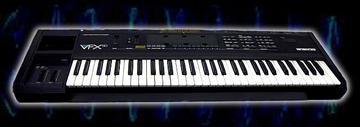
I will probably use that to send changes to everything else and have 
the VFX get its program changes from the Roland.  I might have to get 
another patch bay and start using it live again to make it happen, 
but that is the price of total control.

Thank you, 

Harry Ebbeson III
Ebbeson Management Group
www.geocities.com/ebbrecords

Move to quarantaine

This moves the raw source file on disk only. The archive index is not changed automatically, so you still need to run a manual refresh afterward.