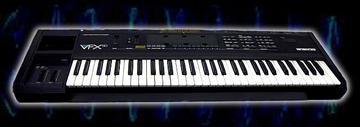
On Monday 10 December 2001 11:47 am, you wrote:
> Hi, my problems are slightly related to zappedguy's in the previous
> message. When I connect my VFX-SD (as a controller keyboard and as
> one of more midi sound sources) to an external sequencer I cannot
> affect the octave settings the vfx is sending (-2, -1, 0, 1, 2).
> Standalone my vfx works properly in this respect but set up in
> multimode (and in accordance, as far as I understand, with the manual
> for use with an external sequencer) the octave is fixed and do not
> respond to any "octave changes" - so is it possible to change octave
> using it as a controller keyboard ?

Can't comment here, my SD1's transpose functions works as its supposed to, on
external modules. So something is wrong with your VFX, or you're using the
wrong transpose function (are you setting the 'Pitch' page setting instead of
the Transpose ? Pitch settings only affect a specific DCO in the synth
module, you should be using the transpose page (format of a transpose setting
is +/-O SS, where O = octave SS = semitone).


>
> my second question concerns aftertouch. I manged to fix the
> connection between the two "keyboard boards" by hardwireing the
> connection (thanks to info received from members of this group - very
> much obliged !) and my VFX-SD has worked properly ever after (huge
> difference from the 10-minute sessions every second hour it managed
> without freezing completely before the fix...) But the aftertouch of
> the keys of the lowest octave is very insensitive - I really have to
> use force to get any response - could it be one of the connections in
> the "fix" above that is weak (which in such case)? - you know I have
> to ask since I've never really used a soldering iron before and I
> think I really would be pushing my luck opening the VFX once more and
> try to re-solder what I've just fixed by valuable advice and a huge
> proportion of pure luck...

It IS possible that the connections could be causing aftertouch problems, the
signal is analog, and a dry solder joint can result in signal loss. Try
resoldering the joints relevant to that octave, it might fix it.

But it could also be that the sensors on that octave are old/dying or just
outputting a lower level for some reason (the VFX series use proximity
sensors for aftertouch). I believe that the VFX's proximity sensors are
hall-effect sensors with a small magnet glued to the bottom of the key, so
that as the key moves lower, the magnet comes closer to the hall-effect chip.
If this is the case, its also possible that the magnet or sensor has shifted
slightly, and the distance is higher on that octave than others.

If fixing up the solder work doesn't help, you might want to take a look at
one of the prox. sensors under the key, check that you didn't move the sensor
board off axis a little bit when you did the solder work, and check that the
magnets under the keys are aligned the same on the lower octave as on the
rest of the keyboard. If you still have problems, try and take a look at the
sensor chips, they are likely still made, so you can find the specs for the
output voltage, and measure the outputs of a few of the 'bad' keys with a DMM
or scope, if it is lower than it should be, then you might want to think
about replacing the sensors, again - they should be still available from most
electronic component vendors.

(Btw, just as an aside, hall sensors are considered a little expensive and
unreliable way of doing aftertouch these days, a much easier and cheaper way
is to use some kind of pressure sensitive rubber, in particular 3M make a
product called 'velostat' which is sold as an anti-static shipping foam, that
has a nice side effect that if you put contacts on either side, the
resistance between the contacts varies based on how much the foam is
squeezed...)