Sorry didn't see your second question.
Midi is a serial interface.
Midi is only capable of playing one note at a time. By "playing" I mean executing a NOTE-ON or any midi command.
Any perception of simultaneity from a Midi instrument is just an illusion based on our limited human time resolution (the same way that we can't tell the difference between 30 frames per second video and reality).
Also: a midi instrument uses midi for it's internal communications.
So the processor speed is not really a factor.
The limiting factor/bottleneck is midi itself.
Specifically:
MIDI messages are made up of 8-bit words, and are transmitted serially at a rate of 31.25 kbaud. This nonstandard transmission rate was chosen because it is an exact division of 1 MHz, the speed at which many early microprocessors operated. (From Wikipedia). So A: MIDI is slower than a 56K modem!
And B: any processor faster than 1MHz can transmit/receive/execute the full MIDI bandwidth.
The bottom line is that if you ask midi to do/execute 16 things at once (ie start playing 16 notes) you are going to run into problems.
Note, that that is different from having 16 sounds/voices sounding at once. That's an oscillator issue - not a midi issue.
I'm talking about issuing 16 note-on commands at the "same" time (or even worse if you've played the drum parts in from a keyboard note-on + velocity + note-off commands).
If you are taking up bandwidth by using any continuous controllers (pitch bend - mod wheel ....) that will make things much worse.
On Mar 3, 2013, at 2:54 PM, cyyoung2012 wrote:
Hi:
_____________________P A R T T W O _________________________
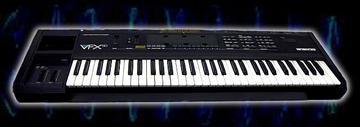
With the SD-1 sequencer on extremely busy drum parts, the timing is sloppy. I was wondering if the cpu of the TS series were faster, or if it were very same chip.
Some of you will know that one.