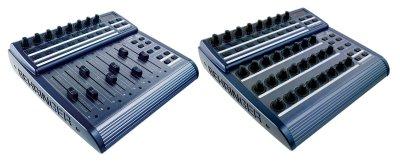
Bc2000 (for the BCF2000 & BCR2000) group photo

Yahoo Groups archive

Bc2000 (for the BCF2000 & BCR2000)

Index last updated: 2026-04-28 23:16 UTC

Thread

TX802 joy with BCR2000!

TX802 joy with BCR2000!

2009-10-30 by gmeredith1

Hi everyone,

So I finally got around to actually trying out my BCR2000 on a TX802 I just bought. It was the first time I'd used the BCR in MIDI mode with a real synth (rather than USB mode with a computer softsynth or something). Wow, what a difference to programming the TX it is!!

It took a while to get everything to work - first I had to learn how the BCR works, then I had to learn how the TX works, and then get them to talk, which wasn't easy when you don't know much. But now it is really working well.

In lieu of my experience, I thought maybe I should write a "Dummy's guide to BCR synth control" for beginners such as me. I'll focus on control of hardware synths only, not software stuff.

Here is a prototype guide for editing the TX802 parameters using sysex messages with the BCR2000. It presumes you have installed the BCR2000 drivers on your computer and you know how to connect it the computer via USB and have them communicating. If you don't know, read the BCR2000 user manual to set it up.


------------- Setting up the BCR2000 --------------

1. Decide what you want to do - "I want to control the voice parameters, such as ADSR, etc." or whatever.

2. Download the file DX7Sysex.zip file from the FILES -> PRESETS -> DX7 PRESET folder. The TX802 is the same as the DX7 for controlling purposes, so use it. Unzip the files. 
There are 3 files in it:
"DX7 1 and 2.syx"
"DX7 3 and 4.syx"
"DX7 5 and 6.syx"

3. Download Bome's SendSX, it's free:

http://www.bome.com/midi/sendsx/

Install it. Connect the BCR2000 to the computer using USB, switch it on. Run the program, go to the "MIDI in" and "MIDI out" menus and select the "USB audio device" from the list in each menu.

If you have a few USB audio devices plugged in, such as USB controller keyboards etc. disconnect them from your computer so that you know that the only USB audio device listed is the BCR2000. You can then plug them back in once you've got that done.

Under the OPTIONS menu, UNTICK "Split long sysex messages" so that it is not used.

4. Load the file "DX7 1 and 2.syx" into SendSX. The "MIDI out" screen on SendSX should fill up with lines of numbers and letters.

On the BCR2000, hold down the EDIT button while pressing the STORE button. The display should now say "EG". Turn the very top most left controller knob (labelled "TYPE"). Set the display to "u-1". This puts it in USB mode. Press the EXIT button. 

5. Choose an empty preset in your BCR2000, or one that is not valuable to you. Click the "Send(F4)" button on SendSX. Your BCR2000 display should now have a dashed line circling around and around on its screen. The "MIDI In" screen of SendSX should have a notice saying "Receiving bulk dump". When this has finished, your BCR2000 display should be back to normal. 

You have now uploaded the first preset of controllers for the TX802 that control all parameters for operators 1 and 2 on the TX802. Use this just for starters, you can upload the others once you've got the hang of it.


6. On the BCR2000, hold down the EDIT button while pressing the STORE button. The display should now say "EG". Turn the very top most left controller knob (labelled "TYPE"). Set the display from "u-1" to read "S-3". Press the EXIT button. 

This puts it in MIDI mode S3 - which uses the MIDI port A to output both knob messages and also any note messages from a controller keyboard connected to its MIDI IN port.


7. STORE the preset on the BCR2000 - Press the STORE button once - it will now be flashing - press it again to finalise. It is now stored in memory even when you switch the unit off.


------- Connecting the BCR2000 to the TX802 -------------

Test the TX802 is working and making a sound using a Keyboard to control it, select a single sound patch - press VOICE SELECT and scroll through the sounds and find one you want to edit - choose a brass sound, say. Now disconnect the keyboard.

Connect a MIDI cable from the MIDI OUT of the BCR2000 to the MIDI IN of the TX802. 
Connect a MIDI cable from the keyboard MIDI OUT to the BCR2000's MIDI IN.

Play the keyboard - you should hear the TX802 sound play.


---------- Setting up the TX802 --------------

Press the SYSTEM SETUP button on the TX802.
Choose the SYSEX menu by pressing the "4" button below the screen on the 1-8 button row.
Set the SYSTEM EXCLUSIVE DEVICE NUMBER to "all" using the +/- buttons on the keypad, if it isn't on it already.

Go back to the main screen - press the PERFORM SELECT button to return to the sound preset screen.
Press the VOICE EDIT(1) button to view the individual patch sound in that performance bank that is active.

Now turn the first knob of the BCR2000 - labelled "TYPE"

The TX802 screen should suddenly switch to the OP1 EG page. You should see The R1 value change value 
as you turn the knob back and forth. IT's WORKING!! 

Turn the other knobs along the top row. They should change the values of the other parameters on that page.
Play the keyboard while you turn the knobs and listen the the changes in the sound.

You are now successfuly controlling the attack/decay/ADSR values for operator 1 of that sound.
On the BCR, press the 3rd ENCODER GROUPS button (directly below the first button). Turn the top row knobs again. The screen will suddenly switch to the OPERATOR 2 EG parameter page, and alter the ADSR values for it.

Turn the other knobs on the BCR, and watch what the TX screen suddenly changes to, and what parameter value changes.

Want to control operators 3 and 4 now?

Select another empty preset on the BCR2000 and upload the file "DX7 3 and 4.syx" into it using SendSX.
You will have to go out of MIDI port mode on the BCR2000 first - hold the EDIT button down and press the STORE button, turn the first knob and select "u-1" (for USB mode). Upload it. Change back to MIDI port mode "S-3". Store the preset (press store twice). 

Repeat the precess for "DX7 5 and 6.syx" file while you're at it. Remember to save them to that preset number memory.

So, once you've got the 3 BCR presets loaded, you can select the first preset to control all the parameters of OPERATOR 1 and 2 (flipping between 1 and 2 using the encoder group buttons), the second preset to control OP 3 and 4, and the third preset for OP 5 and 6.


Enjoy!!

Graham

Re: TX802 joy with BCR2000!

2009-11-02 by k5kip_1999

Congrats on the preset, I know how doing a synth control preset goes!
Guide - That is a great idea, I wanted to move a flash movie about it, but never got the time.

Kip


--- In bc2000@yahoogroups.com, "gmeredith1" <gmeredith1@...> wrote:
Show quoted textHide quoted text
>
> Hi everyone,
> 
> So I finally got around to actually trying out my BCR2000 on a TX802 I just bought. It was the first time I'd used the BCR in MIDI mode with a real synth (rather than USB mode with a computer softsynth or something). Wow, what a difference to programming the TX it is!!
> 
> It took a while to get everything to work - first I had to learn how the BCR works, then I had to learn how the TX works, and then get them to talk, which wasn't easy when you don't know much. But now it is really working well.
> 
> In lieu of my experience, I thought maybe I should write a "Dummy's guide to BCR synth control" for beginners such as me. I'll focus on control of hardware synths only, not software stuff.
> 
> Here is a prototype guide for editing the TX802 parameters using sysex messages with the BCR2000. It presumes you have installed the BCR2000 drivers on your computer and you know how to connect it the computer via USB and have them communicating. If you don't know, read the BCR2000 user manual to set it up.
> 
> 
> ------------- Setting up the BCR2000 --------------
> 
> 1. Decide what you want to do - "I want to control the voice parameters, such as ADSR, etc." or whatever.
> 
> 2. Download the file DX7Sysex.zip file from the FILES -> PRESETS -> DX7 PRESET folder. The TX802 is the same as the DX7 for controlling purposes, so use it. Unzip the files. 
> There are 3 files in it:
> "DX7 1 and 2.syx"
> "DX7 3 and 4.syx"
> "DX7 5 and 6.syx"
> 
> 3. Download Bome's SendSX, it's free:
> 
> http://www.bome.com/midi/sendsx/
> 
> Install it. Connect the BCR2000 to the computer using USB, switch it on. Run the program, go to the "MIDI in" and "MIDI out" menus and select the "USB audio device" from the list in each menu.
> 
> If you have a few USB audio devices plugged in, such as USB controller keyboards etc. disconnect them from your computer so that you know that the only USB audio device listed is the BCR2000. You can then plug them back in once you've got that done.
> 
> Under the OPTIONS menu, UNTICK "Split long sysex messages" so that it is not used.
> 
> 4. Load the file "DX7 1 and 2.syx" into SendSX. The "MIDI out" screen on SendSX should fill up with lines of numbers and letters.
> 
> On the BCR2000, hold down the EDIT button while pressing the STORE button. The display should now say "EG". Turn the very top most left controller knob (labelled "TYPE"). Set the display to "u-1". This puts it in USB mode. Press the EXIT button. 
> 
> 5. Choose an empty preset in your BCR2000, or one that is not valuable to you. Click the "Send(F4)" button on SendSX. Your BCR2000 display should now have a dashed line circling around and around on its screen. The "MIDI In" screen of SendSX should have a notice saying "Receiving bulk dump". When this has finished, your BCR2000 display should be back to normal. 
> 
> You have now uploaded the first preset of controllers for the TX802 that control all parameters for operators 1 and 2 on the TX802. Use this just for starters, you can upload the others once you've got the hang of it.
> 
> 
> 6. On the BCR2000, hold down the EDIT button while pressing the STORE button. The display should now say "EG". Turn the very top most left controller knob (labelled "TYPE"). Set the display from "u-1" to read "S-3". Press the EXIT button. 
> 
> This puts it in MIDI mode S3 - which uses the MIDI port A to output both knob messages and also any note messages from a controller keyboard connected to its MIDI IN port.
> 
> 
> 7. STORE the preset on the BCR2000 - Press the STORE button once - it will now be flashing - press it again to finalise. It is now stored in memory even when you switch the unit off.
> 
> 
> ------- Connecting the BCR2000 to the TX802 -------------
> 
> Test the TX802 is working and making a sound using a Keyboard to control it, select a single sound patch - press VOICE SELECT and scroll through the sounds and find one you want to edit - choose a brass sound, say. Now disconnect the keyboard.
> 
> Connect a MIDI cable from the MIDI OUT of the BCR2000 to the MIDI IN of the TX802. 
> Connect a MIDI cable from the keyboard MIDI OUT to the BCR2000's MIDI IN.
> 
> Play the keyboard - you should hear the TX802 sound play.
> 
> 
> ---------- Setting up the TX802 --------------
> 
> Press the SYSTEM SETUP button on the TX802.
> Choose the SYSEX menu by pressing the "4" button below the screen on the 1-8 button row.
> Set the SYSTEM EXCLUSIVE DEVICE NUMBER to "all" using the +/- buttons on the keypad, if it isn't on it already.
> 
> Go back to the main screen - press the PERFORM SELECT button to return to the sound preset screen.
> Press the VOICE EDIT(1) button to view the individual patch sound in that performance bank that is active.
> 
> Now turn the first knob of the BCR2000 - labelled "TYPE"
> 
> The TX802 screen should suddenly switch to the OP1 EG page. You should see The R1 value change value 
> as you turn the knob back and forth. IT's WORKING!! 
> 
> Turn the other knobs along the top row. They should change the values of the other parameters on that page.
> Play the keyboard while you turn the knobs and listen the the changes in the sound.
> 
> You are now successfuly controlling the attack/decay/ADSR values for operator 1 of that sound.
> On the BCR, press the 3rd ENCODER GROUPS button (directly below the first button). Turn the top row knobs again. The screen will suddenly switch to the OPERATOR 2 EG parameter page, and alter the ADSR values for it.
> 
> Turn the other knobs on the BCR, and watch what the TX screen suddenly changes to, and what parameter value changes.
> 
> Want to control operators 3 and 4 now?
> 
> Select another empty preset on the BCR2000 and upload the file "DX7 3 and 4.syx" into it using SendSX.
> You will have to go out of MIDI port mode on the BCR2000 first - hold the EDIT button down and press the STORE button, turn the first knob and select "u-1" (for USB mode). Upload it. Change back to MIDI port mode "S-3". Store the preset (press store twice). 
> 
> Repeat the precess for "DX7 5 and 6.syx" file while you're at it. Remember to save them to that preset number memory.
> 
> So, once you've got the 3 BCR presets loaded, you can select the first preset to control all the parameters of OPERATOR 1 and 2 (flipping between 1 and 2 using the encoder group buttons), the second preset to control OP 3 and 4, and the third preset for OP 5 and 6.
> 
> 
> Enjoy!!
> 
> Graham
>

Move to quarantaine

This moves the raw source file on disk only. The archive index is not changed automatically, so you still need to run a manual refresh afterward.