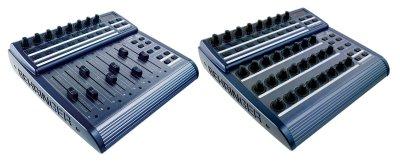
Bc2000 (for the BCF2000 & BCR2000) group photo

Yahoo Groups archive

Bc2000 (for the BCF2000 & BCR2000)

Index last updated: 2026-04-28 23:16 UTC

Thread

Roland GT-10 MIDI implementation chart

Roland GT-10 MIDI implementation chart

2015-02-22 by rogersned26@...

I've been trying to digest this implementation chart and am having a hard time. Its not like most charts with clearly defined CC#, NRPN, Rx/Tx and X and O's, it is however extremely detailed.

Most if it is in Hex but it doesn't actually list what each of the data bytes are.

I'd copy the code that interests me but its write/copy protected, it on page 26 and its the globalEQ parameters

(see attachment)

Any advice in general would be welcome on how to interpret such a dense implementation chart.

Cheers


Attachments

Re: Roland GT-10 MIDI implementation chart

2015-02-22 by rpcfender@...

Hi
what you are looking at is the parameter changes that can be made by system exclusive.
The messages in Hex you need to send are

F0 41 id 00 00 2F 12 a1 a2 a3 a4 data checksum F7
id is Device Id and Roland usually set this to 10 hex. So unless you have changed it that is what it will be.
A1 a2 a3 a4 is the 4 byte address for the parameter - these are the four numbers on the left of page 26
see page 4 for the heading of the table.
4 bytes of the Address - 4 bytes of the data (usually 1 byte) - Min and Max Data values

The BC can be programmed handle these messages but not from the front panel.
You will need either my editor, if you are a programmer, or Mark's graphic editor.

So in the temporary buffer the hex address of
Global EQ Low Gain = 00 00 00 48
Global EQ Mid Gain = 00 00 00 49
Global EQ Mid Q = 00 00 00 4A
Global EQ Mid Freq = 00 00 00 4B
Global EQ Low Gain = 00 00 00 4C

To program an encoder to change the Mid Freq.....
On Mark's editor go to the encoder edit dialog and select Custom Output
Press the + button to add a sysex line
Presss the + button on the new dialog to add the bytes and words


F0 41 10 00 00 2F 00 00 00 4B Value bits 0-6 Checksum:Method 1 starting 7 F7

you should get
$F0 $41 $10 $00 $00 $2F $00 $00 $00 $4B val0.6 cks-1 $07 $F7

Range is 00 to 1B (0 to 75)
I have a Hex - decimal converter on my website if you are unfamiliar with hex.

All the best
Royce

Re: Roland GT-10 MIDI implementation chart

2015-02-23 by rogersned26@...

OK, I get most of it now.

A couple more questions,


1) Where you have written:

F0 41 id 00 00 2F 12 a1 a2 a3 a4 data, checksum F7


you have 12 as the command ID, but later you state the message to send is

F0 41 10 00 00 2F 00 00 00 4B Value bits 0-6 Checksum:Method 1 starting 7 F7

Where the command ID is 12h for sending ( or 11h for receiving), has this been intentionally omitted?


2) Also where the datasheet specifies (as in your example for MIDfreq) :

00 00 00 4B 00 00 00 01 00 00 - 00 1B

I'm a little confused as to how a1 a2 a3 a4 data are represented here:

F0 41 10 00 00 2F 00 00 00 4B Value bits 0-6 Checksum:Method 1 starting 7 F7

Thanks again


Re: Roland GT-10 MIDI implementation chart

2015-02-25 by rpcfender@...

Hi Ned
Sorry, I missed the 12

00 00 00 4B 00 00 00 01 00 00 - 00 1B

00 00 00 4B parameter address
00 00 00 01 data size
00 00 - min
00 1B max

00 a1 MSB
00 a2
00 a3
4B a4 Least significant byte - parameter address


F0 41 10 00 00 2F 12 00 00 00 4B Value bits 0-6 Checksum:Method 1 starting 7 F7
F0 start of sysex
41 Roland
10 unit id
00 00 2F model id
12 command DT1 (11 is RQ1 data request)
00 00 00 4B address
Value bits 0-6 7bit value
Checksum:Method 1 starting at byte 7 - the address - the header is ignored
F7 end of sysex

All the best
Royce

Move to quarantaine

This moves the raw source file on disk only. The archive index is not changed automatically, so you still need to run a manual refresh afterward.