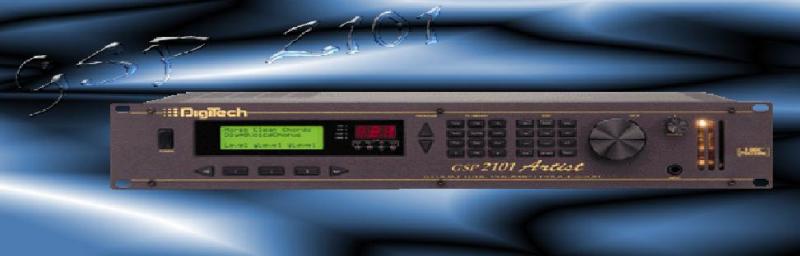
HYS 4: Cannon Problems
NOTE: These are MY(!) experiences with the cannon-effect. I collected them
at my 2101 tune-ups. If anyone has more information, a different meaning, or
confirmation ....please send it to me.
There are different types of \u201ccannon- problems221; at the GSP 2101.
I gave them the following names:
I gave them the following names:
;
a. The Incorrect SDISC - Cannon
b. The Correct SDISC - Cannon
c. The Dump- Cannon
b. The Correct SDISC - Cannon
c. The Dump- Cannon
NOTEs:
- The cannon has nothing to do with the frequency of the Z80- processor. (10 MHz or 20 MHz, Software- Version xx.xx.xx or xx.xx.xx.a notice: the \u201ca\u201d means 20 MHz)
- The cannon - noise which occurs if you switch on and off your GSP 2101 in NOT the cannon- effect I mean. Yes- OK it sounds like a cannon, but it\u2019s not the failure we\u2019;re talking about.
- The cannon has nothing to do with the frequency of the Z80- processor. (10 MHz or 20 MHz, Software- Version xx.xx.xx or xx.xx.xx.a notice: the \u201ca\u201d means 20 MHz)
- The cannon - noise which occurs if you switch on and off your GSP 2101 in NOT the cannon- effect I mean. Yes- OK it sounds like a cannon, but it\u2019s not the failure we\u2019;re talking about.
a. The Incorrect SDISC - Cannon:
What is this?
This cannon only appears if you have the PPC 210 and software 3.00.00.x installed.
It is the worst cannon you could have, because it is the loudest and the most disturbing.
It causes clicks, pops, occasional booms if you change programs and even a crackling sound, if nothing is played or switched. The programs, which are affected are different.
Note: Please don\u2019t confuse the crackling sound with the crackling sound which is caused by the \u201cCoil- Problem\u201d. Please have a look at my HYS- document \u201cHYS: Coil- Problem\u201d
What\u2019s the case?
This cannon is caused by the incompatibility between the SDISC on the motherboard and on the PPC 210. There are two generations of SDISCs. SDISC I and SDISC II. You can detect them at the different writing on them. If it is a VLSI- processor (with writing \u201cS_DISC\u201d on it) then it is one of the first generation (SDISC I). If it is a Harman International- processor (with writing \u201cSDISCii\u201d on it) then it is one of the second generating (SDISC II). You have to open your GSP 2101 and look what\u2019s installed on your motherboard and on your PPC 210.
The “Incorrect SDISC- Cannon\u201d appears, if you have a SDISC I on your motherboard and a SDISC II on your PPC 210.
What\u2019s the solution?
There are two solutions:
Solution 1: replace the SDISC II into a SDISC I on the PPC 210.
Solution 2: replace the SDISC I into a SDISC II on the motherboard.
I always replace the SDISC II into a SDISC I on the PPC 210, because so I can use the PPC 210 in different GSP 2101. (The SDISC I on the PPC 210 can be combined with both types of SDISCs on the motherboard)
The SDISC processors are available as spare- parts. You'll get it from the Digitech- supports, which are listed in the owners-manual. In Germany it costs about 60 Euro. It is easy to install. Use a PLCC- removing tool for removing the SDISC processor. A little screwdriver does the same, but you have to be careful! Don\u2019t damage the PLCC84- socket. Take care of the rules for static protection. If you don\u2019t know them, you\u2019ll find them at: http://home.sprynet.com/~clpastor/gfaq-7.html
This cannon only appears if you have the PPC 210 and software 3.00.00.x installed.
It is the worst cannon you could have, because it is the loudest and the most disturbing.
It causes clicks, pops, occasional booms if you change programs and even a crackling sound, if nothing is played or switched. The programs, which are affected are different.
Note: Please don\u2019t confuse the crackling sound with the crackling sound which is caused by the \u201cCoil- Problem\u201d. Please have a look at my HYS- document \u201cHYS: Coil- Problem\u201d
What\u2019s the case?
This cannon is caused by the incompatibility between the SDISC on the motherboard and on the PPC 210. There are two generations of SDISCs. SDISC I and SDISC II. You can detect them at the different writing on them. If it is a VLSI- processor (with writing \u201cS_DISC\u201d on it) then it is one of the first generation (SDISC I). If it is a Harman International- processor (with writing \u201cSDISCii\u201d on it) then it is one of the second generating (SDISC II). You have to open your GSP 2101 and look what\u2019s installed on your motherboard and on your PPC 210.
The “Incorrect SDISC- Cannon\u201d appears, if you have a SDISC I on your motherboard and a SDISC II on your PPC 210.
What\u2019s the solution?
There are two solutions:
Solution 1: replace the SDISC II into a SDISC I on the PPC 210.
Solution 2: replace the SDISC I into a SDISC II on the motherboard.
I always replace the SDISC II into a SDISC I on the PPC 210, because so I can use the PPC 210 in different GSP 2101. (The SDISC I on the PPC 210 can be combined with both types of SDISCs on the motherboard)
The SDISC processors are available as spare- parts. You'll get it from the Digitech- supports, which are listed in the owners-manual. In Germany it costs about 60 Euro. It is easy to install. Use a PLCC- removing tool for removing the SDISC processor. A little screwdriver does the same, but you have to be careful! Don\u2019t damage the PLCC84- socket. Take care of the rules for static protection. If you don\u2019t know them, you\u2019ll find them at: http://home.sprynet.com/~clpastor/gfaq-7.html
b. The Correct SDISC - Cannon:
What is this?
This is the cannon, which appears if you have a PPC 210 with the correct SDISC installed.
Sorry, but I never had a GSP 2101 with PPC 210 in my hands without the \u201cCorrect SDISC - Cannon\u201d. I found some GSP 2101 where the cannon- noise is very soft, but I never found one, without that cannon. There are 2 effects which are caused by the \u201cCorrect SDISC - Cannon\u201d.
Effect 1: Mild popping noises on patch- changes (seldom and occasionally)
Effect 2: Loud popping noises on not muted programs. (ever- but different levels on different GSPs)
You can produce that effect so:
- pull all plugs out of the input- jacks
- dial program 136 (Skunk Pedal Steel)
- set the Hold Time and the Ramp Time (Seamless Program Change) to 1.5 s
- dial program 137 (Squall Now)
- set the Hold Time and the Ramp Time (Seamless Program Change) to 1.5 s
- turn the Output- Volume- Potentiometer to maximum
- switch between program 136 and 137. If you switch from 136 to 137 you hear “boom-tap-tap-tap\u201d
As I already said.... I never found a GSP 2101 (with PPC 210) without that kind of cannon. So everyone of you should hear it (loud or soft)- if it isn\u2019t so, let me know.
What\u03357;s the case?
I\u2019m not sure, but in my mind it\u2019s a software failure, that\u2019s caused by the second SDISC on the PPC 210. Because, when a PPC 210 is installed, a second set of DRAM is also installed for every effect with time- displacement. And so the software has to administrate 2 sets of DRAM.
What\u2019s the solution?
For the effect 1 (Mild popping noises on patch- changes (seldom and occasionally)) I never found a solution. But it\u2019s not very disturbing. Some people which ever played with the PPC 210 said to me, that they never recognised that noises. And if I showed them what I mean (on their own GSPs) they said: Oh... you mean that! It doesn\u2019t disturb me - isn\u2019t it normal?
For the effect 2 there is a simple solution. You only have to mute your program. For an example follow that steps:
- store program 136 to any program-place (e.g. program 1)
- store program 137 one step higher (e.g. program 2)
- set the Attenuation- Value at the Noise - Gate in program 2 (Squall Now) to 100 dB
- save the program
- switch between the two programs...... the cannon has been gone.
What is this?
This is the cannon, which appears if you have a PPC 210 with the correct SDISC installed.
Sorry, but I never had a GSP 2101 with PPC 210 in my hands without the \u201cCorrect SDISC - Cannon\u201d. I found some GSP 2101 where the cannon- noise is very soft, but I never found one, without that cannon. There are 2 effects which are caused by the \u201cCorrect SDISC - Cannon\u201d.
Effect 1: Mild popping noises on patch- changes (seldom and occasionally)
Effect 2: Loud popping noises on not muted programs. (ever- but different levels on different GSPs)
You can produce that effect so:
- pull all plugs out of the input- jacks
- dial program 136 (Skunk Pedal Steel)
- set the Hold Time and the Ramp Time (Seamless Program Change) to 1.5 s
- dial program 137 (Squall Now)
- set the Hold Time and the Ramp Time (Seamless Program Change) to 1.5 s
- turn the Output- Volume- Potentiometer to maximum
- switch between program 136 and 137. If you switch from 136 to 137 you hear “boom-tap-tap-tap\u201d
As I already said.... I never found a GSP 2101 (with PPC 210) without that kind of cannon. So everyone of you should hear it (loud or soft)- if it isn\u2019t so, let me know.
What\u03357;s the case?
I\u2019m not sure, but in my mind it\u2019s a software failure, that\u2019s caused by the second SDISC on the PPC 210. Because, when a PPC 210 is installed, a second set of DRAM is also installed for every effect with time- displacement. And so the software has to administrate 2 sets of DRAM.
What\u2019s the solution?
For the effect 1 (Mild popping noises on patch- changes (seldom and occasionally)) I never found a solution. But it\u2019s not very disturbing. Some people which ever played with the PPC 210 said to me, that they never recognised that noises. And if I showed them what I mean (on their own GSPs) they said: Oh... you mean that! It doesn\u2019t disturb me - isn\u2019t it normal?
For the effect 2 there is a simple solution. You only have to mute your program. For an example follow that steps:
- store program 136 to any program-place (e.g. program 1)
- store program 137 one step higher (e.g. program 2)
- set the Attenuation- Value at the Noise - Gate in program 2 (Squall Now) to 100 dB
- save the program
- switch between the two programs...... the cannon has been gone.
c. The Dump- Cannon:
What is this?
This is the cannon which is called "shot across the bow", because it sounds so.
It appears if you select the program (the invalid program of course).
It has nothing to do with SDISCs and PPC-210.
What\u2019s the case?
It is caused by transmission- errors via Midi or by an error which already exists in the program (or algorithm or bulk) that is dumped to the GSP 2101.
What\u2019s the solution?
You first have to find out, whether it is a transmission- error or an existing error in the program (on the PC). You find that out, by dumping the concerned program again (and again). If the cannon disappears when you dump the program a second (or third) time it must be a transmission- error. If it remains it may be an existing error.
If it is a transmission- error:
The first thing you have to check is the correct Midi- connection.
I always recommend a Midi- interface with galvanic separation (with an opto-coupler). Do not use a simple Midi- Adapter without galvanic separation (such kind with only has a 15 pole SUB-D- connector and two 5 pole DIN- plugs hanging out). Such kind of adapters cause a ground- loop, which disturbs the Midi- serial- protocol.
But you can also tackle that problem by dumping it a second (or third) time.
Another solution (which works if it is a transmission- error OR an existing error in the program) is to change some parameters in the program and store it again (directly on the GSP 2101). If even this does not work, try to save the user- algorithm again (after changing any link). After the cannon is gone, you can set the changed parameter (and/or links) back to their original values.
What is this?
This is the cannon which is called "shot across the bow", because it sounds so.
It appears if you select the program (the invalid program of course).
It has nothing to do with SDISCs and PPC-210.
What\u2019s the case?
It is caused by transmission- errors via Midi or by an error which already exists in the program (or algorithm or bulk) that is dumped to the GSP 2101.
What\u2019s the solution?
You first have to find out, whether it is a transmission- error or an existing error in the program (on the PC). You find that out, by dumping the concerned program again (and again). If the cannon disappears when you dump the program a second (or third) time it must be a transmission- error. If it remains it may be an existing error.
If it is a transmission- error:
The first thing you have to check is the correct Midi- connection.
I always recommend a Midi- interface with galvanic separation (with an opto-coupler). Do not use a simple Midi- Adapter without galvanic separation (such kind with only has a 15 pole SUB-D- connector and two 5 pole DIN- plugs hanging out). Such kind of adapters cause a ground- loop, which disturbs the Midi- serial- protocol.
But you can also tackle that problem by dumping it a second (or third) time.
Another solution (which works if it is a transmission- error OR an existing error in the program) is to change some parameters in the program and store it again (directly on the GSP 2101). If even this does not work, try to save the user- algorithm again (after changing any link). After the cannon is gone, you can set the changed parameter (and/or links) back to their original values.
FINAL COMMENT:
If you have experiences with cannon- problems, please send them all to me. I collect them to help other people who have the same problems. If you have questions, answers, impressions or anything else about the cannon, send them, too.
If you have experiences with cannon- problems, please send them all to me. I collect them to help other people who have the same problems. If you have questions, answers, impressions or anything else about the cannon, send them, too.
Dieter Waechter (waechter.dieter@...)