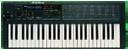
Willi,

sorry for the delay, I've been looking for this:

http://synthetizer-sche.chez-alice.fr/korg/poly800/poly800-2.html

This is a simple starting point to calibrate the power supply and
check a couple of other points on the board.

Most of it applies to Poly 800 MK 1 and 2.

Mike.


--- In korgpolyex@yahoogroups.com, "earth2willi" <earth2willi@...> wrote:
>
> Hi Mike
>
> Thanks for the reply.  I do have a multimeter.  I didn't see any
signs of corrosion /
> deposits/breaks on either side of the analog or digital boards, but
I didn't check both
> sides of the buttons/LED PCB.  I'll take that board out and check
both sides, although that
> seems an unlikely candidate given the display and buttons work OK.
Still, I will give it
> another look.  What should I try with the multimeter?
>
>
> Thanks again!
> willi
>
> --- In korgpolyex@yahoogroups.com, Michael Hawkins <korgpolyex800@>
wrote:
> >
> > Hi Willi,
> >
> > The fact that you can do a tape dump and get the "Good" message
virtually proves that
> your ROM, RAM, CPU and CPU clock are OK. And because you can command
the Poly via
> the rear switches and get that tape load working, emphasizes how
much I doubt you have
> a corrupted ROM.
> >
> > I've not heard of anyone damaging their Poly's using a bad audio
cable either.
> >
> > My first guess is that you probably do have some damage on the
circuit board from a
> little battery acid combined with rain water. I would obtain a
strong magnifying glass and
> then, sitting under a bright light, thoroughly examine the entire
board looking for any
> signs of corrosion. Any white salty looking deposit is a prime
candidate. If you've
> previously used a brush or fingers to rub off any salty looking
deposit then try to
> remember where it/they were and thoroughly examine the copper tracks
for breaks. The
> copper tracks are under a solder mask which is the green color on
the board so it can be
> quite difficult to find a crack but the green coating is also what
makes the boards so well
> protected from general corrosion.
> >
> > You might also have an intermittent circuit break. This could take
a bit more time to nail
> down.
> >
> > If you have a multimeter then we can do some more testing. Let me
know if you have
> one.
> >
> > Mike.
> >
> >
> > earth2willi <earth2willi@> wrote:                                  Hi
> >
> >  I'm the original owner of my Poly800 mk1.  It was my first synth!
 It's in pretty good
> >  physical shape overall, but unfortunately it has seen better
days.  There seem to be
> some
> >  very knowledgable people in this usergroup, so here is my situation.
> >
> >  Short; it's not making any sound, when it occasionally does make
some noise on it's
> own
> >  it's distorted as if the presets are corrupt and the sound does
not always reflect any
> input
> >  played on the local keyboard, and the MIDI has stopped outputting
data.
> >
> >  My Poly800 worked great for many years.  It saw some outdoor use
when I was in
> >  highschool marching band; once when we traveled to Canada to
perform, I forgot my
> >  keytar strap, so we ended up duct taping the keyboard to my band
uniform.  When we
> >  marched, it rained, and the Poly800 did get a bit wet but not too
bad.  It worked fine
> for
> >  many years after that.
> >
> >  I also had some alkaline batteries in it that I forgot about and
they leaked, but the
> leakage
> >  does not seem to have traveled outside the battery compartment.
Inside the keyboard
> was
> >  a bit dusty but there is no visible corrosion (a common problem
in Hawaii, where the
> >  keyboard (and myself) had been living the past years).  I cleaned
out the insides with
> some
> >  compressed air but that hasn't solved my problem.
> >
> >  I'm not sure what exactly is wrong as they keyboard appears to be
functioning OK
> (powers
> >  up, can hear the headphone jack amplifier power up (just the
click of it being powered
> up,
> >  no excess noise), and when I attempt to flash it using a .WAV
file of the original casette
> >  data it says 'GOOD'.
> >
> >  However, the keyboard does not trigger the sound.  Usually there
is no sound, but
> >  sometimes there is some spurious random output, like the DCO or
VCF or something is
> >  getting a corrupt/random 'preset' and the VCA is not usually
responding to keyboard
> >  input.  It will sometimes audibly respond to the keyboard input,
but the sound will be
> >  accompanied by the noise generator going crazy or some random DCO
output.  Then
> the
> >  sound will all stop and cut out suddenly.  It usually won't make
any more noise or
> respond
> >  to the keyboard at all again, until I put it away and try again
some other time.
> >
> >  The sequencer does advance per each note, and on the occasional
output that does
> >  respond the keybed/DCO's will seem to track accurately, so I
don't think it's a problem
> >  with the keybed itself.
> >
> >  I was just using it as a MIDI controller until that stopped
sending any data, which lead
> to
> >  my discovery of the audio problem.  :(
> >
> >  I've tried flashing it a number of times, with all the write
switches enabled (and in
> various
> >  permutations; e.g. just program data).  I've used a couple
different .WAV files.  The unit
> >  claims to get a 'GOOD' flash.  I had some trouble flashing it
when I was trying to check
> up
> >  on the MIDI and battery situation a while ago due to a bad cable,
and then the audio
> >  problems started up.  So I don't know if they are related or if
that is possible.  It almost
> >  seems like the OS (or ROM or CPU) are corrupt and it can't
properly load/play the
> presets.
> >  I haven't tried sending the data over MIDI sysex but again the
MIDI out is buggered...
> >
> >  It seems unlikely the ROM is corrupt, but is there any easy way
to test the ROM or CPU?
> Is
> >  it possible to get these parts anymore without cannibalizing
another Poly800?  Do these
> >  seem likely candidates or should I be investigating some other
areas first?  I have a
> simple
> >  multimeter but not an oscilliscope...
> >
> >  Sorry to ramble but I've tried to be complete with the
information related to the
> problem.
> >  Please let me know if there are any questions or suggestions.
And thank you very much
> >  for your time.
> >
> >  Sincerely,
> >  willi
> >  http://www.earth2willi.com
> >
> >
> >
> >
> >
> >  __________________________________________________
> > Do You Yahoo!?
> > Tired of spam?  Yahoo! Mail has the best spam protection around
> > http://mail.yahoo.com
> >
>
Message
Re: Resurrecting your Poly800 mk1
2007-01-17 by korgpolyex800
Attachments
- No local attachments were found for this message.