The Mellotron Group group photo

Yahoo Groups archive

The Mellotron Group

Index last updated: 2026-04-28 23:38 UTC

Thread

What's in a name?

What's in a name?

2011-09-04 by Andy kinch

I may have been asleep earlier in proceedings when this topic was raised. So forgive me asking, but what constitute the name "Mellotron"?

Is it a brand name or an electro mechanical Machine? Probably both, I know.

I mean we all have Hoovers in our homes, but I would suggest that only a few of us have Hoovers made by Hoover. I have a Dyson, but I still call it a Hoover for example.

Bear with me here, because I'm a tad confused.

It is my assumption that John and Martin build Mellotron "machines", but simply can't use the name because the brand name "Mellotron" was sold off.

But Markus can build the Digital Mellotron and call it Mellotron because he has permission to use the name, even though, some people would accept that

the 4000D is not a Mellotron.

As much as I love the instrument that Markus has produced, for the reasons I have stated elsewhere, there is no way do I think that it is a Mellotron, because to my mind, 

by definition a Mellotron has to be a Mechanical Machine with motors, heads, tapes etc.

Come to think of it, I have a Hoover Washing Machine!

Beam me up Scotty!


Andy K

Re: [newmellotrongroup] What's in a name?

2011-09-04 by tronbros

Hi Andy,

The word 'mellotron' in lowercase is a noun in the Oxford English and other tomes and is a generic term.  It can be used within a sentence and we challenge anyone trying to stop us using 'Streetly Electronics M4000 mellotron', especially in the light of M4000D being used by Mr Resch in a flagrant violation of our established brand.  We could easily send a 'Cease and Dissist' letter from our tame yet vibrant solicitor to the offender!  

Best,

Martin

mellotronics.co.uk
Show quoted textHide quoted text
On 4 Sep 2011, at 08:50, Andy kinch <kinchmusic@aol.com> wrote:

> 
> I may have been asleep earlier in proceedings when this topic was raised. So forgive me asking, but what constitute the name "Mellotron"?
>  
> Is it a brand name or an electro mechanical Machine? Probably both, I know.
>  
> I mean we all have Hoovers in our homes, but I would suggest that only a few of us have Hoovers made by Hoover. I have a Dyson, but I still call it a Hoover for example.
>  
> Bear with me here, because I'm a tad confused.
>  
> It is my assumption that John and Martin build Mellotron "machines", but simply can't use the name because the brand name "Mellotron" was sold off.
>  
> But Markus can build the Digital Mellotron and call it Mellotron because he has permission to use the name, even though, some people would accept that
>  
> the 4000D is not a Mellotron.
>  
> As much as I love the instrument that Markus has produced, for the reasons I have stated elsewhere, there is no way do I think that it is a Mellotron, because to my mind,
>  
> by definition a Mellotron has to be a Mechanical Machine with motors, heads, tapes etc.
>  
> Come to think of it, I have a Hoover Washing Machine!
>  
> Beam me up Scotty!
>  
>  
> Andy K
>  
>

Re: [newmellotrongroup] What's in a name?

2011-09-04 by Mattias Olsson (Roth Händle studios)

Good one, Martin !
Show quoted textHide quoted text
  ----- Original Message ----- 
  From: tronbros 
  To: newmellotrongroup@yahoogroups.com 
  Sent: Sunday, September 04, 2011 10:38 AM
  Subject: Re: [newmellotrongroup] What's in a name?


  Hi Andy,


  The word 'mellotron' in lowercase is a noun in the Oxford English and other tomes and is a generic term.  It can be used within a sentence and we challenge anyone trying to stop us using 'Streetly Electronics M4000 mellotron', especially in the light of M4000D being used by Mr Resch in a flagrant violation of our established brand.  We could easily send a 'Cease and Dissist' letter from our tame yet vibrant solicitor to the offender!  


  Best,


  Martin

  mellotronics.co.uk


  On 4 Sep 2011, at 08:50, Andy kinch <kinchmusic@aol.com> wrote:


    I may have been asleep earlier in proceedings when this topic was raised. So forgive me asking, but what constitute the name "Mellotron"?

    Is it a brand name or an electro mechanical Machine? Probably both, I know.

    I mean we all have Hoovers in our homes, but I would suggest that only a few of us have Hoovers made by Hoover. I have a Dyson, but I still call it a Hoover for example.

    Bear with me here, because I'm a tad confused.

    It is my assumption that John and Martin build Mellotron "machines", but simply can't use the name because the brand name "Mellotron" was sold off.

    But Markus can build the Digital Mellotron and call it Mellotron because he has permission to use the name, even though, some people would accept that

    the 4000D is not a Mellotron.

    As much as I love the instrument that Markus has produced, for the reasons I have stated elsewhere, there is no way do I think that it is a Mellotron, because to my mind, 

    by definition a Mellotron has to be a Mechanical Machine with motors, heads, tapes etc.

    Come to think of it, I have a Hoover Washing Machine!

    Beam me up Scotty!


    Andy K

Re: [newmellotrongroup] What's in a name?

2011-09-04 by lsf5275@aol.com

My way of looking at is simple. If it has a keyboard and plays back  
prerecorded tape, it may not be a mellotron. If it does not play back  prerecorded 
tape it cannot be a mellotron.
 
 
In a message dated 9/4/2011 3:50:43 A.M. Eastern Daylight Time,  
kinchmusic@aol.com writes:


I may have been asleep earlier in proceedings when this topic was  raised. 
So forgive me asking, but what constitute the name "Mellotron"?
 
Is it a brand name or an electro mechanical  Machine? Probably both, I know.
 
I mean we all have Hoovers in our homes, but I would suggest that only a  
few of us have Hoovers made by Hoover. I have a Dyson, but I still call it a  
Hoover for example.
 
Bear with me here, because I'm a tad confused.
 
It is my assumption that John and Martin build Mellotron "machines", but  
simply can't use the name because the brand name "Mellotron" was sold  off.
 
But Markus can build the Digital Mellotron and call it Mellotron because  
he has permission to use the name, even though, some people would accept  that
 
the 4000D is not a Mellotron.
 
As much as I love the instrument that Markus has produced, for the  reasons 
I have stated elsewhere, there is no way do I think that it is a  
Mellotron, because to my mind, 
 
by definition a Mellotron has to be a Mechanical Machine with motors,  
heads, tapes etc.
 
Come to think of it, I have a Hoover Washing Machine!
 
Beam me up Scotty!
 
 
Andy K

Re: [newmellotrongroup] What's in a name?

2011-09-04 by Chris Dale

That's kind of it in a nutshell, though it's not the first time a Mellotron company built a digital product.
The "Studio Symphony XT-2000" of 1985 was the first digital machine built by Mellotron USA.
It was only ever a prototype yet the name 'Mellotron' was not used anywhere on it because it was not a Mellotron.
Any digital source that plays back Mellotron samples is not (and can never be) a Mellotron or referenced as such because the mention of digital technology is not included in the original patents in 1962 / 1963, nor referenced in Harry Chamberlins earlier patents.
The Mellotron, Chamberlin, and Birotron are defined and limited only to the scope of their patents. Although there are similarites the technical mechanisms and build materials are different.
How it operates, the materials used, etc. etc, right down to 'micro-metre9; mechanical movements etc. etc. must be included in patents to separate all similar items from what they are and what they are not.
This is why it takes years to file and receive them .
Once it's filed, the patent for a manufactured item legally and legitimately defines it historically for all time - (forever).
Patents cannot be amended and are non-transferable.
For example George Lucas can modify 'Star Wars' all he wants but it hasn't been the 'original ' movie since 1981 when he added 'Episode IV" to the title which was not included in the original screening..
So because of that he would have to file multiple patents and copyrights each time he changes it.
Lucas owning the name doesn't make a difference. The name becomes equal to a button or 'badge' one would wear.


Show quoted textHide quoted text
On Sun, Sep 4, 2011 at 7:45 AM, <lsf5275@aol.com> wrote:

My way of looking at is simple. If it has a keyboard and plays back prerecorded tape, it may not be a mellotron. If it does not play back prerecorded tape it cannot be a mellotron.
In a message dated 9/4/2011 3:50:43 A.M. Eastern Daylight Time, kinchmusic@aol.com writes:


I may have been asleep earlier in proceedings when this topic was raised. So forgive me asking, but what constitute the name "Mellotron"?
Is it a brand name or an electro mechanical Machine? Probably both, I know.
I mean we all have Hoovers in our homes, but I would suggest that only a few of us have Hoovers made by Hoover. I have a Dyson, but I still call it a Hoover for example.
Bear with me here, because I'm a tad confused.
It is my assumption that John and Martin build Mellotron "machines", but simply can't use the name because the brand name "Mellotron" was sold off.
But Markus can build the Digital Mellotron and call it Mellotron because he has permission to use the name, even though, some people would accept that
the 4000D is not a Mellotron.
As much as I love the instrument that Markus has produced, for the reasons I have stated elsewhere, there is no way do I think that it is a Mellotron, because to my mind,
by definition a Mellotron has to be a Mechanical Machine with motors, heads, tapes etc.
Come to think of it, I have a Hoover Washing Machine!
Beam me up Scotty!
Andy K


Re: [newmellotrongroup] What's in a name?

2011-09-04 by Andy kinch

So are you saying Markus is violating the original patents by using Mellotron on the new instrument?
AK
Show quoted textHide quoted text
-----Original Message-----
From: Chris Dale <unobtainiumkeys@gmail.com>
To: newmellotrongroup <newmellotrongroup@yahoogroups.com>
Sent: Sun, 4 Sep 2011 14:59
Subject: Re: [newmellotrongroup] What's in a name?


That's kind of it in a nutshell, though it's not the first time a Mellotron company built a digital product.
 
 
The "Studio Symphony XT-2000" of 1985 was the first digital machine built by Mellotron USA. 
It was only ever a prototype yet the name 'Mellotron' was not used anywhere on it because it was not a Mellotron. 
 
Any digital source that plays back Mellotron samples is not (and can never be) a Mellotron or referenced as such because the mention of digital technology is not included in the original patents in 1962 / 1963, nor referenced in Harry Chamberlins earlier patents.
 
 
The Mellotron, Chamberlin, and Birotron are defined and limited only to the scope of their patents. Although there are similarites the technical mechanisms and build materials are different.
 
How it operates, the materials used, etc. etc, right down to 'micro-metre' mechanical movements etc. etc. must be included in patents to separate all similar items from what they are and what they are not.
 
This is why it takes years to file and receive them .
 
 
Once it's filed, the patent for a manufactured item legally and legitimately defines it historically for all time - (forever). 
 
Patents cannot be amended and are non-transferable.
 
 
For example George Lucas can modify 'Star Wars' all he wants but it hasn't been the 'original ' movie since 1981 when he added 'Episode IV" to the title which was not included in the original screening..
 
So because of that he would have to file multiple patents and copyrights each time he changes it.
 
Lucas owning the name doesn't make a difference. The name becomes equal to a button or 'badge' one would wear.


On Sun, Sep 4, 2011 at 7:45 AM, <lsf5275@aol.com> wrote:


My way of looking at is simple. If it has a keyboard and plays back prerecorded tape, it may not be a mellotron. If it does not play back prerecorded tape it cannot be a mellotron.


In a message dated 9/4/2011 3:50:43 A.M. Eastern Daylight Time, kinchmusic@aol.com writes:


I may have been asleep earlier in proceedings when this topic was raised. So forgive me asking, but what constitute the name "Mellotron"?
 
Is it a brand name or an electro mechanical Machine? Probably both, I know.
 
I mean we all have Hoovers in our homes, but I would suggest that only a few of us have Hoovers made by Hoover. I have a Dyson, but I still call it a Hoover for example.
 
Bear with me here, because I'm a tad confused.
 
It is my assumption that John and Martin build Mellotron "machines", but simply can't use the name because the brand name "Mellotron" was sold off.
 
But Markus can build the Digital Mellotron and call it Mellotron because he has permission to use the name, even though, some people would accept that
 
the 4000D is not a Mellotron.
 
As much as I love the instrument that Markus has produced, for the reasons I have stated elsewhere, there is no way do I think that it is a Mellotron, because to my mind, 
 
by definition a Mellotron has to be a Mechanical Machine with motors, heads, tapes etc.
 
Come to think of it, I have a Hoover Washing Machine!
 
Beam me up Scotty!
 
 
Andy K

Re: [newmellotrongroup] What's in a name?

2011-09-04 by tronbros

The truth is that Markus has protected a name that he cannot protect.  A colossal waste of time.

M

mellotronics.co.uk
Show quoted textHide quoted text
On 4 Sep 2011, at 15:07, Andy kinch <kinchmusic@aol.com> wrote:

> So are you saying Markus is violating the original patents by using Mellotron on the new instrument?
> AK
> 
> 
> 
> -----Original Message-----
> From: Chris Dale <unobtainiumkeys@gmail.com>
> To: newmellotrongroup <newmellotrongroup@yahoogroups.com>
> Sent: Sun, 4 Sep 2011 14:59
> Subject: Re: [newmellotrongroup] What's in a name?
> 
>  
>  
> That's kind of it in a nutshell, though it's not the first time a Mellotron company built a digital product.
>  
>  
> The "Studio Symphony XT-2000" of 1985 was the first digital machine built by Mellotron USA. 
> It was only ever a prototype yet the name 'Mellotron' was not used anywhere on it because it was not a Mellotron.
>  
> Any digital source that plays back Mellotron samples is not (and can never be) a Mellotron or referenced as such because the mention of digital technology is not included in the original patents in 1962 / 1963, nor referenced in Harry Chamberlins earlier patents.
>  
>  
> The Mellotron, Chamberlin, and Birotron are defined and limited only to the scope of their patents. Although there are similarites the technical mechanisms and build materials are different.
>  
> How it operates, the materials used, etc. etc, right down to 'micro-metre' mechanical movements etc. etc. must be included in patents to separate all similar items from what they are and what they are not.
>  
> This is why it takes years to file and receive them .
>  
>  
> Once it's filed, the patent for a manufactured item legally and legitimately defines it historically for all time - (forever).
>  
> Patents cannot be amended and are non-transferable.
>  
>  
> For example George Lucas can modify 'Star Wars' all he wants but it hasn't been the 'original ' movie since 1981 when he added 'Episode IV" to the title which was not included in the original screening..
>  
> So because of that he would have to file multiple patents and copyrights each time he changes it.
>  
> Lucas owning the name doesn't make a difference. The name becomes equal to a button or 'badge' one would wear.
>  
>  
>  
>  
>  
>  
>  
>  
>  
>  
>  
>  
>  
>  
>  
>  
>  
>  
>  
>  
> 
> 
>  
> On Sun, Sep 4, 2011 at 7:45 AM, <lsf5275@aol.com> wrote:
>  
> My way of looking at is simple. If it has a keyboard and plays back prerecorded tape, it may not be a mellotron. If it does not play back prerecorded tape it cannot be a mellotron.
>  
> In a message dated 9/4/2011 3:50:43 A.M. Eastern Daylight Time, kinchmusic@aol.com writes:
>  
> 
> I may have been asleep earlier in proceedings when this topic was raised. So forgive me asking, but what constitute the name "Mellotron"?
>  
> Is it a brand name or an electro mechanical Machine? Probably both, I know.
>  
> I mean we all have Hoovers in our homes, but I would suggest that only a few of us have Hoovers made by Hoover. I have a Dyson, but I still call it a Hoover for example.
>  
> Bear with me here, because I'm a tad confused.
>  
> It is my assumption that John and Martin build Mellotron "machines", but simply can't use the name because the brand name "Mellotron" was sold off.
>  
> But Markus can build the Digital Mellotron and call it Mellotron because he has permission to use the name, even though, some people would accept that
>  
> the 4000D is not a Mellotron.
>  
> As much as I love the instrument that Markus has produced, for the reasons I have stated elsewhere, there is no way do I think that it is a Mellotron, because to my mind,
>  
> by definition a Mellotron has to be a Mechanical Machine with motors, heads, tapes etc.
>  
> Come to think of it, I have a Hoover Washing Machine!
>  
> Beam me up Scotty!
>  
>  
> Andy K
>  
> 
>

Re: [newmellotrongroup] What's in a name?

2011-09-04 by gino wong

I said it before and I'll say it again. Whoever owns the Mellotron trademark knows how it got where it got and how painful it has been to the people who labored to create the Mellotron. A truly decent proper gentleman of a human being would present it to Leslie Bradley's family with love and appreciation. Things would be better overall for it. More commerce would occur all the way around. It's not obvious but it is a fact.

To me, there is no question. it ias like somebody dropped a dollar on the street and you saw them do it. Do you walk fast for half a block and return it or do you pocket it. ?

It is that simple and it is going to define that person historically. Nobody will remember good guy or not. If these guys have children, they will never live it down, kids will never understand, it will get worse as they get older.

I don't understand why Markus thinks doing something like this buys him any respect or trust. People who invest money are looking to avoid people who have pulled moves like this. In this day and age, with all of the financial hurt this is the equivalent of a civil rights violation. I work for and advise an artist, very well known who will not be using his instrument and I will work for others and the people I have trained will hear the story, and there is no deciding for themselves. Bad form is bad form


On Sun, Sep 4, 2011 at 10:23 AM, tronbros <tronbros@aol.com> wrote:

The truth is that Markus has protected a name that he cannot protect. A colossal waste of time.


On 4 Sep 2011, at 15:07, Andy kinch <kinchmusic@aol.com> wrote:

So are you saying Markus is violating the original patents by using Mellotron on the new instrument?
AK


-----Original Message-----
Show quoted textHide quoted text
From: Chris Dale <unobtainiumkeys@gmail.com>
To: newmellotrongroup <newmellotrongroup@yahoogroups.com>
Sent: Sun, 4 Sep 2011 14:59
Subject: Re: [newmellotrongroup] What's in a name?

That's kind of it in a nutshell, though it's not the first time a Mellotron company built a digital product.
The "Studio Symphony XT-2000" of 1985 was the first digital machine built by Mellotron USA.
It was only ever a prototype yet the name 'Mellotron' was not used anywhere on it because it was not a Mellotron.
Any digital source that plays back Mellotron samples is not (and can never be) a Mellotron or referenced as such because the mention of digital technology is not included in the original patents in 1962 / 1963, nor referenced in Harry Chamberlins earlier patents.
The Mellotron, Chamberlin, and Birotron are defined and limited only to the scope of their patents. Although there are similarites the technical mechanisms and build materials are different.
How it operates, the materials used, etc. etc, right down to 'micro-metre' mechanical movements etc. etc. must be included in patents to separate all similar items from what they are and what they are not.
This is why it takes years to file and receive them .
Once it's filed, the patent for a manufactured item legally and legitimately defines it historically for all time - (forever).
Patents cannot be amended and are non-transferable.
For example George Lucas can modify 'Star Wars' all he wants but it hasn't been the 'original ' movie since 1981 when he added 'Episode IV" to the title which was not included in the original screening..
So because of that he would have to file multiple patents and copyrights each time he changes it.
Lucas owning the name doesn't make a difference. The name becomes equal to a button or 'badge' one would wear.


On Sun, Sep 4, 2011 at 7:45 AM, <lsf5275@aol.com> wrote:
My way of looking at is simple. If it has a keyboard and plays back prerecorded tape, it may not be a mellotron. If it does not play back prerecorded tape it cannot be a mellotron.
In a message dated 9/4/2011 3:50:43 A.M. Eastern Daylight Time, kinchmusic@aol.com writes:

I may have been asleep earlier in proceedings when this topic was raised. So forgive me asking, but what constitute the name "Mellotron"?
Is it a brand name or an electro mechanical Machine? Probably both, I know.
I mean we all have Hoovers in our homes, but I would suggest that only a few of us have Hoovers made by Hoover. I have a Dyson, but I still call it a Hoover for example.
Bear with me here, because I'm a tad confused.
It is my assumption that John and Martin build Mellotron "machines", but simply can't use the name because the brand name "Mellotron" was sold off.
But Markus can build the Digital Mellotron and call it Mellotron because he has permission to use the name, even though, some people would accept that
the 4000D is not a Mellotron.
As much as I love the instrument that Markus has produced, for the reasons I have stated elsewhere, there is no way do I think that it is a Mellotron, because to my mind,
by definition a Mellotron has to be a Mechanical Machine with motors, heads, tapes etc.
Come to think of it, I have a Hoover Washing Machine!
Beam me up Scotty!
Andy K


--

Gino Wong Birgelo
BSComm, BSEE & BS in general
Audio Production, Logistics, Synthesizers and sound design


RE: [newmellotrongroup] What's in a name?

2011-09-04 by Gary Brumm

Maybe I am missing something....did Marcus not acquire the Mellotron trademark legally?
Show quoted textHide quoted text
From: newmellotrongroup@yahoogroups.com [mailto:newmellotrongroup@yahoogroups.com] On Behalf Of gino wong
Sent: Sunday, September 04, 2011 1:01 PM
To: newmellotrongroup@yahoogroups.com
Subject: Re: [newmellotrongroup] What's in a name?


I said it before and I'll say it again.  Whoever owns the Mellotron trademark knows how it got where it got and how painful it has been to the people who labored to create  the Mellotron.  A truly decent proper gentleman of a human being would present it to Leslie Bradley's family with love and appreciation. Things would be better overall for it. More commerce would occur all the way around.  It's not obvious but it is a fact.

To me, there is no question.  it ias like somebody dropped a dollar on the street and you saw them do it.  Do you walk fast for half a block and return it or do you pocket it. ?

It is that simple and it is going to define that person historically. Nobody will remember good guy or not. If these guys have children, they will never live it down, kids will never understand, it will get worse as they get older.

I don't understand why Markus thinks doing something like this buys him any respect or trust.  People who invest money are looking to avoid people who have pulled moves like this. In this day and age, with all of the financial hurt this is the equivalent of a civil rights violation.  I work for and advise an artist, very well known who will not be using his instrument and I will work for others and the people I have trained will hear the story, and there is no deciding for themselves.  Bad form is bad form


On Sun, Sep 4, 2011 at 10:23 AM, tronbros <tronbros@aol.com<mailto:tronbros@aol.com>> wrote:

The truth is that Markus has protected a name that he cannot protect.  A colossal waste of time.

M

mellotronics.co.uk<http://mellotronics.co.uk>


On 4 Sep 2011, at 15:07, Andy kinch <kinchmusic@aol.com<mailto:kinchmusic@aol.com>> wrote:

So are you saying Markus is violating the original patents by using Mellotron on the new instrument?
AK

-----Original Message-----
From: Chris Dale <unobtainiumkeys@gmail.com<mailto:unobtainiumkeys@gmail.com>>
To: newmellotrongroup <newmellotrongroup@yahoogroups.com<mailto:newmellotrongroup@yahoogroups.com>>
Sent: Sun, 4 Sep 2011 14:59
Subject: Re: [newmellotrongroup] What's in a name?


That's kind of it in a nutshell, though it's not the first time a Mellotron company built a digital product.


The "Studio Symphony XT-2000" of 1985 was the first digital machine built by Mellotron USA.
It was only ever a prototype yet the name 'Mellotron' was not used anywhere on it because it was not a Mellotron.

Any digital source that plays back Mellotron samples is not (and can never be) a Mellotron or referenced as such because the mention of digital technology is not included in the original patents in 1962 / 1963, nor referenced in Harry Chamberlins earlier patents.


The Mellotron, Chamberlin, and Birotron are defined and limited only to the scope of their patents. Although there are similarites the technical mechanisms and build materials are different.

How it operates, the materials used, etc. etc, right down to 'micro-metre' mechanical movements etc. etc. must be included in patents to separate all similar items from what they are and what they are not.

This is why it takes years to file and receive them .


Once it's filed, the patent for a manufactured item legally and legitimately defines it historically for all time - (forever).

Patents cannot be amended and are non-transferable.


For example George Lucas can modify 'Star Wars' all he wants but it hasn't been the 'original ' movie since 1981 when he added 'Episode IV" to the title which was not included in the original screening..

So because of that he would have to file multiple patents and copyrights each time he changes it.

Lucas owning the name doesn't make a difference. The name becomes equal to a button or 'badge' one would wear.


On Sun, Sep 4, 2011 at 7:45 AM, <lsf5275@aol.com<mailto:lsf5275@aol.com>> wrote:

My way of looking at is simple. If it has a keyboard and plays back prerecorded tape, it may not be a mellotron. If it does not play back prerecorded tape it cannot be a mellotron.

In a message dated 9/4/2011 3:50:43 A.M. Eastern Daylight Time, kinchmusic@aol.com<mailto:kinchmusic@aol.com> writes:


I may have been asleep earlier in proceedings when this topic was raised. So forgive me asking, but what constitute the name "Mellotron"?

Is it a brand name or an electro mechanical Machine? Probably both, I know.

I mean we all have Hoovers in our homes, but I would suggest that only a few of us have Hoovers made by Hoover. I have a Dyson, but I still call it a Hoover for example.

Bear with me here, because I'm a tad confused.

It is my assumption that John and Martin build Mellotron "machines", but simply can't use the name because the brand name "Mellotron" was sold off.

But Markus can build the Digital Mellotron and call it Mellotron because he has permission to use the name, even though, some people would accept that

the 4000D is not a Mellotron.

As much as I love the instrument that Markus has produced, for the reasons I have stated elsewhere, there is no way do I think that it is a Mellotron, because to my mind,

by definition a Mellotron has to be a Mechanical Machine with motors, heads, tapes etc.

Come to think of it, I have a Hoover Washing Machine!

Beam me up Scotty!


Andy K


--

Gino Wong Birgelo
BSComm, BSEE & BS in general
Audio Production, Logistics, Synthesizers and sound design

Ginowong@gmail.com<mailto:Ginowong@gmail.com>

Re: [newmellotrongroup] What's in a name?

2011-09-04 by john barrick

No, It was legal, though it wasn't Marcus that acquired it. As you know, Gary, legal and "right" or proper, can often be two entirely different things. With that said, I don't know that I'd go as far as to say that there was anything improper about Marcus' end of the deal as far as the Mellotron name goes - his naming convention, however, as in M4000D, is entirely out of bounds and good business practice.

On Sun, Sep 4, 2011 at 3:05 PM, Gary Brumm <gabru@comsec.net>; wrote:

Maybe I am missing something….did Marcus not acquire the Mellotron trademark legally?

Show quoted textHide quoted text

From: newmellotrongroup@yahoogroups.com [mailto:newmellotrongroup@yahoogroups.com] On Behalf Of gino wong
Sent: Sunday, September 04, 2011 1:01 PM
To: newmellotrongroup@yahoogroups.com


Subject: Re: [newmellotrongroup] What's in a name?

I said it before and I'll say it again. Whoever owns the Mellotron trademark knows how it got where it got and how painful it has been to the people who labored to create the Mellotron. A truly decent proper gentleman of a human being would present it to Leslie Bradley's family with love and appreciation. Things would be better overall for it. More commerce would occur all the way around. It's not obvious but it is a fact.

To me, there is no question. it ias like somebody dropped a dollar on the street and you saw them do it. Do you walk fast for half a block and return it or do you pocket it. ?

It is that simple and it is going to define that person historically. Nobody will remember good guy or not. If these guys have children, they will never live it down, kids will never understand, it will get worse as they get older.

I don't understand why Markus thinks doing something like this buys him any respect or trust. People who invest money are looking to avoid people who have pulled moves like this. In this day and age, with all of the financial hurt this is the equivalent of a civil rights violation. I work for and advise an artist, very well known who will not be using his instrument and I will work for others and the people I have trained will hear the story, and there is no deciding for themselves. Bad form is bad form

On Sun, Sep 4, 2011 at 10:23 AM, tronbros <tronbros@aol.com> wrote:

The truth is that Markus has protected a name that he cannot protect. A colossal waste of time.


On 4 Sep 2011, at 15:07, Andy kinch <kinchmusic@aol.com> wrote:

So are you saying Markus is violating the original patents by using Mellotron on the new instrument?

AK

-----Original Message-----
From: Chris Dale <unobtainiumkeys@gmail.com>
To: newmellotrongroup <;newmellotrongroup@yahoogroups.com>
Sent: Sun, 4 Sep 2011 14:59
Subject: Re: [newmellotrongroup] What's in a name?

That's kind of it in a nutshell, though it's not the first time a Mellotron company built a digital product.

The "Studio Symphony XT-2000" of 1985 was the first digital machine built by Mellotron USA.

It was only ever a prototype yet the name 'Mellotron'; was not used anywhere on it because it was not a Mellotron.

Any digital source that plays back Mellotron samples is not (and can never be) a Mellotron or referenced as such because the mention of digital technology is not included in the original patents in 1962 / 1963, nor referenced in Harry Chamberlins earlier patents.

The Mellotron, Chamberlin, and Birotron are defined and limited only to the scope of their patents. Although there are similarites the technical mechanisms and build materials are different.

How it operates, the materials used, etc. etc, right down to 'micro-metre' mechanical movements etc. etc. must be included in patents to separate all similar items from what they are and what they are not.

This is why it takes years to file and receive them .

Once it's filed, the patent for a manufactured item legally and legitimately defines it historically for all time - (forever).

Patents cannot be amended and are non-transferable.

For example George Lucas can modify 'Star Wars' all he wants but it hasn't been the 'original ' movie since 1981 when he added 'Episode IV" to the title which was not included in the original screening..

So because of that he would have to file multiple patents and copyrights each time he changes it.

Lucas owning the name doesn't make a difference. The name becomes equal to a button or 'badge' one would wear.


On Sun, Sep 4, 2011 at 7:45 AM, <lsf5275@aol.com> wrote:

My way of looking at is simple. If it has a keyboard and plays back prerecorded tape, it may not be a mellotron. If it does not play back prerecorded tape it cannot be a mellotron.

In a message dated 9/4/2011 3:50:43 A.M. Eastern Daylight Time, kinchmusic@aol.com writes:


I may have been asleep earlier in proceedings when this topic was raised. So forgive me asking, but what constitute the name "Mellotron"?

Is it a brand name or an electro mechanical Machine? Probably both, I know.

I mean we all have Hoovers in our homes, but I would suggest that only a few of us have Hoovers made by Hoover. I have a Dyson, but I still call it a Hoover for example.

Bear with me here, because I'm a tad confused.

It is my assumption that John and Martin build Mellotron "machines", but simply can't use the name because the brand name "Mellotron" was sold off.

But Markus can build the Digital Mellotron and call it Mellotron because he has permission to use the name, even though, some people would accept that

the 4000D is not a Mellotron.

As much as I love the instrument that Markus has produced, for the reasons I have stated elsewhere, there is no way do I think that it is a Mellotron, because to my mind,

by definition a Mellotron has to be a Mechanical Machine with motors, heads, tapes etc.

Come to think of it, I have a Hoover Washing Machine!

Beam me up Scotty!

Andy K


--

Gino Wong Birgelo

BSComm, BSEE & BS in general

Audio Production, Logistics, Synthesizers and sound design


--
john barrick

*Leo got it right the first time*
*then he added a second pickup and got it righter*

RE: [newmellotrongroup] What's in a name?

2011-09-04 by Gary Brumm

I don't understand...if he owns or licensed the Trademark then he has the right to use it any way he wants.  If he wants to give his Digital keyboard
the Mellotron name then that is just good business from a marketing perspective and I can't imagine anyone in that situation doing anything differently.
Calling it the 4000D is no different than the CX3 vs the C3 or B3.  I know we've had this discussion before and with all due respect to Streetly and others on this
list it just sounds like "sour grapes".  Now why he couldn't have called it the MK VID I don't know but he is free to call it what he wants as far as the Mellotron
name goes and going after someone for a similar model number would probably be a waste of time and money.  I guess from what he said in the video he was
surprised to sell over 100 of the tape based units in a year and I would assume that might be typical for Streetly as well (just a guess please correct me if I am wrong).
Si it is a very small market and the tape units go to a very narrow group...I think the digital unit will defiantly take some sales from that group but that will be the case
no matter what model they call it.  I don't think it's that big of a deal either way.  I think Steetly would use the Mellotron moniker every chance they got to help market
their products if they owned the right to do so and it would be smart marketing to do so.  This is just my opinion as a business owner for most of my life.  I am not trying
to offend anyone here so keep that in mind whilst throwing ye stones...... :)

g
Show quoted textHide quoted text
From: newmellotrongroup@yahoogroups.com [mailto:newmellotrongroup@yahoogroups.com] On Behalf Of john barrick
Sent: Sunday, September 04, 2011 1:33 PM
To: newmellotrongroup@yahoogroups.com
Subject: Re: [newmellotrongroup] What's in a name?


No, It was legal, though it wasn't Marcus that acquired it.  As you know, Gary, legal and "right" or proper, can often be two entirely different things.  With that said, I don't know that I'd go as far as to say that there was anything improper about Marcus' end of the deal as far as the Mellotron name goes - his naming convention, however, as in M4000D, is entirely out of bounds and good business practice.
On Sun, Sep 4, 2011 at 3:05 PM, Gary Brumm <gabru@comsec.net<mailto:gabru@comsec.net>> wrote:

Maybe I am missing something....did Marcus not acquire the Mellotron trademark legally?

From: newmellotrongroup@yahoogroups.com<mailto:newmellotrongroup@yahoogroups.com> [mailto:newmellotrongroup@yahoogroups.com<mailto:newmellotrongroup@yahoogroups.com>] On Behalf Of gino wong
Sent: Sunday, September 04, 2011 1:01 PM
To: newmellotrongroup@yahoogroups.com<mailto:newmellotrongroup@yahoogroups.com>

Subject: Re: [newmellotrongroup] What's in a name?


I said it before and I'll say it again.  Whoever owns the Mellotron trademark knows how it got where it got and how painful it has been to the people who labored to create  the Mellotron.  A truly decent proper gentleman of a human being would present it to Leslie Bradley's family with love and appreciation. Things would be better overall for it. More commerce would occur all the way around.  It's not obvious but it is a fact.

To me, there is no question.  it ias like somebody dropped a dollar on the street and you saw them do it.  Do you walk fast for half a block and return it or do you pocket it. ?

It is that simple and it is going to define that person historically. Nobody will remember good guy or not. If these guys have children, they will never live it down, kids will never understand, it will get worse as they get older.

I don't understand why Markus thinks doing something like this buys him any respect or trust.  People who invest money are looking to avoid people who have pulled moves like this. In this day and age, with all of the financial hurt this is the equivalent of a civil rights violation.  I work for and advise an artist, very well known who will not be using his instrument and I will work for others and the people I have trained will hear the story, and there is no deciding for themselves.  Bad form is bad form


On Sun, Sep 4, 2011 at 10:23 AM, tronbros <tronbros@aol.com<mailto:tronbros@aol.com>> wrote:

The truth is that Markus has protected a name that he cannot protect.  A colossal waste of time.

M

mellotronics.co.uk<http://mellotronics.co.uk>


On 4 Sep 2011, at 15:07, Andy kinch <kinchmusic@aol.com<mailto:kinchmusic@aol.com>> wrote:

So are you saying Markus is violating the original patents by using Mellotron on the new instrument?
AK

-----Original Message-----
From: Chris Dale <unobtainiumkeys@gmail.com<mailto:unobtainiumkeys@gmail.com>>
To: newmellotrongroup <newmellotrongroup@yahoogroups.com<mailto:newmellotrongroup@yahoogroups.com>>
Sent: Sun, 4 Sep 2011 14:59
Subject: Re: [newmellotrongroup] What's in a name?


That's kind of it in a nutshell, though it's not the first time a Mellotron company built a digital product.


The "Studio Symphony XT-2000" of 1985 was the first digital machine built by Mellotron USA.
It was only ever a prototype yet the name 'Mellotron' was not used anywhere on it because it was not a Mellotron.

Any digital source that plays back Mellotron samples is not (and can never be) a Mellotron or referenced as such because the mention of digital technology is not included in the original patents in 1962 / 1963, nor referenced in Harry Chamberlins earlier patents.


The Mellotron, Chamberlin, and Birotron are defined and limited only to the scope of their patents. Although there are similarites the technical mechanisms and build materials are different.

How it operates, the materials used, etc. etc, right down to 'micro-metre' mechanical movements etc. etc. must be included in patents to separate all similar items from what they are and what they are not.

This is why it takes years to file and receive them .


Once it's filed, the patent for a manufactured item legally and legitimately defines it historically for all time - (forever).

Patents cannot be amended and are non-transferable.


For example George Lucas can modify 'Star Wars' all he wants but it hasn't been the 'original ' movie since 1981 when he added 'Episode IV" to the title which was not included in the original screening..

So because of that he would have to file multiple patents and copyrights each time he changes it.

Lucas owning the name doesn't make a difference. The name becomes equal to a button or 'badge' one would wear.


On Sun, Sep 4, 2011 at 7:45 AM, <lsf5275@aol.com<mailto:lsf5275@aol.com>> wrote:

My way of looking at is simple. If it has a keyboard and plays back prerecorded tape, it may not be a mellotron. If it does not play back prerecorded tape it cannot be a mellotron.

In a message dated 9/4/2011 3:50:43 A.M. Eastern Daylight Time, kinchmusic@aol.com<mailto:kinchmusic@aol.com> writes:


I may have been asleep earlier in proceedings when this topic was raised. So forgive me asking, but what constitute the name "Mellotron"?

Is it a brand name or an electro mechanical Machine? Probably both, I know.

I mean we all have Hoovers in our homes, but I would suggest that only a few of us have Hoovers made by Hoover. I have a Dyson, but I still call it a Hoover for example.

Bear with me here, because I'm a tad confused.

It is my assumption that John and Martin build Mellotron "machines", but simply can't use the name because the brand name "Mellotron" was sold off.

But Markus can build the Digital Mellotron and call it Mellotron because he has permission to use the name, even though, some people would accept that

the 4000D is not a Mellotron.

As much as I love the instrument that Markus has produced, for the reasons I have stated elsewhere, there is no way do I think that it is a Mellotron, because to my mind,

by definition a Mellotron has to be a Mechanical Machine with motors, heads, tapes etc.

Come to think of it, I have a Hoover Washing Machine!

Beam me up Scotty!


Andy K


--

Gino Wong Birgelo
BSComm, BSEE & BS in general
Audio Production, Logistics, Synthesizers and sound design

Ginowong@gmail.com<mailto:Ginowong@gmail.com>


--
john barrick

*Leo got it right the first time*
*then he added a second pickup and got it righter*

Re: What's in a name?

2011-09-04 by ClayE

"over 100 of the tape based units in a year" - 
I assume you mean MK-VI's - They sold them over a ten or 11 year period, not one year.

Clay


--- In newmellotrongroup@yahoogroups.com, Gary Brumm <gabru@...> wrote:
Show quoted textHide quoted text
>
> I don't understand...if he owns or licensed the Trademark then he has the right to use it any way he wants.  If he wants to give his Digital keyboard
> the Mellotron name then that is just good business from a marketing perspective and I can't imagine anyone in that situation doing anything differently.
> Calling it the 4000D is no different than the CX3 vs the C3 or B3.  I know we've had this discussion before and with all due respect to Streetly and others on this
> list it just sounds like "sour grapes".  Now why he couldn't have called it the MK VID I don't know but he is free to call it what he wants as far as the Mellotron
> name goes and going after someone for a similar model number would probably be a waste of time and money.  I guess from what he said in the video he was
> surprised to sell over 100 of the tape based units in a year and I would assume that might be typical for Streetly as well (just a guess please correct me if I am wrong).
> Si it is a very small market and the tape units go to a very narrow group...I think the digital unit will defiantly take some sales from that group but that will be the case
> no matter what model they call it.  I don't think it's that big of a deal either way.  I think Steetly would use the Mellotron moniker every chance they got to help market
> their products if they owned the right to do so and it would be smart marketing to do so.  This is just my opinion as a business owner for most of my life.  I am not trying
> to offend anyone here so keep that in mind whilst throwing ye stones...... :)
> 
> g
> 
> 
> From: newmellotrongroup@yahoogroups.com [mailto:newmellotrongroup@yahoogroups.com] On Behalf Of john barrick
> Sent: Sunday, September 04, 2011 1:33 PM
> To: newmellotrongroup@yahoogroups.com
> Subject: Re: [newmellotrongroup] What's in a name?
> 
> 
> 
> No, It was legal, though it wasn't Marcus that acquired it.  As you know, Gary, legal and "right" or proper, can often be two entirely different things.  With that said, I don't know that I'd go as far as to say that there was anything improper about Marcus' end of the deal as far as the Mellotron name goes - his naming convention, however, as in M4000D, is entirely out of bounds and good business practice.
> On Sun, Sep 4, 2011 at 3:05 PM, Gary Brumm <gabru@...<mailto:gabru@...>> wrote:
> 
> Maybe I am missing something....did Marcus not acquire the Mellotron trademark legally?
> 
> From: newmellotrongroup@yahoogroups.com<mailto:newmellotrongroup@yahoogroups.com> [mailto:newmellotrongroup@yahoogroups.com<mailto:newmellotrongroup@yahoogroups.com>] On Behalf Of gino wong
> Sent: Sunday, September 04, 2011 1:01 PM
> To: newmellotrongroup@yahoogroups.com<mailto:newmellotrongroup@yahoogroups.com>
> 
> Subject: Re: [newmellotrongroup] What's in a name?
> 
> 
> I said it before and I'll say it again.  Whoever owns the Mellotron trademark knows how it got where it got and how painful it has been to the people who labored to create  the Mellotron.  A truly decent proper gentleman of a human being would present it to Leslie Bradley's family with love and appreciation. Things would be better overall for it. More commerce would occur all the way around.  It's not obvious but it is a fact.
> 
> To me, there is no question.  it ias like somebody dropped a dollar on the street and you saw them do it.  Do you walk fast for half a block and return it or do you pocket it. ?
> 
> It is that simple and it is going to define that person historically. Nobody will remember good guy or not. If these guys have children, they will never live it down, kids will never understand, it will get worse as they get older.
> 
> I don't understand why Markus thinks doing something like this buys him any respect or trust.  People who invest money are looking to avoid people who have pulled moves like this. In this day and age, with all of the financial hurt this is the equivalent of a civil rights violation.  I work for and advise an artist, very well known who will not be using his instrument and I will work for others and the people I have trained will hear the story, and there is no deciding for themselves.  Bad form is bad form
> 
> 
> 
> 
> On Sun, Sep 4, 2011 at 10:23 AM, tronbros <tronbros@...<mailto:tronbros@...>> wrote:
> 
> The truth is that Markus has protected a name that he cannot protect.  A colossal waste of time.
> 
> M
> 
> mellotronics.co.uk<http://mellotronics.co.uk>
> 
> 
> 
> On 4 Sep 2011, at 15:07, Andy kinch <kinchmusic@...<mailto:kinchmusic@...>> wrote:
> 
> So are you saying Markus is violating the original patents by using Mellotron on the new instrument?
> AK
> 
> -----Original Message-----
> From: Chris Dale <unobtainiumkeys@...<mailto:unobtainiumkeys@...>>
> To: newmellotrongroup <newmellotrongroup@yahoogroups.com<mailto:newmellotrongroup@yahoogroups.com>>
> Sent: Sun, 4 Sep 2011 14:59
> Subject: Re: [newmellotrongroup] What's in a name?
> 
> 
> That's kind of it in a nutshell, though it's not the first time a Mellotron company built a digital product.
> 
> 
> The "Studio Symphony XT-2000" of 1985 was the first digital machine built by Mellotron USA.
> It was only ever a prototype yet the name 'Mellotron' was not used anywhere on it because it was not a Mellotron.
> 
> Any digital source that plays back Mellotron samples is not (and can never be) a Mellotron or referenced as such because the mention of digital technology is not included in the original patents in 1962 / 1963, nor referenced in Harry Chamberlins earlier patents.
> 
> 
> The Mellotron, Chamberlin, and Birotron are defined and limited only to the scope of their patents. Although there are similarites the technical mechanisms and build materials are different.
> 
> How it operates, the materials used, etc. etc, right down to 'micro-metre' mechanical movements etc. etc. must be included in patents to separate all similar items from what they are and what they are not.
> 
> This is why it takes years to file and receive them .
> 
> 
> Once it's filed, the patent for a manufactured item legally and legitimately defines it historically for all time - (forever).
> 
> Patents cannot be amended and are non-transferable.
> 
> 
> For example George Lucas can modify 'Star Wars' all he wants but it hasn't been the 'original ' movie since 1981 when he added 'Episode IV" to the title which was not included in the original screening..
> 
> So because of that he would have to file multiple patents and copyrights each time he changes it.
> 
> Lucas owning the name doesn't make a difference. The name becomes equal to a button or 'badge' one would wear.
> 
> 
> 
> 
> 
> 
> 
> 
> 
> 
> 
> 
> 
> 
> 
> 
> 
> 
> 
> 
> 
> 
> 
> On Sun, Sep 4, 2011 at 7:45 AM, <lsf5275@...<mailto:lsf5275@...>> wrote:
> 
> My way of looking at is simple. If it has a keyboard and plays back prerecorded tape, it may not be a mellotron. If it does not play back prerecorded tape it cannot be a mellotron.
> 
> In a message dated 9/4/2011 3:50:43 A.M. Eastern Daylight Time, kinchmusic@...<mailto:kinchmusic@...> writes:
> 
> 
> I may have been asleep earlier in proceedings when this topic was raised. So forgive me asking, but what constitute the name "Mellotron"?
> 
> Is it a brand name or an electro mechanical Machine? Probably both, I know.
> 
> I mean we all have Hoovers in our homes, but I would suggest that only a few of us have Hoovers made by Hoover. I have a Dyson, but I still call it a Hoover for example.
> 
> Bear with me here, because I'm a tad confused.
> 
> It is my assumption that John and Martin build Mellotron "machines", but simply can't use the name because the brand name "Mellotron" was sold off.
> 
> But Markus can build the Digital Mellotron and call it Mellotron because he has permission to use the name, even though, some people would accept that
> 
> the 4000D is not a Mellotron.
> 
> As much as I love the instrument that Markus has produced, for the reasons I have stated elsewhere, there is no way do I think that it is a Mellotron, because to my mind,
> 
> by definition a Mellotron has to be a Mechanical Machine with motors, heads, tapes etc.
> 
> Come to think of it, I have a Hoover Washing Machine!
> 
> Beam me up Scotty!
> 
> 
> Andy K
> 
> 
> 
> 
> 
> --
> 
> Gino Wong Birgelo
> BSComm, BSEE & BS in general
> Audio Production, Logistics, Synthesizers and sound design
> 
> Ginowong@...<mailto:Ginowong@...>
> 
> 
> 
> 
> 
> --
> john barrick
> 
> *Leo got it right the first time*
> *then he added a second pickup and got it righter*
>

Re: [newmellotrongroup] What's in a name?

2011-09-04 by Gerri Biton

you all seem to know alot about mellotrons....but do any of you know anything about my father bill fransen? I am just trying to get some personal questions answered. i am just so desperate for any information anyone has....thank you....leureen fransen

--- On Sun, 9/4/11, john barrick <barrickjohn262@gmail.com> wrote:
Show quoted textHide quoted text
From: john barrick <barrickjohn262@gmail.com>
Subject: Re: [newmellotrongroup] What's in a name?
To: newmellotrongroup@yahoogroups.com
Date: Sunday, September 4, 2011, 1:32 PM


No, It was legal, though it wasn't Marcus that acquired it.  As you know, Gary, legal and "right" or proper, can often be two entirely different things.  With that said, I don't know that I'd go as far as to say that there was anything improper about Marcus' end of the deal as far as the Mellotron name goes - his naming convention, however, as in M4000D, is entirely out of bounds and good business practice.


On Sun, Sep 4, 2011 at 3:05 PM, Gary Brumm <gabru@comsec.net> wrote:


Maybe I am missing something….did Marcus not acquire the Mellotron trademark legally?  


From: newmellotrongroup@yahoogroups.com [mailto:newmellotrongroup@yahoogroups.com] On Behalf Of gino wong
Sent: Sunday, September 04, 2011 1:01 PM
To: newmellotrongroup@yahoogroups.com


Subject: Re: [newmellotrongroup] What's in a name?


I said it before and I'll say it again.  Whoever owns the Mellotron trademark knows how it got where it got and how painful it has been to the people who labored to create  the Mellotron.  A truly decent proper gentleman of a human being would present it to Leslie Bradley's family with love and appreciation. Things would be better overall for it. More commerce would occur all the way around.  It's not obvious but it is a fact. 


To me, there is no question.  it ias like somebody dropped a dollar on the street and you saw them do it.  Do you walk fast for half a block and return it or do you pocket it. ?


It is that simple and it is going to define that person historically. Nobody will remember good guy or not. If these guys have children, they will never live it down, kids will never understand, it will get worse as they get older.


I don't understand why Markus thinks doing something like this buys him any respect or trust.  People who invest money are looking to avoid people who have pulled moves like this. In this day and age, with all of the financial hurt this is the equivalent of a civil rights violation.  I work for and advise an artist, very well known who will not be using his instrument and I will work for others and the people I have trained will hear the story, and there is no deciding for themselves.  Bad form is bad form


On Sun, Sep 4, 2011 at 10:23 AM, tronbros <tronbros@aol.com> wrote:


The truth is that Markus has protected a name that he cannot protect.  A colossal waste of time.


M

mellotronics.co.uk


On 4 Sep 2011, at 15:07, Andy kinch <kinchmusic@aol.com> wrote:


So are you saying Markus is violating the original patents by using Mellotron on the new instrument?

AK
 

-----Original Message-----
From: Chris Dale <unobtainiumkeys@gmail.com>
To: newmellotrongroup <newmellotrongroup@yahoogroups.com>
Sent: Sun, 4 Sep 2011 14:59
Subject: Re: [newmellotrongroup] What's in a name?


That's kind of it in a nutshell, though it's not the first time a Mellotron company built a digital product.


The "Studio Symphony XT-2000" of 1985 was the first digital machine built by Mellotron USA. 

It was only ever a prototype yet the name 'Mellotron' was not used anywhere on it because it was not a Mellotron. 


Any digital source that plays back Mellotron samples is not (and can never be) a Mellotron or referenced as such because the mention of digital technology is not included in the original patents in 1962 / 1963, nor referenced in Harry Chamberlins earlier patents.


The Mellotron, Chamberlin, and Birotron are defined and limited only to the scope of their patents. Although there are similarites the technical mechanisms and build materials are different.


How it operates, the materials used, etc. etc, right down to 'micro-metre' mechanical movements etc. etc. must be included in patents to separate all similar items from what they are and what they are not.


This is why it takes years to file and receive them .


Once it's filed, the patent for a manufactured item legally and legitimately defines it historically for all time - (forever). 


Patents cannot be amended and are non-transferable.


For example George Lucas can modify 'Star Wars' all he wants but it hasn't been the 'original ' movie since 1981 when he added 'Episode IV" to the title which was not included in the original screening..


So because of that he would have to file multiple patents and copyrights each time he changes it.


Lucas owning the name doesn't make a difference. The name becomes equal to a button or 'badge' one would wear.


On Sun, Sep 4, 2011 at 7:45 AM, <lsf5275@aol.com> wrote:


My way of looking at is simple. If it has a keyboard and plays back prerecorded tape, it may not be a mellotron. If it does not play back prerecorded tape it cannot be a mellotron.


In a message dated 9/4/2011 3:50:43 A.M. Eastern Daylight Time, kinchmusic@aol.com writes:


I may have been asleep earlier in proceedings when this topic was raised. So forgive me asking, but what constitute the name "Mellotron"?


Is it a brand name or an electro mechanical Machine? Probably both, I know.


I mean we all have Hoovers in our homes, but I would suggest that only a few of us have Hoovers made by Hoover. I have a Dyson, but I still call it a Hoover for example.


Bear with me here, because I'm a tad confused.


It is my assumption that John and Martin build Mellotron "machines", but simply can't use the name because the brand name "Mellotron" was sold off.


But Markus can build the Digital Mellotron and call it Mellotron because he has permission to use the name, even though, some people would accept that


the 4000D is not a Mellotron.


As much as I love the instrument that Markus has produced, for the reasons I have stated elsewhere, there is no way do I think that it is a Mellotron, because to my mind, 


by definition a Mellotron has to be a Mechanical Machine with motors, heads, tapes etc.


Come to think of it, I have a Hoover Washing Machine!


Beam me up Scotty!


Andy K


-- 


Gino Wong Birgelo  

BSComm, BSEE & BS in general

Audio Production, Logistics, Synthesizers and sound design


Ginowong@gmail.com


-- 

john barrick


*Leo got it right the first time*
*then he added a second pickup and got it righter*

Re: [newmellotrongroup] What's in a name?

2011-09-04 by lsf5275@aol.com

What is it that you would like to know?


In a message dated 9/4/2011 6:21:33 P.M. Eastern Daylight Time,  
gerribiton@yahoo.com writes:


you all seem to know alot about mellotrons....but do any  of you know 
anything about my father bill fransen? I am just trying to  get some personal 
questions answered. i am just so desperate for any  information anyone 
has....thank you....leureen fransen

--- On  Sun, 9/4/11, john barrick <barrickjohn262@gmail.com>  wrote:
Show quoted textHide quoted text
From:  john barrick <barrickjohn262@gmail.com>
Subject: Re:  [newmellotrongroup] What's in a name?
To:  newmellotrongroup@yahoogroups.com
Date: Sunday, September 4, 2011,  1:32 PM


No, It was legal, though it wasn't Marcus that acquired it.  As you know, 
Gary, legal and "right" or proper, can often be two  entirely different 
things.  With that said, I don't know that I'd  go as far as to say that there 
was anything improper about Marcus' end  of the deal as far as the Mellotron 
name goes - his naming convention,  however, as in M4000D, is entirely out of 
bounds and good business  practice.

On Sun, Sep 4, 2011 at 3:05 PM,  Gary Brumm <_gabru@comsec.net_ 
(http://us.mc1205.mail.yahoo.com/mc/compose?to=gabru@comsec.net) >  wrote:


Maybe I am missing  something….did Marcus not acquire the Mellotron 
trademark  legally?  


From: _newmellotrongroup@yahoogroups.com_ 
(http://us.mc1205.mail.yahoo.com/mc/compose?to=newmellotrongroup@yahoogroups.com)   
[mailto:_newmellotrongroup@yahoogroups.com_ 
(http://us.mc1205.mail.yahoo.com/mc/compose?to=newmellotrongroup@yahoogroups.com) ]  On Behalf Of gino wong
Sent: Sunday, September 04,  2011 1:01 PM
To: _newmellotrongroup@yahoogroups.com_ 
(http://us.mc1205.mail.yahoo.com/mc/compose?to=newmellotrongroup@yahoogroups.com) 


Subject: Re:  [newmellotrongroup] What's in a name?


I said it before and I'll say it  again.  Whoever owns the Mellotron 
trademark knows how it got  where it got and how painful it has been to the people 
who labored  to create  the Mellotron.  A truly decent proper gentleman  of 
a human being would present it to Leslie Bradley's family with  love and 
appreciation. Things would be better overall for it. More  commerce would 
occur all the way around.  It's not obvious but  it is a fact. 


To me, there is no question.  it ias like somebody dropped a dollar on the 
street and you  saw them do it.  Do you walk fast for half a block and 
return  it or do you pocket it. ?


It is that simple and it is going to  define that person historically. 
Nobody will remember good guy or  not. If these guys have children, they will 
never live it down,  kids will never understand, it will get worse as they get 
 older.


I don't understand why Markus thinks  doing something like this buys him 
any respect or trust.  People  who invest money are looking to avoid people 
who have pulled moves  like this. In this day and age, with all of the 
financial hurt this is  the equivalent of a civil rights violation.  I work for and 
 advise an artist, very well known who will not be using his instrument  
and I will work for others and the people I have trained will hear the  story, 
and there is no deciding for themselves.  Bad form is bad  form


On Sun, Sep 4, 2011 at 10:23 AM,  tronbros <_tronbros@aol.com_ 
(http://us.mc1205.mail.yahoo.com/mc/compose?to=tronbros@aol.com) >  wrote:


The truth is  that Markus has protected a name that he cannot protect.  A  
colossal waste of time.


M

_mellotronics.co.uk_ (http://mellotronics.co.uk/) 


On 4 Sep  2011, at 15:07, Andy kinch <_kinchmusic@aol.com_ 
(http://us.mc1205.mail.yahoo.com/mc/compose?to=kinchmusic@aol.com) >  wrote:


So are you saying Markus is violating the  original patents by using 
Mellotron on the new  instrument?

 
AK


-----Original  Message-----
From: Chris Dale <_unobtainiumkeys@gmail.com_ 
(http://us.mc1205.mail.yahoo.com/mc/compose?to=unobtainiumkeys@gmail.com) >
To:  newmellotrongroup <_newmellotrongroup@yahoogroups.com_ 
(http://us.mc1205.mail.yahoo.com/mc/compose?to=newmellotrongroup@yahoogroups.com) >
Sent:  Sun, 4 Sep 2011 14:59
Subject: Re: [newmellotrongroup] What's in a  name?


That's kind of it in a nutshell,  though it's not the first time a 
Mellotron company built a digital  product.


The "Studio Symphony XT-2000" of  1985 was the first digital machine built 
by Mellotron USA.  
 
It was only ever a prototype yet  the name 'Mellotron' was not used 
anywhere on it because it  was not a Mellotron. 


Any digital source that  plays back Mellotron samples is not (and can never 
be) a  Mellotron or referenced as such because the mention of digital  
technology is not included in the original patents in 1962 / 1963, nor  
referenced in Harry Chamberlins earlier  patents.


The Mellotron, Chamberlin, and  Birotron are defined and limited only to 
the scope of their  patents. Although there are similarites the technical 
mechanisms and  build materials are different.


How it operates, the  materials used, etc. etc, right down to 'micro-metre' 
mechanical  movements etc. etc. must be included in patents to separate all 
 similar items from what they are and what they are  not.


This is why it takes years to  file and receive them .


Once it's filed, the patent for  a manufactured item legally and 
legitimately defines  it historically for all time - (forever).  


Patents cannot be amended and  are non-transferable.


For example George Lucas can  modify 'Star Wars' all he wants but it hasn't 
been the  'original ' movie since 1981 when he added 'Episode IV" to  the 
title which was not included in the original  screening..


So because of that he would have  to file multiple patents and copyrights 
each time he changes  it.


Lucas owning the name  doesn't make a difference. The name becomes equal to 
a button or  'badge' one would wear.


On Sun, Sep 4, 2011 at 7:45 AM,  <_lsf5275@aol.com_ 
(http://us.mc1205.mail.yahoo.com/mc/compose?to=lsf5275@aol.com) >  wrote:


My way of looking at is simple. If it has a  keyboard and plays back 
prerecorded tape, it may not be a mellotron.  If it does not play back prerecorded 
tape it cannot be a  mellotron.


In a message dated 9/4/2011 3:50:43 A.M. Eastern  Daylight Time, 
_kinchmusic@aol.com_ 
(http://us.mc1205.mail.yahoo.com/mc/compose?to=kinchmusic@aol.com)   writes:


I may have been asleep earlier in proceedings  when this topic was raised. 
So forgive me asking, but what constitute  the name "Mellotron"?


Is it a brand name or an electro mechanical  Machine? Probably both, I  
know.


I mean we all have Hoovers in our homes, but I  would suggest that only a 
few of us have Hoovers made by Hoover. I  have a Dyson, but I still call it a 
Hoover for  example.


Bear with me here, because I'm a tad  confused.


It is my assumption that John and Martin build  Mellotron "machines", but 
simply can't use the name because the brand  name "Mellotron" was sold off.


But Markus can build the Digital Mellotron and  call it Mellotron because 
he has permission to use the name, even  though, some people would accept that


the 4000D is not a  Mellotron.


As much as I love the instrument that Markus has  produced, for the reasons 
I have stated elsewhere, there is no way do  I think that it is a 
Mellotron, because to my mind,  


by definition a Mellotron has to be a Mechanical  Machine with motors, 
heads, tapes etc.


Come to think of it, I have a Hoover Washing  Machine!


Beam me up Scotty!


Andy K


--  


Gino Wong Birgelo  
 
BSComm, BSEE & BS in  general
 
Audio Production, Logistics,  Synthesizers and sound design


_Ginowong@gmail.com_ 
(http://us.mc1205.mail.yahoo.com/mc/compose?to=Ginowong@gmail.com) 


-- 
john barrick


*Leo got it right the first time*
*then he added a second pickup and got it  righter*

Re: [newmellotrongroup] What's in a name?

2011-09-04 by djacques@csulb.edu

Oh please... Get off of it. There is no human crime here.

If you care so much about it, go after the people who stole Harry Chamberlin's invention in the first place.

This is "business". Someone saw an opportunity and jumped on it. And its not like they are just sitting on a name, they continue doing business with tape based products. Real and digital.

Sent via BlackBerry from T-Mobile

Show quoted textHide quoted text
From: gino wong <wonggster@gmail.com>
Sender: <newmellotrongroup@yahoogroups.com>
Date: Sun, 4 Sep 2011 16:00:36 -0400
To: <newmellotrongroup@yahoogroups.com>
ReplyTo: <newmellotrongroup@yahoogroups.com>
Subject: Re: [newmellotrongroup] What's in a name?

I said it before and I'll say it again. Whoever owns the Mellotron trademark knows how it got where it got and how painful it has been to the people who labored to create the Mellotron. A truly decent proper gentleman of a human being would present it to Leslie Bradley's family with love and appreciation. Things would be better overall for it. More commerce would occur all the way around. It's not obvious but it is a fact.

To me, there is no question. it ias like somebody dropped a dollar on the street and you saw them do it. Do you walk fast for half a block and return it or do you pocket it. ?

It is that simple and it is going to define that person historically. Nobody will remember good guy or not. If these guys have children, they will never live it down, kids will never understand, it will get worse as they get older.

I don't understand why Markus thinks doing something like this buys him any respect or trust. People who invest money are looking to avoid people who have pulled moves like this. In this day and age, with all of the financial hurt this is the equivalent of a civil rights violation. I work for and advise an artist, very well known who will not be using his instrument and I will work for others and the people I have trained will hear the story, and there is no deciding for themselves. Bad form is bad form


On Sun, Sep 4, 2011 at 10:23 AM, tronbros <tronbros@aol.com> wrote:

The truth is that Markus has protected a name that he cannot protect. A colossal waste of time.


On 4 Sep 2011, at 15:07, Andy kinch <kinchmusic@aol.com> wrote:

So are you saying Markus is violating the original patents by using Mellotron on the new instrument?
AK


-----Original Message-----
From: Chris Dale <unobtainiumkeys@gmail.com>
To: newmellotrongroup <newmellotrongroup@yahoogroups.com>
Sent: Sun, 4 Sep 2011 14:59
Subject: Re: [newmellotrongroup] What's in a name?

That's kind of it in a nutshell, though it's not the first time a Mellotron company built a digital product.
The "Studio Symphony XT-2000" of 1985 was the first digital machine built by Mellotron USA.
It was only ever a prototype yet the name 'Mellotron' was not used anywhere on it because it was not a Mellotron.
Any digital source that plays back Mellotron samples is not (and can never be) a Mellotron or referenced as such because the mention of digital technology is not included in the original patents in 1962 / 1963, nor referenced in Harry Chamberlins earlier patents.
The Mellotron, Chamberlin, and Birotron are defined and limited only to the scope of their patents. Although there are similarites the technical mechanisms and build materials are different.
How it operates, the materials used, etc. etc, right down to 'micro-metre' mechanical movements etc. etc. must be included in patents to separate all similar items from what they are and what they are not.
This is why it takes years to file and receive them .
Once it's filed, the patent for a manufactured item legally and legitimately defines it historically for all time - (forever).
Patents cannot be amended and are non-transferable.
For example George Lucas can modify 'Star Wars' all he wants but it hasn't been the 'original ' movie since 1981 when he added 'Episode IV" to the title which was not included in the original screening..
So because of that he would have to file multiple patents and copyrights each time he changes it.
Lucas owning the name doesn't make a difference. The name becomes equal to a button or 'badge' one would wear.


On Sun, Sep 4, 2011 at 7:45 AM, <lsf5275@aol.com> wrote:
My way of looking at is simple. If it has a keyboard and plays back prerecorded tape, it may not be a mellotron. If it does not play back prerecorded tape it cannot be a mellotron.
In a message dated 9/4/2011 3:50:43 A.M. Eastern Daylight Time, kinchmusic@aol.com writes:

I may have been asleep earlier in proceedings when this topic was raised. So forgive me asking, but what constitute the name "Mellotron"?
Is it a brand name or an electro mechanical Machine? Probably both, I know.
I mean we all have Hoovers in our homes, but I would suggest that only a few of us have Hoovers made by Hoover. I have a Dyson, but I still call it a Hoover for example.
Bear with me here, because I'm a tad confused.
It is my assumption that John and Martin build Mellotron "machines", but simply can't use the name because the brand name "Mellotron" was sold off.
But Markus can build the Digital Mellotron and call it Mellotron because he has permission to use the name, even though, some people would accept that
the 4000D is not a Mellotron.
As much as I love the instrument that Markus has produced, for the reasons I have stated elsewhere, there is no way do I think that it is a Mellotron, because to my mind,
by definition a Mellotron has to be a Mechanical Machine with motors, heads, tapes etc.
Come to think of it, I have a Hoover Washing Machine!
Beam me up Scotty!
Andy K


--

Gino Wong Birgelo
BSComm, BSEE & BS in general
Audio Production, Logistics, Synthesizers and sound design


Re: What's in a name?

2011-09-04 by ClayE

They were thinking about calling the instrument a "Franson".  See photos here:
http://mellotron.com/people.htm


--- In newmellotrongroup@yahoogroups.com, Gerri Biton <gerribiton@...> wrote:
Show quoted textHide quoted text
>
> you all seem to know alot about mellotrons....but do any of you know anything about my father bill fransen? I am just trying to get some personal questions answered. i am just so desperate for any information anyone has....thank you....leureen fransen
> 
> --- On Sun, 9/4/11, john barrick <barrickjohn262@...> wrote:
> 
> 
> From: john barrick <barrickjohn262@...>
> Subject: Re: [newmellotrongroup] What's in a name?
> To: newmellotrongroup@yahoogroups.com
> Date: Sunday, September 4, 2011, 1:32 PM
> 
> 
> Â  
> 
> 
> 
> No, It was legal, though it wasn't Marcus that acquired it. Â As you know, Gary, legal and "right" or proper, can often be two entirely different things. Â With that said, I don't know that I'd go as far as to say that there was anything improper about Marcus' end of the deal as far as the Mellotron name goes - his naming convention, however, as in M4000D, is entirely out of bounds and good business practice.
> 
> 
> On Sun, Sep 4, 2011 at 3:05 PM, Gary Brumm <gabru@...> wrote:
> 
> 
> Â  
> 
> 
> 
> 
> 
> Maybe I am missing something….did Marcus not acquire the Mellotron trademark legally?  
> Â 
> 
> 
> From: newmellotrongroup@yahoogroups.com [mailto:newmellotrongroup@yahoogroups.com] On Behalf Of gino wong
> Sent: Sunday, September 04, 2011 1:01 PM
> To: newmellotrongroup@yahoogroups.com
> 
> 
> 
> Subject: Re: [newmellotrongroup] What's in a name?
> 
> 
> 
> 
> Â 
> Â  
> 
> 
> 
> 
> I said it before and I'll say it again.  Whoever owns the Mellotron trademark knows how it got where it got and how painful it has been to the people who labored to create  the Mellotron.  A truly decent proper gentleman of a human being would present it to Leslie Bradley's family with love and appreciation. Things would be better overall for it. More commerce would occur all the way around.  It's not obvious but it is a fact. 
> 
> Â 
> 
> To me, there is no question. Â it ias like somebody dropped a dollar on the street and you saw them do it. Â Do you walk fast for half a block and return it or do you pocket it. ?
> 
> Â 
> 
> It is that simple and it is going to define that person historically. Nobody will remember good guy or not. If these guys have children, they will never live it down, kids will never understand, it will get worse as they get older.
> 
> Â 
> 
> I don't understand why Markus thinks doing something like this buys him any respect or trust. Â People who invest money are looking to avoid people who have pulled moves like this. In this day and age, with all of the financial hurt this is the equivalent of a civil rights violation. Â I work for and advise an artist, very well known who will not be using his instrument and I will work for others and the people I have trained will hear the story, and there is no deciding for themselves. Â Bad form is bad form
> 
> Â 
> 
> Â 
> 
> Â 
> 
> Â Â 
> 
> On Sun, Sep 4, 2011 at 10:23 AM, tronbros <tronbros@...> wrote:
> 
> Â  
> 
> 
> 
> 
> The truth is that Markus has protected a name that he cannot protect. Â A colossal waste of time.
> 
> Â 
> 
> M
> 
> mellotronics.co.uk
> 
> Â 
> 
> Â 
> 
> 
> 
> 
> On 4 Sep 2011, at 15:07, Andy kinch <kinchmusic@...> wrote:
> 
> 
> Â  
> 
> 
> So are you saying Markus is violating the original patents by using Mellotron on the new instrument?
> 
> AK
> Â 
> 
> -----Original Message-----
> From: Chris Dale <unobtainiumkeys@...>
> To: newmellotrongroup <newmellotrongroup@yahoogroups.com>
> Sent: Sun, 4 Sep 2011 14:59
> Subject: Re: [newmellotrongroup] What's in a name?
> 
> Â  
> 
> 
> 
> 
> 
> Â 
> 
> That's kind of it in a nutshell, though it's not the first time a Mellotron company built a digital product.
> 
> Â 
> 
> Â 
> 
> The "Studio Symphony XT-2000" of 1985Â was the first digital machine built by Mellotron USA. 
> 
> It was only ever a prototype yet the name 'Mellotron' was not used anywhere on it because it was not a Mellotron. 
> 
> Â 
> 
> Any digital source that plays back Mellotron samples is not (and can never be) a Mellotron or referenced as such because the mention of digital technology is not included in the original patents in 1962 / 1963, nor referenced in Harry Chamberlins earlier patents.
> 
> Â 
> 
> Â 
> 
> The Mellotron, Chamberlin, and Birotron are defined and limited only to the scope of their patents. Although there are similarites the technical mechanisms and build materials are different.
> 
> Â 
> 
> How it operates, the materials used, etc. etc, right down to 'micro-metre' mechanical movements etc. etc. must be included in patents to separate all similar items from what they are and what they are not.
> 
> Â 
> 
> This is why it takes years to file and receive them .
> 
> Â 
> 
> Â 
> 
> Once it's filed, the patent for a manufactured item legally and legitimately defines it historically for all time - (forever). 
> 
> Â 
> 
> Patents cannot be amended and are non-transferable.
> 
> Â 
> 
> Â 
> 
> For example George Lucas can modify 'Star Wars' all he wants but it hasn't been the 'original ' movie since 1981 when he added 'Episode IV" to the title which was not included in the original screening..
> 
> Â 
> 
> So because of that he would have to file multiple patents and copyrights each time he changes it.
> 
> Â 
> 
> Lucas owning the name doesn't make a difference. The name becomes equal to a button or 'badge' one would wear.
> 
> Â 
> 
> Â 
> 
> Â 
> 
> Â 
> 
> Â 
> 
> Â 
> 
> Â 
> 
> Â 
> 
> Â 
> 
> Â 
> 
> Â 
> 
> Â 
> 
> Â 
> 
> Â 
> 
> Â 
> 
> Â 
> 
> Â 
> 
> Â 
> 
> Â 
> 
> Â 
> 
> 
> 
> Â 
> 
> On Sun, Sep 4, 2011 at 7:45 AM, <lsf5275@...> wrote:
> 
> Â  
> 
> 
> 
> 
> My way of looking at is simple. If it has a keyboard and plays back prerecorded tape, it may not be a mellotron. If it does not play back prerecorded tape it cannot be a mellotron.
> 
> 
> Â 
> 
> 
> In a message dated 9/4/2011 3:50:43 A.M. Eastern Daylight Time, kinchmusic@... writes:
> 
> Â  
> 
> 
> 
> I may have been asleep earlier in proceedings when this topic was raised. So forgive me asking, but what constitute the name "Mellotron"?
> 
> Â 
> 
> Is it a brand name or an electro mechanical Machine? Probably both, I know.
> 
> Â 
> 
> I mean we all have Hoovers in our homes, but I would suggest that only a few of us have Hoovers made by Hoover. I have a Dyson, but I still call it a Hoover for example.
> 
> Â 
> 
> Bear with me here, because I'm a tad confused.
> 
> Â 
> 
> It is my assumption that John and Martin build Mellotron "machines", but simply can't use the name because the brand name "Mellotron" was sold off.
> 
> Â 
> 
> But Markus can build the Digital Mellotron and call it Mellotron because he has permission to use the name, even though, some people would accept that
> 
> Â 
> 
> the 4000D is not a Mellotron.
> 
> Â 
> 
> As much as I love the instrument that Markus has produced, for the reasons I have stated elsewhere, there is no way do I think that it is a Mellotron, because to my mind, 
> 
> Â 
> 
> by definition a Mellotron has to be a Mechanical Machine with motors, heads, tapes etc.
> 
> Â 
> 
> Come to think of it, I have a Hoover Washing Machine!
> 
> Â 
> 
> Beam me up Scotty!
> 
> Â 
> 
> Â 
> 
> Andy K
> 
> Â 
> Â 
> 
> 
> 
> 
> Â 
> -- 
> 
> Â 
> 
> Gino Wong Birgelo  
> 
> BSComm, BSEE & BS in general
> 
> Audio Production, Logistics, Synthesizers and sound design
> 
> Â 
> 
> Ginowong@...
> 
> Â 
> Â 
> 
> 
> 
> 
> 
> 
> 
> -- 
> 
> john barrick
> 
> 
> *Leo got it right the first time*
> *then he added a second pickup and got it righter*
>

Re: [newmellotrongroup] What's in a name?

2011-09-04 by lsf5275@aol.com

Wouldn't the person who stole Harry's invention be Bill Fransen? As I  
recall, when the Bradleys found out that Fransen wasn't the inventor they  
contacted Harry and paid him a licensing fee. Seems to me that the Bradleys were  
very honorable.
 
 
In a message dated 9/4/2011 6:57:54 P.M. Eastern Daylight Time,  
djacques@csulb.edu writes:


Oh please... Get off of it. There is no human crime here. 

If you  care so much about it, go after the people who stole Harry 
Chamberlin's  invention in the first place. 

This is "business". Someone saw an  opportunity and jumped on it. And its 
not like they are just sitting on a  name, they continue doing business with 
tape based products. Real and digital.  

Sent via BlackBerry from T-Mobile  
____________________________________
Show quoted textHide quoted text
From: gino wong <wonggster@gmail.com> 
Sender: <newmellotrongroup@yahoogroups.com> 
Date: Sun, 4 Sep 2011 16:00:36 -0400
To: <newmellotrongroup@yahoogroups.com>
ReplyTo: <newmellotrongroup@yahoogroups.com> 
Subject: Re: [newmellotrongroup] What's in a name?


I said it before and I'll say it again.  Whoever owns the Mellotron  
trademark knows how it got where it got and how painful it has been to the  people 
who labored to create  the Mellotron.  A truly decent proper  gentleman of 
a human being would present it to Leslie Bradley's family with  love and 
appreciation. Things would be better overall for it. More commerce  would occur 
all the way around.  It's not obvious but it is a  fact. 


To me, there is no question.  it ias like somebody dropped a dollar  on the 
street and you saw them do it.  Do you walk fast for half a block  and 
return it or do you pocket it. ?


It is that simple and it is going to define that person historically.  
Nobody will remember good guy or not. If these guys have children, they  will 
never live it down, kids will never understand, it will get worse as they  get 
older.


I don't understand why Markus thinks doing something like this buys him  
any respect or trust.  People who invest money are looking to avoid  people 
who have pulled moves like this. In this day and age, with all of the  
financial hurt this is the equivalent of a civil rights violation.  I  work for and 
advise an artist, very well known who will not be using his  instrument and 
I will work for others and the people I have trained will hear  the story, 
and there is no deciding for themselves.  Bad form is bad  form


On Sun, Sep 4, 2011 at 10:23 AM, tronbros <_tronbros@aol.com_ 
(mailto:tronbros@aol.com) > wrote:


The truth is that Markus has protected a name that he cannot protect.  A 
colossal waste of time.


M

_mellotronics.co.uk_ (http://mellotronics.co.uk/)   


On 4 Sep 2011, at 15:07, Andy kinch <_kinchmusic@aol.com_ 
(mailto:kinchmusic@aol.com) > wrote:


So are you saying Markus is violating the original patents by using  
Mellotron on the new instrument?
AK


-----Original  Message-----
From: Chris Dale <_unobtainiumkeys@gmail.com_ 
(mailto:unobtainiumkeys@gmail.com) >
To: newmellotrongroup  <_newmellotrongroup@yahoogroups.com_ 
(mailto:newmellotrongroup@yahoogroups.com) >
Sent: Sun, 4  Sep 2011 14:59
Subject: Re: [newmellotrongroup] What's in a  name?


That's kind of it in a nutshell, though it's not the first time a  
Mellotron company built a digital product.
 
 
The "Studio Symphony XT-2000" of 1985 was the first digital  machine built 
by Mellotron USA. 
It was only ever a prototype yet the name 'Mellotron' was not used  
anywhere on it because it was not a Mellotron. 
 
Any digital source that plays back Mellotron samples is not (and  can never 
be) a Mellotron or referenced as such because the  mention of digital 
technology is not included in the original patents in  1962 / 1963, nor 
referenced in Harry Chamberlins earlier patents.
 
 
The Mellotron, Chamberlin, and Birotron are defined and  limited only to 
the scope of their patents. Although there are  similarites the technical 
mechanisms and build materials are  different.
 
How it operates, the materials used, etc. etc, right down to  'micro-metre' 
mechanical movements etc. etc. must be included in  patents to separate all 
similar items from what they are and what they are  not.
 
This is why it takes years to file and receive them .
 
 
Once it's filed, the patent for a manufactured item legally and  
legitimately defines it historically for all time - (forever).  

Patents cannot be amended and are non-transferable.
 
 
For example George Lucas can modify 'Star Wars' all he wants but it  hasn't 
been the 'original ' movie since 1981 when he added  'Episode IV" to the 
title which was not included in the original  screening..
 
So because of that he would have to file multiple patents and  copyrights 
each time he changes it.
 
Lucas owning the name doesn't make a difference. The name  becomes equal to 
a button or 'badge' one would wear.


On Sun, Sep 4, 2011 at 7:45 AM, < (mailto:lsf5275@aol.com) 
_lsf5275@aol.com_ (mailto:lsf5275@aol.com) >  wrote:


My way of looking at is simple. If it has a keyboard and plays back  
prerecorded tape, it may not be a mellotron. If it does not play back  prerecorded 
tape it cannot be a mellotron.


In a message dated 9/4/2011 3:50:43 A.M. Eastern Daylight Time,  
(mailto:kinchmusic@aol.com) _kinchmusic@aol.com_ (mailto:kinchmusic@aol.com)   writes:


I may have been asleep earlier in proceedings when this topic  was raised. 
So forgive me asking, but what constitute the name  "Mellotron"?
 
Is it a brand name or an electro mechanical  Machine? Probably both, I know.
 
I mean we all have Hoovers in our homes, but I would suggest that  only a 
few of us have Hoovers made by Hoover. I have a Dyson, but I  still call it a 
Hoover for example.
 
Bear with me here, because I'm a tad confused.
 
It is my assumption that John and Martin build Mellotron  "machines", but 
simply can't use the name because the brand name  "Mellotron" was sold off.
 
But Markus can build the Digital Mellotron and call it Mellotron  because 
he has permission to use the name, even though, some people  would accept that
 
the 4000D is not a Mellotron.
 
As much as I love the instrument that Markus has produced, for  the reasons 
I have stated elsewhere, there is no way do I think that  it is a 
Mellotron, because to my mind, 
 
by definition a Mellotron has to be a Mechanical Machine with  motors, 
heads, tapes etc.
 
Come to think of it, I have a Hoover Washing Machine!
 
Beam me up Scotty!
 
 
Andy K


-- 


Gino Wong Birgelo  
BSComm, BSEE & BS in  general
Audio Production,  Logistics, Synthesizers and sound design


_Ginowong@gmail.com_ (mailto:Ginowong@gmail.com)

Re: [newmellotrongroup] What's in a name?

2011-09-05 by lsf5275@aol.com

Sorry...Franson.,and it seems it was Harry that may have contacted the  
Bradleys. Regardless, They never "stole" anything.
 
 
In a message dated 9/4/2011 7:57:45 P.M. Eastern Daylight Time,  
lsf5275@aol.com writes:


Wouldn't the person who stole Harry's invention be Bill Fransen? As I  
recall, when the Bradleys found out that Fransen wasn't the inventor they  
contacted Harry and paid him a licensing fee. Seems to me that the Bradleys  were 
very honorable.
 
 
In a message dated 9/4/2011 6:57:54 P.M. Eastern Daylight Time,  
djacques@csulb.edu writes:

 
Oh please... Get off of it. There is no human crime here. 

If you  care so much about it, go after the people who stole Harry 
Chamberlin's  invention in the first place. 

This is "business". Someone saw an  opportunity and jumped on it. And its 
not like they are just sitting on a  name, they continue doing business with 
tape based products. Real and  digital. 

Sent via BlackBerry from T-Mobile  
____________________________________
Show quoted textHide quoted text
From: gino wong <wonggster@gmail.com> 
Sender: <newmellotrongroup@yahoogroups.com> 
Date: Sun, 4 Sep 2011 16:00:36 -0400
To: <newmellotrongroup@yahoogroups.com>
ReplyTo: <newmellotrongroup@yahoogroups.com> 
Subject: Re: [newmellotrongroup] What's in a name?


I said it before and I'll say it again.  Whoever owns the  Mellotron 
trademark knows how it got where it got and how painful it has  been to the people 
who labored to create  the Mellotron.  A truly  decent proper gentleman of 
a human being would present it to Leslie  Bradley's family with love and 
appreciation. Things would be better overall  for it. More commerce would occur 
all the way around.  It's not obvious  but it is a fact. 


To me, there is no question.  it ias like somebody dropped a  dollar on the 
street and you saw them do it.  Do you walk fast for half  a block and 
return it or do you pocket it. ?


It is that simple and it is going to define that person historically.  
Nobody will remember good guy or not. If these guys have children, they  will 
never live it down, kids will never understand, it will get worse as  they get 
older.


I don't understand why Markus thinks doing something like this buys him  
any respect or trust.  People who invest money are looking to avoid  people 
who have pulled moves like this. In this day and age, with all of the  
financial hurt this is the equivalent of a civil rights violation.  I  work for and 
advise an artist, very well known who will not be using his  instrument and 
I will work for others and the people I have trained will  hear the story, 
and there is no deciding for themselves.  Bad form is  bad form


On Sun, Sep 4, 2011 at 10:23 AM, tronbros <_tronbros@aol.com_ 
(mailto:tronbros@aol.com) > wrote:


The truth is that Markus has protected a name that he cannot protect.  A 
colossal waste of time.


M

_mellotronics.co.uk_ (http://mellotronics.co.uk/)   


On 4 Sep 2011, at 15:07, Andy kinch <_kinchmusic@aol.com_ 
(mailto:kinchmusic@aol.com) > wrote:


So are you saying Markus is violating the original patents by using  
Mellotron on the new instrument?
AK


-----Original  Message-----
From: Chris Dale <_unobtainiumkeys@gmail.com_ 
(mailto:unobtainiumkeys@gmail.com) >
To: newmellotrongroup  <_newmellotrongroup@yahoogroups.com_ 
(mailto:newmellotrongroup@yahoogroups.com) >
Sent: Sun, 4  Sep 2011 14:59
Subject: Re: [newmellotrongroup] What's in a  name?


That's kind of it in a nutshell, though it's not the first time a  
Mellotron company built a digital product.
 
 
The "Studio Symphony XT-2000" of 1985 was the first digital  machine built 
by Mellotron USA. 
It was only ever a prototype yet the name 'Mellotron' was not used  
anywhere on it because it was not a Mellotron. 
 
Any digital source that plays back Mellotron samples is not  (and can never 
be) a Mellotron or referenced as such because  the mention of digital 
technology is not included in the original  patents in 1962 / 1963, nor 
referenced in Harry Chamberlins earlier  patents.
 
 
The Mellotron, Chamberlin, and Birotron are defined and  limited only to 
the scope of their patents. Although there are  similarites the technical 
mechanisms and build materials are  different.
 
How it operates, the materials used, etc. etc, right down to  'micro-metre' 
mechanical movements etc. etc. must be included in  patents to separate all 
similar items from what they are and what they  are not.
 
This is why it takes years to file and receive them .
 
 
Once it's filed, the patent for a manufactured item legally  and 
legitimately defines it historically for all time -  (forever). 
 
Patents cannot be amended and are non-transferable.
 
 
For example George Lucas can modify 'Star Wars' all he wants but it  hasn't 
been the 'original ' movie since 1981 when he  added 'Episode IV" to the 
title which was not included in the original  screening..
 
So because of that he would have to file multiple patents and  copyrights 
each time he changes it.
 
Lucas owning the name doesn't make a difference. The name  becomes equal to 
a button or 'badge' one would wear.


On Sun, Sep 4, 2011 at 7:45 AM, < (mailto:lsf5275@aol.com) 
_lsf5275@aol.com_ (mailto:lsf5275@aol.com) > wrote:


My way of looking at is simple. If it has a keyboard and plays  back 
prerecorded tape, it may not be a mellotron. If it does not play  back prerecorded 
tape it cannot be a mellotron.


In a message dated 9/4/2011 3:50:43 A.M. Eastern Daylight Time,   
(mailto:kinchmusic@aol.com) _kinchmusic@aol.com_ (mailto:kinchmusic@aol.com)   writes:


I may have been asleep earlier in proceedings when this  topic was raised. 
So forgive me asking, but what constitute the name  "Mellotron"?
 
Is it a brand name or an electro mechanical  Machine? Probably both, I know.
 
I mean we all have Hoovers in our homes, but I would suggest  that only a 
few of us have Hoovers made by Hoover. I have a Dyson,  but I still call it a 
Hoover for example.
 
Bear with me here, because I'm a tad confused.
 
It is my assumption that John and Martin build Mellotron  "machines", but 
simply can't use the name because the brand name  "Mellotron" was sold off.
 
But Markus can build the Digital Mellotron and call it  Mellotron because 
he has permission to use the name, even though,  some people would accept that
 
the 4000D is not a Mellotron.
 
As much as I love the instrument that Markus has produced, for  the reasons 
I have stated elsewhere, there is no way do I think that  it is a 
Mellotron, because to my mind, 
 
by definition a Mellotron has to be a Mechanical Machine with  motors, 
heads, tapes etc.
 
Come to think of it, I have a Hoover Washing Machine!
 
Beam me up Scotty!
 
 
Andy K


-- 


Gino Wong Birgelo  
BSComm, BSEE & BS in  general
Audio  Production, Logistics, Synthesizers and sound design


_Ginowong@gmail.com_ (mailto:Ginowong@gmail.com)

RE: [newmellotrongroup] What's in a name?

2011-09-05 by Gary Brumm

…or they probably realized they were wide open for a lawsuit if they didn’t….either way it was a smart move on the Bradleys part...
Show quoted textHide quoted text
From: newmellotrongroup@yahoogroups.com [mailto:newmellotrongroup@yahoogroups.com] On Behalf Of lsf5275@aol.com
Sent: Sunday, September 04, 2011 4:58 PM
To: newmellotrongroup@yahoogroups.com
Subject: Re: [newmellotrongroup] What's in a name?


Wouldn't the person who stole Harry's invention be Bill Fransen? As I recall, when the Bradleys found out that Fransen wasn't the inventor they contacted Harry and paid him a licensing fee. Seems to me that the Bradleys were very honorable.

In a message dated 9/4/2011 6:57:54 P.M. Eastern Daylight Time, djacques@csulb.edu<mailto:djacques@csulb.edu> writes:


Oh please... Get off of it. There is no human crime here.

If you care so much about it, go after the people who stole Harry Chamberlin's invention in the first place.

This is "business". Someone saw an opportunity and jumped on it. And its not like they are just sitting on a name, they continue doing business with tape based products. Real and digital.

Sent via BlackBerry from T-Mobile

________________________________
From: gino wong <wonggster@gmail.com<mailto:wonggster@gmail.com>>
Sender: <newmellotrongroup@yahoogroups.com<mailto:newmellotrongroup@yahoogroups.com>>
Date: Sun, 4 Sep 2011 16:00:36 -0400
To: <newmellotrongroup@yahoogroups.com<mailto:newmellotrongroup@yahoogroups.com>>
ReplyTo: <newmellotrongroup@yahoogroups.com<mailto:newmellotrongroup@yahoogroups.com>>
Subject: Re: [newmellotrongroup] What's in a name?


I said it before and I'll say it again.  Whoever owns the Mellotron trademark knows how it got where it got and how painful it has been to the people who labored to create  the Mellotron.  A truly decent proper gentleman of a human being would present it to Leslie Bradley's family with love and appreciation. Things would be better overall for it. More commerce would occur all the way around.  It's not obvious but it is a fact.

To me, there is no question.  it ias like somebody dropped a dollar on the street and you saw them do it.  Do you walk fast for half a block and return it or do you pocket it. ?

It is that simple and it is going to define that person historically. Nobody will remember good guy or not. If these guys have children, they will never live it down, kids will never understand, it will get worse as they get older.

I don't understand why Markus thinks doing something like this buys him any respect or trust.  People who invest money are looking to avoid people who have pulled moves like this. In this day and age, with all of the financial hurt this is the equivalent of a civil rights violation.  I work for and advise an artist, very well known who will not be using his instrument and I will work for others and the people I have trained will hear the story, and there is no deciding for themselves.  Bad form is bad form


On Sun, Sep 4, 2011 at 10:23 AM, tronbros <tronbros@aol.com<mailto:tronbros@aol.com>> wrote:

The truth is that Markus has protected a name that he cannot protect.  A colossal waste of time.

M

mellotronics.co.uk<http://mellotronics.co.uk/>


On 4 Sep 2011, at 15:07, Andy kinch <kinchmusic@aol.com<mailto:kinchmusic@aol.com>> wrote:

So are you saying Markus is violating the original patents by using Mellotron on the new instrument?
AK

-----Original Message-----
From: Chris Dale <unobtainiumkeys@gmail.com<mailto:unobtainiumkeys@gmail.com>>
To: newmellotrongroup <newmellotrongroup@yahoogroups.com<mailto:newmellotrongroup@yahoogroups.com>>
Sent: Sun, 4 Sep 2011 14:59
Subject: Re: [newmellotrongroup] What's in a name?


That's kind of it in a nutshell, though it's not the first time a Mellotron company built a digital product.


The "Studio Symphony XT-2000" of 1985 was the first digital machine built by Mellotron USA.
It was only ever a prototype yet the name 'Mellotron' was not used anywhere on it because it was not a Mellotron.

Any digital source that plays back Mellotron samples is not (and can never be) a Mellotron or referenced as such because the mention of digital technology is not included in the original patents in 1962 / 1963, nor referenced in Harry Chamberlins earlier patents.


The Mellotron, Chamberlin, and Birotron are defined and limited only to the scope of their patents. Although there are similarites the technical mechanisms and build materials are different.

How it operates, the materials used, etc. etc, right down to 'micro-metre' mechanical movements etc. etc. must be included in patents to separate all similar items from what they are and what they are not.

This is why it takes years to file and receive them .


Once it's filed, the patent for a manufactured item legally and legitimately defines it historically for all time - (forever).

Patents cannot be amended and are non-transferable.


For example George Lucas can modify 'Star Wars' all he wants but it hasn't been the 'original ' movie since 1981 when he added 'Episode IV" to the title which was not included in the original screening..

So because of that he would have to file multiple patents and copyrights each time he changes it.

Lucas owning the name doesn't make a difference. The name becomes equal to a button or 'badge' one would wear.


On Sun, Sep 4, 2011 at 7:45 AM, <lsf5275@aol.com<mailto:lsf5275@aol.com>> wrote:

My way of looking at is simple. If it has a keyboard and plays back prerecorded tape, it may not be a mellotron. If it does not play back prerecorded tape it cannot be a mellotron.

In a message dated 9/4/2011 3:50:43 A.M. Eastern Daylight Time, kinchmusic@aol.com<mailto:kinchmusic@aol.com> writes:


I may have been asleep earlier in proceedings when this topic was raised. So forgive me asking, but what constitute the name "Mellotron"?

Is it a brand name or an electro mechanical Machine? Probably both, I know.

I mean we all have Hoovers in our homes, but I would suggest that only a few of us have Hoovers made by Hoover. I have a Dyson, but I still call it a Hoover for example.

Bear with me here, because I'm a tad confused.

It is my assumption that John and Martin build Mellotron "machines", but simply can't use the name because the brand name "Mellotron" was sold off.

But Markus can build the Digital Mellotron and call it Mellotron because he has permission to use the name, even though, some people would accept that

the 4000D is not a Mellotron.

As much as I love the instrument that Markus has produced, for the reasons I have stated elsewhere, there is no way do I think that it is a Mellotron, because to my mind,

by definition a Mellotron has to be a Mechanical Machine with motors, heads, tapes etc.

Come to think of it, I have a Hoover Washing Machine!

Beam me up Scotty!


Andy K


--

Gino Wong Birgelo
BSComm, BSEE & BS in general
Audio Production, Logistics, Synthesizers and sound design

Ginowong@gmail.com<mailto:Ginowong@gmail.com>

Re: [newmellotrongroup] What's in a name?

2011-09-05 by djacques@csulb.edu

The story goes that the harry found the bradleys selling the tron at namm, and said "uh, excuse me...". Like good businessmen they struck a deal.

The patented name mellotron was out there for anyone to purchase. Dave Kean was wise enough to do it. And it could not go to a nicer guy who has continued to develop products with Marcus. All the power to them, I say.

Sent via BlackBerry from T-Mobile

Show quoted textHide quoted text
From: <lsf5275@aol.com>
Sender: <newmellotrongroup@yahoogroups.com>
Date: Sun, 4 Sep 2011 19:57:35 -0400
To: <newmellotrongroup@yahoogroups.com>
ReplyTo: <newmellotrongroup@yahoogroups.com>
Subject: Re: [newmellotrongroup] What's in a name?

Wouldn't the person who stole Harry's invention be Bill Fransen? As I recall, when the Bradleys found out that Fransen wasn't the inventor they contacted Harry and paid him a licensing fee. Seems to me that the Bradleys were very honorable.
In a message dated 9/4/2011 6:57:54 P.M. Eastern Daylight Time, djacques@csulb.edu writes:

Oh please... Get off of it. There is no human crime here.

If you care so much about it, go after the people who stole Harry Chamberlin's invention in the first place.

This is "business". Someone saw an opportunity and jumped on it. And its not like they are just sitting on a name, they continue doing business with tape based products. Real and digital.

Sent via BlackBerry from T-Mobile

From: gino wong <wonggster@gmail.com>
Sender: <newmellotrongroup@yahoogroups.com>
Date: Sun, 4 Sep 2011 16:00:36 -0400
To: <newmellotrongroup@yahoogroups.com>
ReplyTo: <newmellotrongroup@yahoogroups.com>
Subject: Re: [newmellotrongroup] What's in a name?

I said it before and I'll say it again. Whoever owns the Mellotron trademark knows how it got where it got and how painful it has been to the people who labored to create the Mellotron. A truly decent proper gentleman of a human being would present it to Leslie Bradley's family with love and appreciation. Things would be better overall for it. More commerce would occur all the way around. It's not obvious but it is a fact.

To me, there is no question. it ias like somebody dropped a dollar on the street and you saw them do it. Do you walk fast for half a block and return it or do you pocket it. ?

It is that simple and it is going to define that person historically. Nobody will remember good guy or not. If these guys have children, they will never live it down, kids will never understand, it will get worse as they get older.

I don't understand why Markus thinks doing something like this buys him any respect or trust. People who invest money are looking to avoid people who have pulled moves like this. In this day and age, with all of the financial hurt this is the equivalent of a civil rights violation. I work for and advise an artist, very well known who will not be using his instrument and I will work for others and the people I have trained will hear the story, and there is no deciding for themselves. Bad form is bad form


On Sun, Sep 4, 2011 at 10:23 AM, tronbros <tronbros@aol.com> wrote:

The truth is that Markus has protected a name that he cannot protect. A colossal waste of time.


On 4 Sep 2011, at 15:07, Andy kinch <kinchmusic@aol.com> wrote:

So are you saying Markus is violating the original patents by using Mellotron on the new instrument?
AK


-----Original Message-----
From: Chris Dale <unobtainiumkeys@gmail.com>
To: newmellotrongroup <newmellotrongroup@yahoogroups.com>
Sent: Sun, 4 Sep 2011 14:59
Subject: Re: [newmellotrongroup] What's in a name?

That's kind of it in a nutshell, though it's not the first time a Mellotron company built a digital product.
The "Studio Symphony XT-2000" of 1985 was the first digital machine built by Mellotron USA.
It was only ever a prototype yet the name 'Mellotron' was not used anywhere on it because it was not a Mellotron.
Any digital source that plays back Mellotron samples is not (and can never be) a Mellotron or referenced as such because the mention of digital technology is not included in the original patents in 1962 / 1963, nor referenced in Harry Chamberlins earlier patents.
The Mellotron, Chamberlin, and Birotron are defined and limited only to the scope of their patents. Although there are similarites the technical mechanisms and build materials are different.
How it operates, the materials used, etc. etc, right down to 'micro-metre' mechanical movements etc. etc. must be included in patents to separate all similar items from what they are and what they are not.
This is why it takes years to file and receive them .
Once it's filed, the patent for a manufactured item legally and legitimately defines it historically for all time - (forever).
Patents cannot be amended and are non-transferable.
For example George Lucas can modify 'Star Wars' all he wants but it hasn't been the 'original ' movie since 1981 when he added 'Episode IV" to the title which was not included in the original screening..
So because of that he would have to file multiple patents and copyrights each time he changes it.
Lucas owning the name doesn't make a difference. The name becomes equal to a button or 'badge' one would wear.


On Sun, Sep 4, 2011 at 7:45 AM, <lsf5275@aol.com> wrote:
My way of looking at is simple. If it has a keyboard and plays back prerecorded tape, it may not be a mellotron. If it does not play back prerecorded tape it cannot be a mellotron.
In a message dated 9/4/2011 3:50:43 A.M. Eastern Daylight Time, kinchmusic@aol.com writes:

I may have been asleep earlier in proceedings when this topic was raised. So forgive me asking, but what constitute the name "Mellotron"?
Is it a brand name or an electro mechanical Machine? Probably both, I know.
I mean we all have Hoovers in our homes, but I would suggest that only a few of us have Hoovers made by Hoover. I have a Dyson, but I still call it a Hoover for example.
Bear with me here, because I'm a tad confused.
It is my assumption that John and Martin build Mellotron "machines", but simply can't use the name because the brand name "Mellotron" was sold off.
But Markus can build the Digital Mellotron and call it Mellotron because he has permission to use the name, even though, some people would accept that
the 4000D is not a Mellotron.
As much as I love the instrument that Markus has produced, for the reasons I have stated elsewhere, there is no way do I think that it is a Mellotron, because to my mind,
by definition a Mellotron has to be a Mechanical Machine with motors, heads, tapes etc.
Come to think of it, I have a Hoover Washing Machine!
Beam me up Scotty!
Andy K


--

Gino Wong Birgelo
BSComm, BSEE & BS in general
Audio Production, Logistics, Synthesizers and sound design


Re: [newmellotrongroup] What's in a name?

2011-09-05 by Chris Dale

Hi Laureen:


I hope you're not too disappointed by this, but unfortunately no one on the list has had any direct contact with your father.

Some of us have information on him though.

Your father passed away in 1987 from a heart attack from what I understand. He used to eat very big meals late at night. He was a very large man.


There are two people I've personally met who have had direct contact though. One is John Bradley who you can reach through Martin in the UK on this list, and the other is Richard Chamberlin who resides in the USA.

I suppose I can get in touch with Richard if you like but their business relationship / friendship was several decades ago. There is also Richard's mother who is in her late 80's or early 90's and might still remember.

You will have to be patient though. I can't promise that they can answer your personal questions

Let me know and I'll see if I can help you.


Chris Dale


On Mon, Sep 5, 2011 at 7:21 AM, Gerri Biton <gerribiton@yahoo.com> wrote:

you all seem to know alot about mellotrons....but do any of you know anything about my father bill fransen? I am just trying to get some personal questions answered. i am just so desperate for any information anyone has....thank you....leureen fransen

--- On Sun, 9/4/11, john barrick <barrickjohn262@gmail.com> wrote:

Show quoted textHide quoted text
From: john barrick <barrickjohn262@gmail.com>

Subject: Re: [newmellotrongroup] What's in a name?
To: newmellotrongroup@yahoogroups.com
Date: Sunday, September 4, 2011, 1:32 PM


No, It was legal, though it wasn't Marcus that acquired it. As you know, Gary, legal and "right" or proper, can often be two entirely different things. With that said, I don't know that I'd go as far as to say that there was anything improper about Marcus' end of the deal as far as the Mellotron name goes - his naming convention, however, as in M4000D, is entirely out of bounds and good business practice.

On Sun, Sep 4, 2011 at 3:05 PM, Gary Brumm <gabru@comsec.net> wrote:

Maybe I am missing something….did Marcus not acquire the Mellotron trademark legally?

From: newmellotrongroup@yahoogroups.com [mailto:newmellotrongroup@yahoogroups.com] On Behalf Of gino wong
Sent: Sunday, September 04, 2011 1:01 PM
To: newmellotrongroup@yahoogroups.com


Subject: Re: [newmellotrongroup] What's in a name?

I said it before and I'll say it again. Whoever owns the Mellotron trademark knows how it got where it got and how painful it has been to the people who labored to create the Mellotron. A truly decent proper gentleman of a human being would present it to Leslie Bradley's family with love and appreciation. Things would be better overall for it. More commerce would occur all the way around. It's not obvious but it is a fact.

To me, there is no question. it ias like somebody dropped a dollar on the street and you saw them do it. Do you walk fast for half a block and return it or do you pocket it. ?

It is that simple and it is going to define that person historically. Nobody will remember good guy or not. If these guys have children, they will never live it down, kids will never understand, it will get worse as they get older.

I don't understand why Markus thinks doing something like this buys him any respect or trust. People who invest money are looking to avoid people who have pulled moves like this. In this day and age, with all of the financial hurt this is the equivalent of a civil rights violation. I work for and advise an artist, very well known who will not be using his instrument and I will work for others and the people I have trained will hear the story, and there is no deciding for themselves. Bad form is bad form

On Sun, Sep 4, 2011 at 10:23 AM, tronbros <tronbros@aol.com> wrote:

The truth is that Markus has protected a name that he cannot protect. A colossal waste of time.


On 4 Sep 2011, at 15:07, Andy kinch <kinchmusic@aol.com> wrote:

So are you saying Markus is violating the original patents by using Mellotron on the new instrument?

AK

-----Original Message-----
From: Chris Dale <unobtainiumkeys@gmail.com>
To: newmellotrongroup <newmellotrongroup@yahoogroups.com>
Sent: Sun, 4 Sep 2011 14:59
Subject: Re: [newmellotrongroup] What's in a name?

That's kind of it in a nutshell, though it's not the first time a Mellotron company built a digital product.

The "Studio Symphony XT-2000" of 1985 was the first digital machine built by Mellotron USA.

It was only ever a prototype yet the name 'Mellotron' was not used anywhere on it because it was not a Mellotron.

Any digital source that plays back Mellotron samples is not (and can never be) a Mellotron or referenced as such because the mention of digital technology is not included in the original patents in 1962 / 1963, nor referenced in Harry Chamberlins earlier patents.

The Mellotron, Chamberlin, and Birotron are defined and limited only to the scope of their patents. Although there are similarites the technical mechanisms and build materials are different.

How it operates, the materials used, etc. etc, right down to 'micro-metre' mechanical movements etc. etc. must be included in patents to separate all similar items from what they are and what they are not.

This is why it takes years to file and receive them .

Once it's filed, the patent for a manufactured item legally and legitimately defines it historically for all time - (forever).

Patents cannot be amended and are non-transferable.

For example George Lucas can modify 9;Star Wars' all he wants but it hasn't been the 'original ' movie since 1981 when he added 'Episode IV" to the title which was not included in the original screening..

So because of that he would have to file multiple patents and copyrights each time he changes it.

Lucas owning the name doesn't make a difference. The name becomes equal to a button or 'badge' one would wear.


On Sun, Sep 4, 2011 at 7:45 AM, <lsf5275@aol.com> wrote:

My way of looking at is simple. If it has a keyboard and plays back prerecorded tape, it may not be a mellotron. If it does not play back prerecorded tape it cannot be a mellotron.

In a message dated 9/4/2011 3:50:43 A.M. Eastern Daylight Time, kinchmusic@aol.com writes:


I may have been asleep earlier in proceedings when this topic was raised. So forgive me asking, but what constitute the name "Mellotron"?

Is it a brand name or an electro mechanical Machine? Probably both, I know.

I mean we all have Hoovers in our homes, but I would suggest that only a few of us have Hoovers made by Hoover. I have a Dyson, but I still call it a Hoover for example.

Bear with me here, because I'm a tad confused.

It is my assumption that John and Martin build Mellotron "machines", but simply can't use the name because the brand name "Mellotron" was sold off.

But Markus can build the Digital Mellotron and call it Mellotron because he has permission to use the name, even though, some people would accept that

the 4000D is not a Mellotron.

As much as I love the instrument that Markus has produced, for the reasons I have stated elsewhere, there is no way do I think that it is a Mellotron, because to my mind,

by definition a Mellotron has to be a Mechanical Machine with motors, heads, tapes etc.

Come to think of it, I have a Hoover Washing Machine!

Beam me up Scotty!

Andy K


--

Gino Wong Birgelo

BSComm, BSEE & BS in general

Audio Production, Logistics, Synthesizers and sound design


--
john barrick

*Leo got it right the first time*
*then he added a second pickup and got it righter*


Re: What's in a name?

2011-09-05 by tron400

Whether they realized they were open for a lawsuit or not, they did the right thing. I don't think Marcus has. Between his announcement that he would produce a MkIIx after Streetly announced the M4000 and the naming of his digital "Mellotron" the M4000D, apparently to spite Streetly for their success with the M4000, I would never buy anything from him. I don't think he's an honorable person at all.

Bernie

--- In newmellotrongroup@yahoogroups.com, Gary Brumm <gabru@...> wrote:
Show quoted textHide quoted text
>
> …or they probably realized they were wide open for a lawsuit if they didn’t….either way it was a smart move on the Bradleys part...
> 
> From: newmellotrongroup@yahoogroups.com [mailto:newmellotrongroup@yahoogroups.com] On Behalf Of lsf5275@...
> Sent: Sunday, September 04, 2011 4:58 PM
> To: newmellotrongroup@yahoogroups.com
> Subject: Re: [newmellotrongroup] What's in a name?
> 
> 
> Wouldn't the person who stole Harry's invention be Bill Fransen? As I recall, when the Bradleys found out that Fransen wasn't the inventor they contacted Harry and paid him a licensing fee. Seems to me that the Bradleys were very honorable.
> 
> In a message dated 9/4/2011 6:57:54 P.M. Eastern Daylight Time, djacques@...<mailto:djacques@...> writes:
> 
> 
> Oh please... Get off of it. There is no human crime here.
> 
> If you care so much about it, go after the people who stole Harry Chamberlin's invention in the first place.
> 
> This is "business". Someone saw an opportunity and jumped on it. And its not like they are just sitting on a name, they continue doing business with tape based products. Real and digital.
> 
> Sent via BlackBerry from T-Mobile
> 
> ________________________________
> From: gino wong <wonggster@...<mailto:wonggster@...>>
> Sender: <newmellotrongroup@yahoogroups.com<mailto:newmellotrongroup@yahoogroups.com>>
> Date: Sun, 4 Sep 2011 16:00:36 -0400
> To: <newmellotrongroup@yahoogroups.com<mailto:newmellotrongroup@yahoogroups.com>>
> ReplyTo: <newmellotrongroup@yahoogroups.com<mailto:newmellotrongroup@yahoogroups.com>>
> Subject: Re: [newmellotrongroup] What's in a name?
> 
> 
> I said it before and I'll say it again.  Whoever owns the Mellotron trademark knows how it got where it got and how painful it has been to the people who labored to create  the Mellotron.  A truly decent proper gentleman of a human being would present it to Leslie Bradley's family with love and appreciation. Things would be better overall for it. More commerce would occur all the way around.  It's not obvious but it is a fact.
> 
> To me, there is no question.  it ias like somebody dropped a dollar on the street and you saw them do it.  Do you walk fast for half a block and return it or do you pocket it. ?
> 
> It is that simple and it is going to define that person historically. Nobody will remember good guy or not. If these guys have children, they will never live it down, kids will never understand, it will get worse as they get older.
> 
> I don't understand why Markus thinks doing something like this buys him any respect or trust.  People who invest money are looking to avoid people who have pulled moves like this. In this day and age, with all of the financial hurt this is the equivalent of a civil rights violation.  I work for and advise an artist, very well known who will not be using his instrument and I will work for others and the people I have trained will hear the story, and there is no deciding for themselves.  Bad form is bad form
> 
> 
> 
> 
> On Sun, Sep 4, 2011 at 10:23 AM, tronbros <tronbros@...<mailto:tronbros@...>> wrote:
> 
> The truth is that Markus has protected a name that he cannot protect.  A colossal waste of time.
> 
> M
> 
> mellotronics.co.uk<http://mellotronics.co.uk/>
> 
> 
> 
> On 4 Sep 2011, at 15:07, Andy kinch <kinchmusic@...<mailto:kinchmusic@...>> wrote:
> 
> So are you saying Markus is violating the original patents by using Mellotron on the new instrument?
> AK
> 
> -----Original Message-----
> From: Chris Dale <unobtainiumkeys@...<mailto:unobtainiumkeys@...>>
> To: newmellotrongroup <newmellotrongroup@yahoogroups.com<mailto:newmellotrongroup@yahoogroups.com>>
> Sent: Sun, 4 Sep 2011 14:59
> Subject: Re: [newmellotrongroup] What's in a name?
> 
> 
> That's kind of it in a nutshell, though it's not the first time a Mellotron company built a digital product.
> 
> 
> The "Studio Symphony XT-2000" of 1985 was the first digital machine built by Mellotron USA.
> It was only ever a prototype yet the name 'Mellotron' was not used anywhere on it because it was not a Mellotron.
> 
> Any digital source that plays back Mellotron samples is not (and can never be) a Mellotron or referenced as such because the mention of digital technology is not included in the original patents in 1962 / 1963, nor referenced in Harry Chamberlins earlier patents.
> 
> 
> The Mellotron, Chamberlin, and Birotron are defined and limited only to the scope of their patents. Although there are similarites the technical mechanisms and build materials are different.
> 
> How it operates, the materials used, etc. etc, right down to 'micro-metre' mechanical movements etc. etc. must be included in patents to separate all similar items from what they are and what they are not.
> 
> This is why it takes years to file and receive them .
> 
> 
> Once it's filed, the patent for a manufactured item legally and legitimately defines it historically for all time - (forever).
> 
> Patents cannot be amended and are non-transferable.
> 
> 
> For example George Lucas can modify 'Star Wars' all he wants but it hasn't been the 'original ' movie since 1981 when he added 'Episode IV" to the title which was not included in the original screening..
> 
> So because of that he would have to file multiple patents and copyrights each time he changes it.
> 
> Lucas owning the name doesn't make a difference. The name becomes equal to a button or 'badge' one would wear.
> 
> 
> 
> 
> 
> 
> 
> 
> 
> 
> 
> 
> 
> 
> 
> 
> 
> 
> 
> 
> 
> 
> 
> On Sun, Sep 4, 2011 at 7:45 AM, <lsf5275@...<mailto:lsf5275@...>> wrote:
> 
> My way of looking at is simple. If it has a keyboard and plays back prerecorded tape, it may not be a mellotron. If it does not play back prerecorded tape it cannot be a mellotron.
> 
> In a message dated 9/4/2011 3:50:43 A.M. Eastern Daylight Time, kinchmusic@...<mailto:kinchmusic@...> writes:
> 
> 
> I may have been asleep earlier in proceedings when this topic was raised. So forgive me asking, but what constitute the name "Mellotron"?
> 
> Is it a brand name or an electro mechanical Machine? Probably both, I know.
> 
> I mean we all have Hoovers in our homes, but I would suggest that only a few of us have Hoovers made by Hoover. I have a Dyson, but I still call it a Hoover for example.
> 
> Bear with me here, because I'm a tad confused.
> 
> It is my assumption that John and Martin build Mellotron "machines", but simply can't use the name because the brand name "Mellotron" was sold off.
> 
> But Markus can build the Digital Mellotron and call it Mellotron because he has permission to use the name, even though, some people would accept that
> 
> the 4000D is not a Mellotron.
> 
> As much as I love the instrument that Markus has produced, for the reasons I have stated elsewhere, there is no way do I think that it is a Mellotron, because to my mind,
> 
> by definition a Mellotron has to be a Mechanical Machine with motors, heads, tapes etc.
> 
> Come to think of it, I have a Hoover Washing Machine!
> 
> Beam me up Scotty!
> 
> 
> Andy K
> 
> 
> 
> 
> 
> --
> 
> Gino Wong Birgelo
> BSComm, BSEE & BS in general
> Audio Production, Logistics, Synthesizers and sound design
> 
> Ginowong@...<mailto:Ginowong@...>
>

Re: [newmellotrongroup] What's in a name?

2011-09-05 by Chris Dale

That isn't quite what happened.


Harry Chamberlin was extremely pissed off about it (as he was with many people) and threatened to sue Bradmatic Ltd.

Over the course of a year or so, after things cooled down, they came to an agreement.

Bill Fransen had been working for Chamberlin Co. for quite awhile and had stolen two of the instruments (model 600 Musicmasters - one of which Todd Rundgren now has) and brought them to England.

Harry was mad because Bill was an ex-employee who had gone missing for several months.


On Mon, Sep 5, 2011 at 9:23 AM, <djacques@csulb.edu> wrote:

The story goes that the harry found the bradleys selling the tron at namm, and said "uh, excuse me...". Like good businessmen they struck a deal.

The patented name mellotron was out there for anyone to purchase. Dave Kean was wise enough to do it. And it could not go to a nicer guy who has continued to develop products with Marcus. All the power to them, I say.

Sent via BlackBerry from T-Mobile

Show quoted textHide quoted text
Date: Sun, 4 Sep 2011 19:57:35 -0400
Subject: Re: [newmellotrongroup] What's in a name?

Wouldn't the person who stole Harry';s invention be Bill Fransen? As I recall, when the Bradleys found out that Fransen wasn't the inventor they contacted Harry and paid him a licensing fee. Seems to me that the Bradleys were very honorable.
In a message dated 9/4/2011 6:57:54 P.M. Eastern Daylight Time, djacques@csulb.edu writes:

Oh please... Get off of it. There is no human crime here.

If you care so much about it, go after the people who stole Harry Chamberlin's invention in the first place.

This is "business". Someone saw an opportunity and jumped on it. And its not like they are just sitting on a name, they continue doing business with tape based products. Real and digital.

Sent via BlackBerry from T-Mobile

From: gino wong <wonggster@gmail.com>
Date: Sun, 4 Sep 2011 16:00:36 -0400
Subject: Re: [newmellotrongroup] What's in a name?

I said it before and I'll say it again. Whoever owns the Mellotron trademark knows how it got where it got and how painful it has been to the people who labored to create the Mellotron. A truly decent proper gentleman of a human being would present it to Leslie Bradley's family with love and appreciation. Things would be better overall for it. More commerce would occur all the way around. It's not obvious but it is a fact.

To me, there is no question. it ias like somebody dropped a dollar on the street and you saw them do it. Do you walk fast for half a block and return it or do you pocket it. ?

It is that simple and it is going to define that person historically. Nobody will remember good guy or not. If these guys have children, they will never live it down, kids will never understand, it will get worse as they get older.

I don't understand why Markus thinks doing something like this buys him any respect or trust. People who invest money are looking to avoid people who have pulled moves like this. In this day and age, with all of the financial hurt this is the equivalent of a civil rights violation. I work for and advise an artist, very well known who will not be using his instrument and I will work for others and the people I have trained will hear the story, and there is no deciding for themselves. Bad form is bad form


On Sun, Sep 4, 2011 at 10:23 AM, tronbros <tronbros@aol.com> wrote:

The truth is that Markus has protected a name that he cannot protect. A colossal waste of time.


On 4 Sep 2011, at 15:07, Andy kinch <kinchmusic@aol.com> wrote:

So are you saying Markus is violating the original patents by using Mellotron on the new instrument?
AK


-----Original Message-----
From: Chris Dale <unobtainiumkeys@gmail.com>
To: newmellotrongroup <newmellotrongroup@yahoogroups.com>
Sent: Sun, 4 Sep 2011 14:59
Subject: Re: [newmellotrongroup] What's in a name?

That's kind of it in a nutshell, though it's not the first time a Mellotron company built a digital product.
The "Studio Symphony XT-2000" of 1985 was the first digital machine built by Mellotron USA.
It was only ever a prototype yet the name 'Mellotron' was not used anywhere on it because it was not a Mellotron.
Any digital source that plays back Mellotron samples is not (and can never be) a Mellotron or referenced as such because the mention of digital technology is not included in the original patents in 1962 / 1963, nor referenced in Harry Chamberlins earlier patents.
The Mellotron, Chamberlin, and Birotron are defined and limited only to the scope of their patents. Although there are similarites the technical mechanisms and build materials are different.
How it operates, the materials used, etc. etc, right down to 'micro-metre' mechanical movements etc. etc. must be included in patents to separate all similar items from what they are and what they are not.
This is why it takes years to file and receive them .
Once it's filed, the patent for a manufactured item legally and legitimately defines it historically for all time - (forever).
Patents cannot be amended and are non-transferable.
For example George Lucas can modify 'Star Wars' all he wants but it hasn't been the 'original ' movie since 1981 when he added 'Episode IV" to the title which was not included in the original screening..
So because of that he would have to file multiple patents and copyrights each time he changes it.
Lucas owning the name doesn't make a difference. The name becomes equal to a button or 'badge' one would wear.


On Sun, Sep 4, 2011 at 7:45 AM, <lsf5275@aol.com>; wrote:
My way of looking at is simple. If it has a keyboard and plays back prerecorded tape, it may not be a mellotron. If it does not play back prerecorded tape it cannot be a mellotron.
In a message dated 9/4/2011 3:50:43 A.M. Eastern Daylight Time, kinchmusic@aol.com writes:

I may have been asleep earlier in proceedings when this topic was raised. So forgive me asking, but what constitute the name "Mellotron"?
Is it a brand name or an electro mechanical Machine? Probably both, I know.
I mean we all have Hoovers in our homes, but I would suggest that only a few of us have Hoovers made by Hoover. I have a Dyson, but I still call it a Hoover for example.
Bear with me here, because I'm a tad confused.
It is my assumption that John and Martin build Mellotron "machines", but simply can't use the name because the brand name "Mellotron" was sold off.
But Markus can build the Digital Mellotron and call it Mellotron because he has permission to use the name, even though, some people would accept that
the 4000D is not a Mellotron.
As much as I love the instrument that Markus has produced, for the reasons I have stated elsewhere, there is no way do I think that it is a Mellotron, because to my mind,
by definition a Mellotron has to be a Mechanical Machine with motors, heads, tapes etc.
Come to think of it, I have a Hoover Washing Machine!
Beam me up Scotty!
Andy K


--

Gino Wong Birgelo
BSComm, BSEE & BS in general
Audio Production, Logistics, Synthesizers and sound design


Re: [newmellotrongroup] What's in a name?

2011-09-05 by Mike Dickson

On 04/09/2011 14:59, Chris Dale wrote:
\ufffd How it operates,\ufffdthe materials used, etc. etc, right down to 'micro-metre' mechanical movements etc. etc.\ufffdmust be included in patents to separate all similar items from what they are and what they are not.
\ufffd
This is why it takes years to file\ufffdand receive them .

Of course, there are the odd exceptions. Laurens Hammond managed to get a patent for the organ that bears his name in a matter of days.

For example George Lucas can modify 'Star Wars' all he wants but it hasn't been\ufffdthe 'original\ufffd' movie\ufffdsince 1981 when he added 'Episode IV" to the title which was not included in the original screening..
\ufffd
So because of that he would have to file multiple patents and copyrights each time he changes it.

Not so. You cannot patent any artistic work at all, for any reason.\ufffd Patent can only be applied to novel concepts, processes or inventions capable of industrial application.\ufffd Of the numerous things excluded from being patented, one is 'artistic works'. (Interestingly, another is computer software). In that case, copyright applies. You need not apply for copyright, merely assert it as your own.\ufffd So George Lucas can make as many changes as he likes to the film - it's still his under any jurisdiction in the world.

In the specific case of the Mellotron, the name is a trade mark applied to a patented invention.\ufffd Since Streetly don't own the name any more they cannot call their product a Mellotron any more than I could build a PC and put the name 'Dell' on it.

Mike

Re: [newmellotrongroup] What's in a name?

2011-09-05 by Chris Dale

No - nothing of the sort. He's not violating them.

He has the exclusive license to use the names "Mellotron" and "Chamberlin" in the promotion of new products produced by "Mellotron USA".

They can be digital or tape based products but the digital ones can never be legally referred to as Mellotrons or Chamberlins.

To actually legally apply the name "Mellotron" to a product - to be able to call it that - it must strictly be tape based and use the mechanical operations documented in the original 1963 patent. They cannot be veered away from regardless of who owns the name or who manufactures them.

Patents transcend copyright and trademarks. Patents are independent of the trends of business interests.

What you're calling a digital Mellotron is a computer - no different than a Kurzweil K2000. The word "Mellotron" applied to any digital or otherwise analog reproduction is a joke. It becomes a nickname with no legal or historical significance.

For example, even the Chamberlin and Birotron are not Mellotrons. Although they may make the same or similar sounds. You can have Chamberlin sounds in a Mellotron - but that does not make it a Chamberlin.


For it any of this name stuff to be taken seriously, there has to be an identical mechanical resemblance.

This is how Harry found out about his invention being stolen. A lawyer for patent law contacted him about a "British company" trying to get an overseas patent what he already invented in the USA in 1948.

Today, that original patent covers the MK VI and Streetly's M4000 even if Streetly doesn't own the name..

Hypothetically, even if Streetly claimed their M4000 wasn't a Mellotron, they would be wrong according to patent law.

When Harry Chamberlin created the M series using a new tape transport system, he had to file new patents for that.

When Wakeman's Birotronics Ltd devised the pre-production Birotron, they had to file new patents alongside Dave Biro's patent to cover the different tape arrangement from the original prototype.

The technology of using recording tape in a musical instrument to playback sound is what connects them all together. Because the technology was the same, the patents could be filed, and reference each other.

But digital and analog are two different technologies. You cannot classify completely different technologies within the same name. Patents are the backbone of law that prevent people labelling and calling things whatever they want without regard to history.


On Sun, Sep 4, 2011 at 11:07 PM, Andy kinch <kinchmusic@aol.com> wrote:

So are you saying Markus is violating the original patents by using Mellotron on the new instrument?
AK


-----Original Message-----

Show quoted textHide quoted text

From: Chris Dale <unobtainiumkeys@gmail.com>
To: newmellotrongroup <newmellotrongroup@yahoogroups.com>
Sent: Sun, 4 Sep 2011 14:59
Subject: Re: [newmellotrongroup] What's in a name?

That's kind of it in a nutshell, though it's not the first time a Mellotron company built a digital product.
The "Studio Symphony XT-2000" of 1985 was the first digital machine built by Mellotron USA.
It was only ever a prototype yet the name 'Mellotron' was not used anywhere on it because it was not a Mellotron.
Any digital source that plays back Mellotron samples is not (and can never be) a Mellotron or referenced as such because the mention of digital technology is not included in the original patents in 1962 / 1963, nor referenced in Harry Chamberlins earlier patents.
The Mellotron, Chamberlin, and Birotron are defined and limited only to the scope of their patents. Although there are similarites the technical mechanisms and build materials are different.
How it operates, the materials used, etc. etc, right down to 'micro-metre' mechanical movements etc. etc. must be included in patents to separate all similar items from what they are and what they are not.
This is why it takes years to file and receive them .
Once it's filed, the patent for a manufactured item legally and legitimately defines it historically for all time - (forever).
Patents cannot be amended and are non-transferable.
For example George Lucas can modify 'Star Wars' all he wants but it hasn't been the 'original ' movie since 1981 when he added 'Episode IV" to the title which was not included in the original screening..
So because of that he would have to file multiple patents and copyrights each time he changes it.
Lucas owning the name doesn't make a difference. The name becomes equal to a button or 'badge' one would wear.


On Sun, Sep 4, 2011 at 7:45 AM, <lsf5275@aol.com> wrote:
My way of looking at is simple. If it has a keyboard and plays back prerecorded tape, it may not be a mellotron. If it does not play back prerecorded tape it cannot be a mellotron.
In a message dated 9/4/2011 3:50:43 A.M. Eastern Daylight Time, kinchmusic@aol.com writes:

I may have been asleep earlier in proceedings when this topic was raised. So forgive me asking, but what constitute the name "Mellotron"?
Is it a brand name or an electro mechanical Machine? Probably both, I know.
I mean we all have Hoovers in our homes, but I would suggest that only a few of us have Hoovers made by Hoover. I have a Dyson, but I still call it a Hoover for example.
Bear with me here, because I'm a tad confused.
It is my assumption that John and Martin build Mellotron "machines", but simply can't use the name because the brand name "Mellotron" was sold off.
But Markus can build the Digital Mellotron and call it Mellotron because he has permission to use the name, even though, some people would accept that
the 4000D is not a Mellotron.
As much as I love the instrument that Markus has produced, for the reasons I have stated elsewhere, there is no way do I think that it is a Mellotron, because to my mind,
by definition a Mellotron has to be a Mechanical Machine with motors, heads, tapes etc.
Come to think of it, I have a Hoover Washing Machine!
Beam me up Scotty!
Andy K


Re: [newmellotrongroup] What's in a name?

2011-09-05 by Chris Dale


Sorry - I meant trademark instead of patent regarding Star Wars. He would have to trademark names of any new characters he added with any new scenes.

About Streetly and the name Mellotron - yes they do not have the business rights to market products using the name, but as far as patent law is concerned, both Streetly and Markus are making Mellotrons.
Show quoted textHide quoted text
On Mon, Sep 5, 2011 at 3:48 PM, Mike Dickson <mike.dickson@gmail.com> wrote:


Not so. You cannot patent any artistic work at all, for any reason. Patent can only be applied to novel concepts, processes or inventions capable of industrial application. Of the numerous things excluded from being patented, one is 'artistic works'. (Interestingly, another is computer software). In that case, copyright applies. You need not apply for copyright, merely assert it as your own. So George Lucas can make as many changes as he likes to the film - it's still his under any jurisdiction in the world.

In the specific case of the Mellotron, the name is a trade mark applied to a patented invention. Since Streetly don't own the name any more they cannot call their product a Mellotron any more than I could build a PC and put the name 'Dell' on it.

Mike

Re: [newmellotrongroup] What's in a name?

2011-09-05 by Andy kinch

So, whats to stop Markus from putting the illuminated  Mellotron logo on the front of his digital unit? Surely by doing so, even if it is not a Mellotron in the way the patent describes it, he can do it by virtue of the fact that he is using the name of the legally aquired company! In the same way my Washing Machine carries the "Hoover" name.
As far as I can see, the only thing he has done wrong, (and it is a massive "wrong" IMO) whilst accepting that he probaly saw "a business opportunity" is the use of the M4000D name. Unwise to do that in every other respect, and will doubtless cost him "some" though I would suggest, not many sales. Though judging by the ever growing waiting list, he may not be too concerned with that at the moment.
Anyway on a lighter subject, I thought you might want to take a look inside. And whatever you think of Markus and/ or his creation, the build and attention to detail is extraordinary!


The other thing I'm finding is that because you can create playlists of the sounds you can combine sounds from any machine very quickly, and because everything has been timed, the potential for unusual sound combinations is huge.

Andy K
Show quoted textHide quoted text
-----Original Message-----
From: Chris Dale <unobtainiumkeys@gmail.com>
To: newmellotrongroup <newmellotrongroup@yahoogroups.com>
Sent: Mon, 5 Sep 2011 7:55
Subject: Re: [newmellotrongroup] What's in a name?


No - nothing of the sort. He's not violating them. 

He has the exclusive license to use the names "Mellotron" and "Chamberlin" in the promotion of new products produced by "Mellotron USA". 

They can be digital or tape based products but the digital ones can never be legally referred to as Mellotrons or Chamberlins.

To actually legally apply the name "Mellotron" to a product - to be able to call it that - it must strictly be tape based and use the mechanical operations documented in the original 1963 patent. They cannot be veered away from regardless of who owns the name or who manufactures them.

Patents transcend copyright and trademarks. Patents are independent of the trends of business interests.

What you're calling a digital Mellotron is a computer - no different than a Kurzweil K2000. The word "Mellotron" applied to any digital or otherwise analog reproduction is a joke. It becomes a nickname with no legal or historical significance. 

For example, even the Chamberlin and Birotron are not Mellotrons. Although they may make the same or similar sounds. You can have Chamberlin sounds in a Mellotron - but that does not make it a Chamberlin.


For it any of this name stuff to be taken seriously, there has to be an identical mechanical resemblance.

This is how Harry found out about his invention being stolen. A lawyer for patent law contacted him about a "British company" trying to get an overseas patent what he already invented in the USA in 1948. 

Today, that original patent covers the MK VI and Streetly's M4000 even if Streetly doesn't own the name..

Hypothetically, even if Streetly claimed their M4000 wasn't a Mellotron, they would be wrong according to patent law. 

When Harry Chamberlin created the M series using a new tape transport system, he had to file new patents for that. 

When Wakeman's Birotronics Ltd devised the pre-production Birotron, they had to file new patents alongside Dave Biro's patent to cover the different tape arrangement from the original prototype.

The technology of  using recording tape in a musical instrument to playback sound is what connects them all together. Because the technology was the same, the patents could be filed, and reference each other.

But digital and analog are two different technologies. You cannot classify completely different technologies within the same name. Patents are the backbone of law that prevent people labelling and calling things whatever they want without regard to history.


On Sun, Sep 4, 2011 at 11:07 PM, Andy kinch <kinchmusic@aol.com> wrote:


So are you saying Markus is violating the original patents by using Mellotron on the new instrument?
AK


-----Original Message-----
From: Chris Dale <unobtainiumkeys@gmail.com>
To: newmellotrongroup <newmellotrongroup@yahoogroups.com>
Sent: Sun, 4 Sep 2011 14:59
Subject: Re: [newmellotrongroup] What's in a name?


That's kind of it in a nutshell, though it's not the first time a Mellotron company built a digital product.
 
 
The "Studio Symphony XT-2000" of 1985 was the first digital machine built by Mellotron USA. 
It was only ever a prototype yet the name 'Mellotron' was not used anywhere on it because it was not a Mellotron. 
 
Any digital source that plays back Mellotron samples is not (and can never be) a Mellotron or referenced as such because the mention of digital technology is not included in the original patents in 1962 / 1963, nor referenced in Harry Chamberlins earlier patents.
 
 
The Mellotron, Chamberlin, and Birotron are defined and limited only to the scope of their patents. Although there are similarites the technical mechanisms and build materials are different.
 
How it operates, the materials used, etc. etc, right down to 'micro-metre' mechanical movements etc. etc. must be included in patents to separate all similar items from what they are and what they are not.
 
This is why it takes years to file and receive them .
 
 
Once it's filed, the patent for a manufactured item legally and legitimately defines it historically for all time - (forever). 
 
Patents cannot be amended and are non-transferable.
 
 
For example George Lucas can modify 'Star Wars' all he wants but it hasn't been the 'original ' movie since 1981 when he added 'Episode IV" to the title which was not included in the original screening..
 
So because of that he would have to file multiple patents and copyrights each time he changes it.
 
Lucas owning the name doesn't make a difference. The name becomes equal to a button or 'badge' one would wear.


On Sun, Sep 4, 2011 at 7:45 AM, <lsf5275@aol.com> wrote:


My way of looking at is simple. If it has a keyboard and plays back prerecorded tape, it may not be a mellotron. If it does not play back prerecorded tape it cannot be a mellotron.


In a message dated 9/4/2011 3:50:43 A.M. Eastern Daylight Time, kinchmusic@aol.com writes:


I may have been asleep earlier in proceedings when this topic was raised. So forgive me asking, but what constitute the name "Mellotron"?
 
Is it a brand name or an electro mechanical Machine? Probably both, I know.
 
I mean we all have Hoovers in our homes, but I would suggest that only a few of us have Hoovers made by Hoover. I have a Dyson, but I still call it a Hoover for example.
 
Bear with me here, because I'm a tad confused.
 
It is my assumption that John and Martin build Mellotron "machines", but simply can't use the name because the brand name "Mellotron" was sold off.
 
But Markus can build the Digital Mellotron and call it Mellotron because he has permission to use the name, even though, some people would accept that
 
the 4000D is not a Mellotron.
 
As much as I love the instrument that Markus has produced, for the reasons I have stated elsewhere, there is no way do I think that it is a Mellotron, because to my mind, 
 
by definition a Mellotron has to be a Mechanical Machine with motors, heads, tapes etc.
 
Come to think of it, I have a Hoover Washing Machine!
 
Beam me up Scotty!
 
 
Andy K


So are you saying Markus is violating the original patents by using Mellotron on the new instrument?
AK


-----Original Message-----
From: Chris Dale <unobtainiumkeys@gmail.com>
To: newmellotrongroup <newmellotrongroup@yahoogroups.com>
Sent: Sun, 4 Sep 2011 14:59
Subject: Re: [newmellotrongroup] What's in a name?


That's kind of it in a nutshell, though it's not the first time a Mellotron company built a digital product.
 
 
The "Studio Symphony XT-2000" of 1985 was the first digital machine built by Mellotron USA. 
It was only ever a prototype yet the name 'Mellotron' was not used anywhere on it because it was not a Mellotron. 
 
Any digital source that plays back Mellotron samples is not (and can never be) a Mellotron or referenced as such because the mention of digital technology is not included in the original patents in 1962 / 1963, nor referenced in Harry Chamberlins earlier patents.
 
 
The Mellotron, Chamberlin, and Birotron are defined and limited only to the scope of their patents. Although there are similarites the technical mechanisms and build materials are different.
 
How it operates, the materials used, etc. etc, right down to 'micro-metre' mechanical movements etc. etc. must be included in patents to separate all similar items from what they are and what they are not.
 
This is why it takes years to file and receive them .
 
 
Once it's filed, the patent for a manufactured item legally and legitimately defines it historically for all time - (forever). 
 
Patents cannot be amended and are non-transferable.
 
 
For example George Lucas can modify 'Star Wars' all he wants but it hasn't been the 'original ' movie since 1981 when he added 'Episode IV" to the title which was not included in the original screening..
 
So because of that he would have to file multiple patents and copyrights each time he changes it.
 
Lucas owning the name doesn't make a difference. The name becomes equal to a button or 'badge' one would wear.


On Sun, Sep 4, 2011 at 7:45 AM, <lsf5275@aol.com> wrote:


My way of looking at is simple. If it has a keyboard and plays back prerecorded tape, it may not be a mellotron. If it does not play back prerecorded tape it cannot be a mellotron.


In a message dated 9/4/2011 3:50:43 A.M. Eastern Daylight Time, kinchmusic@aol.com writes:


I may have been asleep earlier in proceedings when this topic was raised. So forgive me asking, but what constitute the name "Mellotron"?
 
Is it a brand name or an electro mechanical Machine? Probably both, I know.
 
I mean we all have Hoovers in our homes, but I would suggest that only a few of us have Hoovers made by Hoover. I have a Dyson, but I still call it a Hoover for example.
 
Bear with me here, because I'm a tad confused.
 
It is my assumption that John and Martin build Mellotron "machines", but simply can't use the name because the brand name "Mellotron" was sold off.
 
But Markus can build the Digital Mellotron and call it Mellotron because he has permission to use the name, even though, some people would accept that
 
the 4000D is not a Mellotron.
 
As much as I love the instrument that Markus has produced, for the reasons I have stated elsewhere, there is no way do I think that it is a Mellotron, because to my mind, 
 
by definition a Mellotron has to be a Mechanical Machine with motors, heads, tapes etc.
 
Come to think of it, I have a Hoover Washing Machine!
 
Beam me up Scotty!
 
 
Andy K

Re: [newmellotrongroup] What's in a name?

2011-09-05 by Mike Dickson

On 05/09/2011 08:20, Chris Dale wrote:
\ufffd

Sorry - I meant trademark instead of patent regarding Star Wars. He would have to trademark names of any new characters he added with any new scenes.


Again, no he wouldn't.\ufffd A trade mark is any sign capable of being represented graphically which is capable of distinguishing goods or services of one undertaking from those of other undertakings.\ufffd Characters or character names in a work of fiction would not apply under such a set of circumstances\ufffd - again, they would come under the aegis of copyright, although the definitions are much less clear than you may imagine.\ufffd

To come back to your Star Wars analogy, there are many bits of third-party fictional works out there that deal with the various characters in the series, yet at no time does any of this breach copyright since the new book is an original artistic work.\ufffd The fact that the book almost certainly has to have the Star Wars logo (or even just the name) on the front as a marketing device does mean that it has to acknowledge the marketing rights of George Lucas, and would have to pay him accordingly.\ufffd

Trade mark law is actually quite a weird area.\ufffd You cannot just have the rights to a trade mark under any circumstances - you have to register your trade mark in specific areas.\ufffd The pop musical hot beat combo 'Wet Wet Wet' trademarked their name in categories related to printed material and won a case against an author who wrote a book about them which used their name in the title.\ufffd In his summing up the judge mentioned that anyone writing a book about (say) hillwalking in the Lake District who had given his work the same title would have got away with it.\ufffd

There are other cases where the use of a 'known' name in a totally different context to the original have got away with it.\ufffd In these circumstances, I could quite legally produce the Ford Mellotron and market it as such.\ufffd (It would probably only run for eight seconds).\ufffd Even odder, Internet domain names can now breach trade mark legislation - after all, if the title of a book can, anything pretty much can.\ufffd The glory days of 'Cyber Squatting' on domain names are well behind us, even if the domain's owner had no intention of doing anything with the name. Bizarre indeed.

About Streetly and the name Mellotron - yes they do not have the business rights to market products using the name, but as far as patent law is concerned, both Streetly and Markus are making Mellotrons.


Under patent legislation, one person holds the patent and can licence others to manufacture the product as it sees fit.\ufffd Hence, Markus is making Mellotrons and Streetly are making mellotrons. There is a difference.

Mike


Re: [newmellotrongroup] What's in a name?

2011-09-05 by Chris Dale


On Mon, Sep 5, 2011 at 4:14 AM, Mike Dickson <mike.dickson@gmail.com> wrote:


Again, no he wouldn't. A trade mark is any sign capable of being represented graphically which is capable of distinguishing goods or services of one undertaking from those of other undertakings. Characters or character names in a work of fiction would not apply under such a set of circumstances - again, they would come under the aegis of copyright, although the definitions are much less clear than you may imagine.

Yes, true but how would he be able to use character names such as "Commander Cody" "Klaatu", "Barada", "Nikto"?
Those are all names and words appearing in other sci-fi films long before Star Wars. He stole lots of other idea props from other films too - the Flash Gordon videoscreen, Logan's Run hologram, etc.etc.

The pop musical hot beat combo 'Wet Wet Wet' trademarked their name in categories related to printed material and won a case against an author who wrote a book about them which used their name in the title.
What a bunch of class A assholes. I'm sorry, but why anyone would bother to write a book about such non-entities is beyond me. I would think they'd be grateful for any possible publicity they got. To me, their version of Love Is All Around was an overproduced teenage Karaoke session - them flubbing the timing of the lyrics as they sang the second half. Evidence of horrendously low standards (and not an artistic move) - and that's being kind. They might be well known and respected in Britain, but over here in Canada they may as well be working a McDonald's drive thru. They're as forgettable as the lint in an elephants' belly button.

Under patent legislation, one person holds the patent and can licence others to manufacture the product as it sees fit. Hence, Markus is making Mellotrons and Streetly are making mellotrons. There is a difference.

Yes - but only in the spelling of the name, not in the functions of the instrument. I guess I should have been more clear. I was referring to the functions of the instrument covered in the patent - which is what ultimately matters.
I have to say I've done business with both Streetly and Mellotron over the years and both have been supportive of me in my endeavors.


Re: [newmellotrongroup] What's in a name?

2011-09-05 by Andy Thompson

So, let me get this straight:
Markus is making a machine that technically isn't a Mellotron, but he's allowed to use the name.
Streetly are making a machine that technically is a Mellotron, but aren't.
Somewhere in there lies the idiocy of patent law.
Andy T.

Re: [newmellotrongroup] What's in a name? [1 Attachment]

2011-09-05 by Chris Dale

The Mellotron 'logo' as it appears there, is a continuation of how it was used by Dallas Arbiter Ltd.
The Bradley's never used that logo to my knowledge.
You can see the appearance of this logo as just a continuation of the original 1976 Dallas Arbiter promotional advertisment and it's font. A nod to history.
I'm sure it's a wonderful digital machine to render the Mellotron sound.
When you say "any machine" do you mean other Mellotron models or do you mean the Chamberlin, Birotron, Orchestron, Optigan, Talentmaker?
Or is it all of the above?

On Mon, Sep 5, 2011 at 3:55 AM, Andy kinch <kinchmusic@aol.com> wrote:
[Attachment(s) from Andy kinch included below]

So, whats to stop Markus from putting the illuminated Mellotron logo on the front of his digital unit? Surely by doing so, even if it is not a Mellotron in the way the patent describes it, he can do it by virtue of the fact that he is using the name of the legally aquired company! In the same way my Washing Machine carries the "Hoover" name.
As far as I can see, the only thing he has done wrong, (and it is a massive "wrong" IMO) whilst accepting that he probaly saw "a business opportunity" is the use of the M4000D name. Unwise to do that in every other respect, and will doubtless cost him "some" though I would suggest, not many sales. Though judging by the ever growing waiting list, he may not be too concerned with that at the moment.
Anyway on a lighter subject, I thought you might want to take a look inside. And whatever you think of Markus and/ or his creation, the build and attention to detail is extraordinary!

The other thing I'm finding is that because you can create playlists of the sounds you can combine sounds from any machine very quickly, and because everything has been timed, the potential for unusual sound combinations is huge.
Andy K

-----Original Message-----
Show quoted textHide quoted text
From: Chris Dale <;unobtainiumkeys@gmail.com>
To: newmellotrongroup <newmellotrongroup@yahoogroups.com>
Sent: Mon, 5 Sep 2011 7:55
Subject: Re: [newmellotrongroup] What's in a name?

No - nothing of the sort. He's not violating them.

He has the exclusive license to use the names "Mellotron" and "Chamberlin" in the promotion of new products produced by "Mellotron USA".

They can be digital or tape based products but the digital ones can never be legally referred to as Mellotrons or Chamberlins.

To actually legally apply the name "Mellotron" to a product - to be able to call it that - it must strictly be tape based and use the mechanical operations documented in the original 1963 patent. They cannot be veered away from regardless of who owns the name or who manufactures them.

Patents transcend copyright and trademarks. Patents are independent of the trends of business interests.

What you're calling a digital Mellotron is a computer - no different than a Kurzweil K2000. The word "Mellotron" applied to any digital or otherwise analog reproduction is a joke. It becomes a nickname with no legal or historical significance.

For example, even the Chamberlin and Birotron are not Mellotrons. Although they may make the same or similar sounds. You can have Chamberlin sounds in a Mellotron - but that does not make it a Chamberlin.


For it any of this name stuff to be taken seriously, there has to be an identical mechanical resemblance.

This is how Harry found out about his invention being stolen. A lawyer for patent law contacted him about a "British company" trying to get an overseas patent what he already invented in the USA in 1948.

Today, that original patent covers the MK VI and Streetly's M4000 even if Streetly doesn't own the name..

Hypothetically, even if Streetly claimed their M4000 wasn't a Mellotron, they would be wrong according to patent law.

When Harry Chamberlin created the M series using a new tape transport system, he had to file new patents for that.

When Wakeman's Birotronics Ltd devised the pre-production Birotron, they had to file new patents alongside Dave Biro's patent to cover the different tape arrangement from the original prototype.

The technology of using recording tape in a musical instrument to playback sound is what connects them all together. Because the technology was the same, the patents could be filed, and reference each other.

But digital and analog are two different technologies. You cannot classify completely different technologies within the same name. Patents are the backbone of law that prevent people labelling and calling things whatever they want without regard to history.


On Sun, Sep 4, 2011 at 11:07 PM, Andy kinch <kinchmusic@aol.com> wrote:
So are you saying Markus is violating the original patents by using Mellotron on the new instrument?
AK


-----Original Message-----
From: Chris Dale <unobtainiumkeys@gmail.com>
To: newmellotrongroup <newmellotrongroup@yahoogroups.com>
Sent: Sun, 4 Sep 2011 14:59
Subject: Re: [newmellotrongroup] What's in a name?

That's kind of it in a nutshell, though it's not the first time a Mellotron company built a digital product.
The "Studio Symphony XT-2000" of 1985 was the first digital machine built by Mellotron USA.
It was only ever a prototype yet the name 'Mellotron' was not used anywhere on it because it was not a Mellotron.
Any digital source that plays back Mellotron samples is not (and can never be) a Mellotron or referenced as such because the mention of digital technology is not included in the original patents in 1962 / 1963, nor referenced in Harry Chamberlins earlier patents.
The Mellotron, Chamberlin, and Birotron are defined and limited only to the scope of their patents. Although there are similarites the technical mechanisms and build materials are different.
How it operates, the materials used, etc. etc, right down to 'micro-metre' mechanical movements etc. etc. must be included in patents to separate all similar items from what they are and what they are not.
This is why it takes years to file and receive them .
Once it's filed, the patent for a manufactured item legally and legitimately defines it historically for all time - (forever).
Patents cannot be amended and are non-transferable.
For example George Lucas can modify 'Star Wars' all he wants but it hasn't been the 'original ' movie since 1981 when he added 'Episode IV" to the title which was not included in the original screening..
So because of that he would have to file multiple patents and copyrights each time he changes it.
Lucas owning the name doesn't make a difference. The name becomes equal to a button or 'badge' one would wear.


On Sun, Sep 4, 2011 at 7:45 AM, <lsf5275@aol.com> wrote:
My way of looking at is simple. If it has a keyboard and plays back prerecorded tape, it may not be a mellotron. If it does not play back prerecorded tape it cannot be a mellotron.
In a message dated 9/4/2011 3:50:43 A.M. Eastern Daylight Time, kinchmusic@aol.com writes:

I may have been asleep earlier in proceedings when this topic was raised. So forgive me asking, but what constitute the name "Mellotron"?
Is it a brand name or an electro mechanical Machine? Probably both, I know.
I mean we all have Hoovers in our homes, but I would suggest that only a few of us have Hoovers made by Hoover. I have a Dyson, but I still call it a Hoover for example.
Bear with me here, because I'm a tad confused.
It is my assumption that John and Martin build Mellotron "machines", but simply can't use the name because the brand name "Mellotron" was sold off.
But Markus can build the Digital Mellotron and call it Mellotron because he has permission to use the name, even though, some people would accept that
the 4000D is not a Mellotron.
As much as I love the instrument that Markus has produced, for the reasons I have stated elsewhere, there is no way do I think that it is a Mellotron, because to my mind,
by definition a Mellotron has to be a Mechanical Machine with motors, heads, tapes etc.
Come to think of it, I have a Hoover Washing Machine!
Beam me up Scotty!
Andy K


Re: [newmellotrongroup] What's in a name?

2011-09-05 by Chris Dale

On Mon, Sep 5, 2011 at 6:07 AM, Andy Thompson <andy.thompson@virgin.net> wrote:

So, let me get this straight:
Markus is making a machine that technically isn't a Mellotron, but he's allowed to use the name. (the digital one - yes)
Streetly are making a machine that technically is a Mellotron, but aren't. (the original tape one - yes)
Somewhere in there lies the idiocy of patent law.

But somehow this idiocy seems normal in our group don't you think?!


Re: [newmellotrongroup] What's in a name?

2011-09-05 by Mike Dickson

On 05/09/2011 11:01, Chris Dale wrote:
\ufffd

On Mon, Sep 5, 2011 at 4:14 AM, Mike Dickson <mike.dickson@gmail.com> wrote:


Again, no he wouldn't.\ufffd A trade mark is any sign capable of being represented graphically which is capable of distinguishing goods or services of one undertaking from those of other undertakings.\ufffd Characters or character names in a work of fiction would not apply under such a set of circumstances\ufffd - again, they would come under the aegis of copyright, although the definitions are much less clear than you may imagine.\ufffd
\ufffd
Yes, true but how would he be able to use character names such as "Commander Cody" "Klaatu", "Barada", "Nikto"?

He could certainly use them if he wanted.\ufffd (I had to look up the names since I didn't realise that he had - I'm not much of a fan of his stuff in particular or blockbuster films in general) Within copyright law lies the realm of 'fair use' which in essence says that you can use other people's works or the product of their works in certain circumstances, such as criticism or parody.\ufffd When is fair use not fair use at all but plagarism?\ufffd That's the narrow slot within which copyright lawyers make most of their money.\ufffd

George Harrison's fairly shameless rip off of 'He's So Fine' revealed that in music the minimum amount that you can use to make a phrase is three notes - two is just an interval.\ufffd More modern legal efforts have shown that you really cannot do much less than that.\ufffd Attempts by EMI to sue for plagarism all the people who sampled the snare and kick drum sounds from the intro to 'Lets Dance' proved not only fruitless but a tad embarrassing when it was revealed that in actual fact the processed sound itself was sampled from 'Moby Dick'.\ufffd (Also ironic, given the amount of ripping-off that Led Zeppelin performed in their career to blues men like Willie Dixon whom they assumed no one else had ever heard)

One fine division lies in the concept of 'homage'.\ufffd When does something stop being a supportive but derivative work and instead become plagarism?\ufffd Again, this sort of thing propels the children of lawyers through an existence at University, with no doubt a fair proportion of them going on to follow in the family law firm - perhaps another reason for hating laws regarding copyright, designs and patents.\ufffd

Incidentally, ignorance is not a competent defence.\ufffd If George Harrison had - by some miracle of bad luck - not heard anything by the Chiffons he still would have no excuses, which seems incredible given that I would hazard that in order to copy something you have to be aware of what it is you are copying.\ufffd Hodson v Hutchison Software Publishing (1978) showed that even if you argue that a common problem requires the application of two nearly identical solutions - even if reached in ignorance of the other - the law will still maintain that the latter version is a copy of the former.\ufffd Amazing.

So George Lucas used Commander Cody because he wanted to.\ufffd It probably constituted fair use.\ufffd Of course the name had already been copied in the interim, so he had precedent to rely upon.

The amount of 'fair use' you can invoke is an interesting and inverse question to the one which asks how much you can feasibly copyright.\ufffd Theoretically, you have copyright on your shopping list if you really want to.\ufffd All you have to do is assert that the work is yours.\ufffd Some things do prove sticky for some firms though, such as Intel.\ufffd After the 486 chip they planned on making (guess what) the 586, but AMD beat them to it by a few months.\ufffd Intel sued and lost since the court told them that you cannot invoke copyright on a number.\ufffd Neither can you use it as a trademark, hence the launch of the Pentium processor.\ufffd Having said that, Chanel are permitted to use as a trade mark 'No 5'. How can they do this? Because trademarks (as we said before) brought out in specific commercial areas, in this case cosmetics.\ufffd If Dior tried to make 'Dior No 5' then they would be in trouble.\ufffd If I want to make a lawn mower and call it 'No 5' I'd be OK.\ufffd Say Chanel thought themselves wise to my evil ways and tried to extend their trade mark to that area.\ufffd They would still fail, unless they had some valid reason for doing so (other than fucking up my nascent trade in grass husbandry).\ufffd

Hence, the Ford Mellotron might be upon us.\ufffd You could use it to drive to the pub, have a pint of Mellotron Ale and a packet of Mellotron flavoured crisps.\ufffd And no one would be any worse off. (Unless you had eight pints of it and tried to drive home)

Those are all names and words\ufffdappearing in other sci-fi films long before Star Wars. He stole lots of other idea props from other films too - the Flash Gordon videoscreen, Logan's Run hologram,\ufffdetc.etc. \ufffd

He did.\ufffd Why wasn't he sued? Class discuss.
\ufffd
\ufffd\ufffd\ufffd The pop musical hot beat combo 'Wet Wet Wet' trademarked their name in categories related to printed material and won a case against an author who wrote a book about them which used their name in the title.\ufffd
\ufffd
What a bunch of class A assholes. I'm sorry, but why anyone would bother to write a book\ufffdabout such non-entities\ufffdis beyond me. I would think they'd be grateful for any possible publicity they got.\ufffdTo me, their version of Love Is All Around was an overproduced teenage Karaoke session\ufffd - them flubbing the timing of the lyrics as they sang the second half.\ufffdEvidence of horrendously low standards (and not an artistic move)\ufffd\ufffd-\ufffdand that's being kind.\ufffdThey might be well known and respected in Britain, but over here in Canada\ufffdthey may as well be working a McDonald's drive thru. They're as forgettable as the lint in an elephants' belly button.

Well, I happen not to care very much for them either (you're better off than me, as you can name one thing they sang - I cannot say anything much about them) but I will have to admit that they were in the right here.\ufffd It is not inconceivable that someone involved in music will move into print as well, particularly when you consider sheet music, etc.\ufffd In some way the author may have been giving the impression that it was 'band authorised' when it was not.\ufffd And I don't think they are 'known and respect in Britain' all that much, other than by lonely and disillusioned middle-aged women who long for the lost landscapes of their half-forgotten youth when they were still beautiful and life promised more than it delivered.\ufffd Possibly.

In any event, most people end up being forgotten, given enough time.


Under patent legislation, one person holds the patent and can licence others to manufacture the product as it sees fit.\ufffd Hence, Markus is making Mellotrons and Streetly are making mellotrons. There is a difference.

\ufffd
Yes - but only in the spelling of the name,\ufffd not in the functions of the instrument. I guess I should have been more clear. I\ufffdwas referring to the functions of the instrument covered in the patent -\ufffdwhich is what ultimately\ufffdmatters.

Actually one guy is making the Mellotron which isn't and the others are making a mellotron which cannot be.\ufffd If you find this concept difficult then I strongly advise against a career in law.\ufffd There are far more weird decisions than this floating in the law books.

Mike
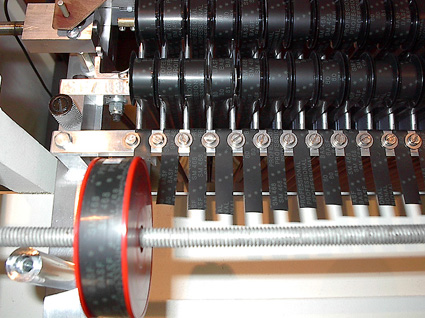
Re: [newmellotrongroup] What's in a name?

2011-09-05 by john barrick

Crystal clear, Tony.

On Mon, Sep 5, 2011 at 1:21 PM, Tony <atm655@verizon.net> wrote:

My 2 cents worth.
If John and Martin didn’t make it, I’m not buying it.
I have a Mellotron, and have an M4000 ordered.
It’s name has changed, but the “real” people are building it for me.
I don’t give a shit about the Swedish stuff, period!
Get it?
Tony Ph.D.
Sent: Monday, September 05, 2011 3:07 AM
Subject: Re: [newmellotrongroup] What's in a name?

So, let me get this straight:
Markus is making a machine that technically isn't a Mellotron, but he's allowed to use the name.
Streetly are making a machine that technically is a Mellotron, but aren't.
Somewhere in there lies the idiocy of patent law.
Andy T.


--
john barrick

*Leo got it right the first time*
*then he added a second pickup and got it righter*

Re: [newmellotrongroup] What's in a name?

2011-09-05 by fdoddy@aol.com

I liked this list better when it was just about politics and hating people. This copyright shit is boring.....

fritz
Show quoted textHide quoted text
-----Original Message-----
From: Mike Dickson <mike.dickson@gmail.com>
To: newmellotrongroup <newmellotrongroup@yahoogroups.com>
Sent: Mon, Sep 5, 2011 8:58 am
Subject: Re: [newmellotrongroup] What's in a name?


        On 05/09/2011 11:01, Chris Dale wrote:    
                       
            
On Mon, Sep 5, 2011 at 4:14 AM, Mike Dickson <mike.dickson@gmail.com>              wrote:


 Again, no he wouldn't.  A trade mark is any                        sign capable of being represented graphically                        which is capable of distinguishing goods or                        services of one undertaking from those of other                        undertakings.  Characters or character names in                        a work of fiction would not apply under such a                        set of circumstances  - again, they would come                        under the aegis of copyright, although the                        definitions are much less clear than you may                        imagine.  


Yes, true but how would he be able to use character                names such as "Commander Cody" "Klaatu", "Barada",                "Nikto"?


    He could certainly use them if he wanted.  (I had to look up the    names since I didn't realise that he had - I'm not much of a fan of    his stuff in particular or blockbuster films in general)    Within copyright law lies the realm of 'fair use' which in essence    says that you can use other people's works or the product of their    works in certain circumstances, such as criticism or parody.  When    is fair use not fair use at all but plagarism?  That's the narrow    slot within which copyright lawyers make most of their money.  
    
    George Harrison's fairly shameless rip off of 'He's So Fine' revealed    that in music the minimum amount that you can use to make a phrase    is three notes - two is just an interval.  More modern legal efforts    have shown that you really cannot do much less than that.  Attempts    by EMI to sue for plagarism all the people who sampled the snare and    kick drum sounds from the intro to 'Lets Dance' proved not    only fruitless but a tad embarrassing when it was revealed that in    actual fact the processed sound itself was sampled from 'Moby      Dick'.  (Also ironic, given the amount of ripping-off that Led    Zeppelin performed in their career to blues men like Willie Dixon    whom they assumed no one else had ever heard) 
    
    One fine division lies in the concept of 'homage'.  When does    something stop being a supportive but derivative work and instead    become plagarism?  Again, this sort of thing propels the children of    lawyers through an existence at University, with no doubt a fair    proportion of them going on to follow in the family law firm -    perhaps another reason for hating laws regarding copyright, designs    and patents.  
    
    Incidentally, ignorance is not a competent defence.  If George    Harrison had - by some miracle of bad luck - not heard anything by    the Chiffons he still would have no excuses, which seems incredible    given that I would hazard that in order to copy something you have    to be aware of what it is you are copying.  Hodson v Hutchison      Software Publishing (1978) showed that even if you argue that    a common problem requires the application of two nearly identical    solutions - even if reached in ignorance of the other - the law will    still maintain that the latter version is a copy of the former.     Amazing.
    
    So George Lucas used Commander Cody because he wanted to.  It    probably constituted fair use.  Of course the name had already been    copied in the interim, so he had precedent to rely upon. 
    
    The amount of 'fair use' you can invoke is an interesting and    inverse question to the one which asks how much you can feasibly    copyright.  Theoretically, you have copyright on your shopping list    if you really want to.  All you have to do is assert that the work    is yours.  Some things do prove sticky for some firms though, such    as Intel.  After the 486 chip they planned on making (guess what)    the 586, but AMD beat them to it by a few months.  Intel sued and    lost since the court told them that you cannot invoke copyright on a    number.  Neither can you use it as a trademark, hence the launch of    the Pentium processor.  Having said that, Chanel are permitted to    use as a trade mark 'No 5'. How can they do this? Because    trademarks (as we said before) brought out in specific commercial    areas, in this case cosmetics.  If Dior tried to make 'Dior No 5'    then they would be in trouble.  If I want to make a lawn mower and    call it 'No 5' I'd be OK.  Say Chanel thought themselves wise to my    evil ways and tried to extend their trade mark to that area.  They    would still fail, unless they had some valid reason for doing so    (other than fucking up my nascent trade in grass husbandry).     
    
    Hence, the Ford Mellotron might be upon us.  You could use it to    drive to the pub, have a pint of Mellotron Ale and a packet of    Mellotron flavoured crisps.  And no one would be any worse off.    (Unless you had eight pints of it and tried to drive home)


Those are all names and words appearing in other                sci-fi films long before Star Wars. He stole lots of                other idea props from other films too - the Flash Gordon                videoscreen, Logan's Run hologram, etc.etc.   


    He did.  Why wasn't he sued? Class discuss.


     The pop musical hot beat combo                        'Wet Wet Wet' trademarked their name in                        categories related to printed material and won a                        case against an author who wrote a book about                        them which used their name in the title.  


What a bunch of class A assholes. I'm sorry, but why                anyone would bother to write a book about such                non-entities is beyond me. I would think they'd be                grateful for any possible publicity they got. To me,                their version of Love Is All Around was an overproduced                teenage Karaoke session  - them flubbing the timing of                the lyrics as they sang the second half. Evidence of                horrendously low standards (and not an artistic                move)  - and that's being kind. They might be well known                and respected in Britain, but over here in Canada they                may as well be working a McDonald's drive thru. They're                as forgettable as the lint in an elephants' belly                button. 


    Well, I happen not to care very much for them either (you're better    off than me, as you can name one thing they sang - I cannot say    anything much about them) but I will have to admit that they were in    the right here.  It is not inconceivable that someone involved in    music will move into print as well, particularly when you consider    sheet music, etc.  In some way the author may have been giving the    impression that it was 'band authorised' when it was not.  And I    don't think they are 'known and respect in Britain' all    that much, other than by lonely and disillusioned middle-aged women    who long for the lost landscapes of their half-forgotten youth when    they were still beautiful and life promised more than it delivered.     Possibly.
    
    In any event, most people end up being forgotten, given enough time.    


Under patent legislation, one                                    person holds the patent and can                                    licence others to manufacture the                                    product as it sees fit.  Hence,                                    Markus is making Mellotrons                                    and Streetly are making mellotrons.                                    There is a difference.


Yes - but only in the spelling of the name,  not in                the functions of the instrument. I guess I should have                been more clear. I was referring to the functions of the                instrument covered in the patent - which is what                ultimately matters. 


    Actually one guy is making the Mellotron which isn't and the others    are making a mellotron which cannot be.  If you find this concept    difficult then I strongly advise against a career in law.  There are    far more weird decisions than this floating in the    law books.
    
    Mike

RE: [newmellotrongroup] What's in a name? [1 Attachment]

2011-09-05 by Gary Brumm

M4000D is a model number so I don’t think it applies. There are many similar model numbers in the world.

I don’t think it will affect a single sale of anything one way or the other. It’s probably not worth pursuing

legally in any case……..

Show quoted textHide quoted text

From: newmellotrongroup@yahoogroups.com [mailto:newmellotrongroup@yahoogroups.com] On Behalf Of Andy kinch
Sent: Monday, September 05, 2011 12:56 AM
To: newmellotrongroup@yahoogroups.com
Subject: Re: [newmellotrongroup] What's in a name? [1 Attachment]

[Attachment(s) from Andy kinch included below]

So, whats to stop Markus from putting the illuminated Mellotron logo on the front of his digital unit? Surely by doing so, even if it is not a Mellotron in the way the patent describes it, he can do it by virtue of the fact that he is using the name of the legally aquired company! In the same way my Washing Machine carries the "Hoover" name.

As far as I can see, the only thing he has done wrong, (and it is a massive "wrong" IMO) whilst accepting that he probaly saw "a business opportunity" is the use of the M4000D name. Unwise to do that in every other respect, and will doubtless cost him "some" though I would suggest, not many sales. Though judging by the ever growing waiting list, he may not be too concerned with that at the moment.

Anyway on a lighter subject, I thought you might want to take a look inside. And whatever you think of Markus and/ or his creation, the build and attention to detail is extraordinary!


The other thing I'm finding is that because you can create playlists of the sounds you can combine sounds from any machine very quickly, and because everything has been timed, the potential for unusual sound combinations is huge.

Andy K

-----Original Message-----
From: Chris Dale <unobtainiumkeys@gmail.com>
To: newmellotrongroup <newmellotrongroup@yahoogroups.com>
Sent: Mon, 5 Sep 2011 7:55
Subject: Re: [newmellotrongroup] What's in a name?

No - nothing of the sort. He's not violating them.

He has the exclusive license to use the names "Mellotron" and "Chamberlin" in the promotion of new products produced by "Mellotron USA".

They can be digital or tape based products but the digital ones can never be legally referred to as Mellotrons or Chamberlins.

To actually legally apply the name "Mellotron" to a product - to be able to call it that - it must strictly be tape based and use the mechanical operations documented in the original 1963 patent. They cannot be veered away from regardless of who owns the name or who manufactures them.

Patents transcend copyright and trademarks. Patents are independent of the trends of business interests.

What you're calling a digital Mellotron is a computer - no different than a Kurzweil K2000. The word "Mellotron" applied to any digital or otherwise analog reproduction is a joke. It becomes a nickname with no legal or historical significance.

For example, even the Chamberlin and Birotron are not Mellotrons. Although they may make the same or similar sounds. You can have Chamberlin sounds in a Mellotron - but that does not make it a Chamberlin.


For it any of this name stuff to be taken seriously, there has to be an identical mechanical resemblance.

This is how Harry found out about his invention being stolen. A lawyer for patent law contacted him about a "British company" trying to get an overseas patent what he already invented in the USA in 1948.

Today, that original patent covers the MK VI and Streetly's M4000 even if Streetly doesn't own the name..

Hypothetically, even if Streetly claimed their M4000 wasn't a Mellotron, they would be wrong according to patent law.

When Harry Chamberlin created the M series using a new tape transport system, he had to file new patents for that.

When Wakeman's Birotronics Ltd devised the pre-production Birotron, they had to file new patents alongside Dave Biro's patent to cover the different tape arrangement from the original prototype.

The technology of using recording tape in a musical instrument to playback sound is what connects them all together. Because the technology was the same, the patents could be filed, and reference each other.

But digital and analog are two different technologies. You cannot classify completely different technologies within the same name. Patents are the backbone of law that prevent people labelling and calling things whatever they want without regard to history.


On Sun, Sep 4, 2011 at 11:07 PM, Andy kinch <kinchmusic@aol.com> wrote:

So are you saying Markus is violating the original patents by using Mellotron on the new instrument?

AK

-----Original Message-----
From: Chris Dale <unobtainiumkeys@gmail.com>
To: newmellotrongroup <newmellotrongroup@yahoogroups.com>
Sent: Sun, 4 Sep 2011 14:59
Subject: Re: [newmellotrongroup] What's in a name?

That's kind of it in a nutshell, though it's not the first time a Mellotron company built a digital product.

The "Studio Symphony XT-2000" of 1985 was the first digital machine built by Mellotron USA.

It was only ever a prototype yet the name 'Mellotron' was not used anywhere on it because it was not a Mellotron.

Any digital source that plays back Mellotron samples is not (and can never be) a Mellotron or referenced as such because the mention of digital technology is not included in the original patents in 1962 / 1963, nor referenced in Harry Chamberlins earlier patents.

The Mellotron, Chamberlin, and Birotron are defined and limited only to the scope of their patents. Although there are similarites the technical mechanisms and build materials are different.

How it operates, the materials used, etc. etc, right down to 'micro-metre' mechanical movements etc. etc. must be included in patents to separate all similar items from what they are and what they are not.

This is why it takes years to file and receive them .

Once it's filed, the patent for a manufactured item legally and legitimately defines it historically for all time - (forever).

Patents cannot be amended and are non-transferable.

For example George Lucas can modify 'Star Wars' all he wants but it hasn't been the 'original ' movie since 1981 when he added 'Episode IV" to the title which was not included in the original screening..

So because of that he would have to file multiple patents and copyrights each time he changes it.

Lucas owning the name doesn't make a difference. The name becomes equal to a button or 'badge' one would wear.


On Sun, Sep 4, 2011 at 7:45 AM, <lsf5275@aol.com> wrote:

My way of looking at is simple. If it has a keyboard and plays back prerecorded tape, it may not be a mellotron. If it does not play back prerecorded tape it cannot be a mellotron.

In a message dated 9/4/2011 3:50:43 A.M. Eastern Daylight Time, kinchmusic@aol.com writes:


I may have been asleep earlier in proceedings when this topic was raised. So forgive me asking, but what constitute the name "Mellotron"?

Is it a brand name or an electro mechanical Machine? Probably both, I know.

I mean we all have Hoovers in our homes, but I would suggest that only a few of us have Hoovers made by Hoover. I have a Dyson, but I still call it a Hoover for example.

Bear with me here, because I'm a tad confused.

It is my assumption that John and Martin build Mellotron "machines", but simply can't use the name because the brand name "Mellotron" was sold off.

But Markus can build the Digital Mellotron and call it Mellotron because he has permission to use the name, even though, some people would accept that

the 4000D is not a Mellotron.

As much as I love the instrument that Markus has produced, for the reasons I have stated elsewhere, there is no way do I think that it is a Mellotron, because to my mind,

by definition a Mellotron has to be a Mechanical Machine with motors, heads, tapes etc.

Come to think of it, I have a Hoover Washing Machine!

Beam me up Scotty!

Andy K

Re: What's in a name? [1 Attachment]

2011-09-05 by tron400

Here's a broken M4000D for sale on eBay:

http://www.ebay.com/itm/Swift-Microscope-Swift-M4000D-Series-parts-repair-/350459436626

Bernie

--- In newmellotrongroup@yahoogroups.com, Gary Brumm <gabru@...> wrote:
Show quoted textHide quoted text
>
> M4000D is a model number so I don’t think it applies.  There are many similar model numbers in the world.
> I don’t think it will affect a single sale of anything one way or the other.  It’s probably not worth pursuing
> legally in any case……..
> 
> From: newmellotrongroup@yahoogroups.com [mailto:newmellotrongroup@yahoogroups.com] On Behalf Of Andy kinch
> Sent: Monday, September 05, 2011 12:56 AM
> To: newmellotrongroup@yahoogroups.com
> Subject: Re: [newmellotrongroup] What's in a name? [1 Attachment]
> 
> 
> [Attachment(s) from Andy kinch included below]
> So, whats to stop Markus from putting the illuminated  Mellotron logo on the front of his digital unit? Surely by doing so, even if it is not a Mellotron in the way the patent describes it, he can do it by virtue of the fact that he is using the name of the legally aquired company! In the same way my Washing Machine carries the "Hoover" name.
> As far as I can see, the only thing he has done wrong, (and it is a massive "wrong" IMO) whilst accepting that he probaly saw "a business opportunity" is the use of the M4000D name. Unwise to do that in every other respect, and will doubtless cost him "some" though I would suggest, not many sales. Though judging by the ever growing waiting list, he may not be too concerned with that at the moment.
> Anyway on a lighter subject, I thought you might want to take a look inside. And whatever you think of Markus and/ or his creation, the build and attention to detail is extraordinary!
> [cid:image001.jpg@...]
> 
> 
> The other thing I'm finding is that because you can create playlists of the sounds you can combine sounds from any machine very quickly, and because everything has been timed, the potential for unusual sound combinations is huge.
> 
> Andy K
> -----Original Message-----
> From: Chris Dale <unobtainiumkeys@...<mailto:unobtainiumkeys@...>>
> To: newmellotrongroup <newmellotrongroup@yahoogroups.com<mailto:newmellotrongroup@yahoogroups.com>>
> Sent: Mon, 5 Sep 2011 7:55
> Subject: Re: [newmellotrongroup] What's in a name?
> 
> No - nothing of the sort. He's not violating them.
> 
> He has the exclusive license to use the names "Mellotron" and "Chamberlin" in the promotion of new products produced by "Mellotron USA".
> 
> They can be digital or tape based products but the digital ones can never be legally referred to as Mellotrons or Chamberlins.
> 
> To actually legally apply the name "Mellotron" to a product - to be able to call it that - it must strictly be tape based and use the mechanical operations documented in the original 1963 patent. They cannot be veered away from regardless of who owns the name or who manufactures them.
> 
> Patents transcend copyright and trademarks. Patents are independent of the trends of business interests.
> 
> What you're calling a digital Mellotron is a computer - no different than a Kurzweil K2000. The word "Mellotron" applied to any digital or otherwise analog reproduction is a joke. It becomes a nickname with no legal or historical significance.
> 
> For example, even the Chamberlin and Birotron are not Mellotrons. Although they may make the same or similar sounds. You can have Chamberlin sounds in a Mellotron - but that does not make it a Chamberlin.
> 
> 
> For it any of this name stuff to be taken seriously, there has to be an identical mechanical resemblance.
> 
> This is how Harry found out about his invention being stolen. A lawyer for patent law contacted him about a "British company" trying to get an overseas patent what he already invented in the USA in 1948.
> 
> Today, that original patent covers the MK VI and Streetly's M4000 even if Streetly doesn't own the name..
> 
> Hypothetically, even if Streetly claimed their M4000 wasn't a Mellotron, they would be wrong according to patent law.
> 
> When Harry Chamberlin created the M series using a new tape transport system, he had to file new patents for that.
> 
> When Wakeman's Birotronics Ltd devised the pre-production Birotron, they had to file new patents alongside Dave Biro's patent to cover the different tape arrangement from the original prototype.
> 
> The technology of  using recording tape in a musical instrument to playback sound is what connects them all together. Because the technology was the same, the patents could be filed, and reference each other.
> 
> But digital and analog are two different technologies. You cannot classify completely different technologies within the same name. Patents are the backbone of law that prevent people labelling and calling things whatever they want without regard to history.
> 
> 
> 
> 
> 
> 
> 
> 
> 
> 
> 
> 
> 
> 
> 
> 
> On Sun, Sep 4, 2011 at 11:07 PM, Andy kinch <kinchmusic@...<mailto:kinchmusic@...>> wrote:
> 
> So are you saying Markus is violating the original patents by using Mellotron on the new instrument?
> AK
> 
> -----Original Message-----
> From: Chris Dale <unobtainiumkeys@...<mailto:unobtainiumkeys@...>>
> To: newmellotrongroup <newmellotrongroup@yahoogroups.com<mailto:newmellotrongroup@yahoogroups.com>>
> Sent: Sun, 4 Sep 2011 14:59
> Subject: Re: [newmellotrongroup] What's in a name?
> 
> 
> That's kind of it in a nutshell, though it's not the first time a Mellotron company built a digital product.
> 
> 
> The "Studio Symphony XT-2000" of 1985 was the first digital machine built by Mellotron USA.
> It was only ever a prototype yet the name 'Mellotron' was not used anywhere on it because it was not a Mellotron.
> 
> Any digital source that plays back Mellotron samples is not (and can never be) a Mellotron or referenced as such because the mention of digital technology is not included in the original patents in 1962 / 1963, nor referenced in Harry Chamberlins earlier patents.
> 
> 
> The Mellotron, Chamberlin, and Birotron are defined and limited only to the scope of their patents. Although there are similarites the technical mechanisms and build materials are different.
> 
> How it operates, the materials used, etc. etc, right down to 'micro-metre' mechanical movements etc. etc. must be included in patents to separate all similar items from what they are and what they are not.
> 
> This is why it takes years to file and receive them .
> 
> 
> Once it's filed, the patent for a manufactured item legally and legitimately defines it historically for all time - (forever).
> 
> Patents cannot be amended and are non-transferable.
> 
> 
> For example George Lucas can modify 'Star Wars' all he wants but it hasn't been the 'original ' movie since 1981 when he added 'Episode IV" to the title which was not included in the original screening..
> 
> So because of that he would have to file multiple patents and copyrights each time he changes it.
> 
> Lucas owning the name doesn't make a difference. The name becomes equal to a button or 'badge' one would wear.
> 
> 
> 
> 
> 
> 
> 
> 
> 
> 
> 
> 
> 
> 
> 
> 
> 
> 
> 
> 
> 
> 
> 
> On Sun, Sep 4, 2011 at 7:45 AM, <lsf5275@...<mailto:lsf5275@...>> wrote:
> 
> My way of looking at is simple. If it has a keyboard and plays back prerecorded tape, it may not be a mellotron. If it does not play back prerecorded tape it cannot be a mellotron.
> 
> In a message dated 9/4/2011 3:50:43 A.M. Eastern Daylight Time, kinchmusic@...<mailto:kinchmusic@...> writes:
> 
> 
> I may have been asleep earlier in proceedings when this topic was raised. So forgive me asking, but what constitute the name "Mellotron"?
> 
> Is it a brand name or an electro mechanical Machine? Probably both, I know.
> 
> I mean we all have Hoovers in our homes, but I would suggest that only a few of us have Hoovers made by Hoover. I have a Dyson, but I still call it a Hoover for example.
> 
> Bear with me here, because I'm a tad confused.
> 
> It is my assumption that John and Martin build Mellotron "machines", but simply can't use the name because the brand name "Mellotron" was sold off.
> 
> But Markus can build the Digital Mellotron and call it Mellotron because he has permission to use the name, even though, some people would accept that
> 
> the 4000D is not a Mellotron.
> 
> As much as I love the instrument that Markus has produced, for the reasons I have stated elsewhere, there is no way do I think that it is a Mellotron, because to my mind,
> 
> by definition a Mellotron has to be a Mechanical Machine with motors, heads, tapes etc.
> 
> Come to think of it, I have a Hoover Washing Machine!
> 
> Beam me up Scotty!
> 
> 
> Andy K
>

Re: [newmellotrongroup] What's in a name?

2011-09-05 by Tony

My 2 cents worth.
If John and Martin didn’t make it, I’m not buying it.
I have a Mellotron, and have an M4000 ordered.
It’s name has changed, but the “real” people are building it for me.
I don’t give a shit about the Swedish stuff, period!
Get it?
Tony Ph.D.
Show quoted textHide quoted text
From: Andy Thompson 
Sent: Monday, September 05, 2011 3:07 AM
To: newmellotrongroup@yahoogroups.com 
Subject: Re: [newmellotrongroup] What's in a name?


So, let me get this straight:

Markus is making a machine that technically isn't a Mellotron, but he's allowed to use the name.
Streetly are making a machine that technically is a Mellotron, but aren't.

Somewhere in there lies the idiocy of patent law.

Andy T.

Re: [newmellotrongroup] Re: What's in a name?

2011-09-05 by Bruce Daily

It would be interesting if the product part number had a copyright.  A case of the chicken or the egg?  Eh, Makus?
 
  I would love to have a true stereoscopic microscope for electronic work.  We had them at the electronic company's repair benches where I used to work.  After they closed shop (and moved to cheaper "geographies"), I tried to find such a  'scope.  Gawd, they are expensive!  Along with a Metcal soldering setup and 1GHz o'scope, I didn't realize how well off we were.
 
   -Bruce D.


--- On Mon, 9/5/11, tron400 <tron400@yahoo.com> wrote:


From: tron400 <tron400@yahoo.com>
Subject: [newmellotrongroup] Re: What's in a name?
To: newmellotrongroup@yahoogroups.com
Date: Monday, September 5, 2011, 11:28 AM


Here's a broken M4000D for sale on eBay:

http://www.ebay.com/itm/Swift-Microscope-Swift-M4000D-Series-parts-repair-/350459436626

Bernie

--- In newmellotrongroup@yahoogroups.com, Gary Brumm <gabru@...> wrote:
Show quoted textHide quoted text
>
> M4000D is a model number so I don’t think it applies. There are many similar model numbers in the world.
> I don’t think it will affect a single sale of anything one way or the other. It’s probably not worth pursuing
> legally in any case……..
> 
> From: newmellotrongroup@yahoogroups.com [mailto:newmellotrongroup@yahoogroups.com] On Behalf Of Andy kinch
> Sent: Monday, September 05, 2011 12:56 AM
> To: newmellotrongroup@yahoogroups.com
> Subject: Re: [newmellotrongroup] What's in a name? [1 Attachment]
> 
> 
> [Attachment(s) from Andy kinch included below]
> So, whats to stop Markus from putting the illuminated Mellotron logo on the front of his digital unit? Surely by doing so, even if it is not a Mellotron in the way the patent describes it, he can do it by virtue of the fact that he is using the name of the legally aquired company! In the same way my Washing Machine carries the "Hoover" name.
> As far as I can see, the only thing he has done wrong, (and it is a massive "wrong" IMO) whilst accepting that he probaly saw "a business opportunity" is the use of the M4000D name. Unwise to do that in every other respect, and will doubtless cost him "some" though I would suggest, not many sales. Though judging by the ever growing waiting list, he may not be too concerned with that at the moment.
> Anyway on a lighter subject, I thought you might want to take a look inside. And whatever you think of Markus and/ or his creation, the build and attention to detail is extraordinary!
> [cid:image001.jpg@...]
> 
> 
> The other thing I'm finding is that because you can create playlists of the sounds you can combine sounds from any machine very quickly, and because everything has been timed, the potential for unusual sound combinations is huge.
> 
> Andy K
> -----Original Message-----
> From: Chris Dale <unobtainiumkeys@...<mailto:unobtainiumkeys@...>>
> To: newmellotrongroup <newmellotrongroup@yahoogroups.com<mailto:newmellotrongroup@yahoogroups.com>>
> Sent: Mon, 5 Sep 2011 7:55
> Subject: Re: [newmellotrongroup] What's in a name?
> 
> No - nothing of the sort. He's not violating them.
> 
> He has the exclusive license to use the names "Mellotron" and "Chamberlin" in the promotion of new products produced by "Mellotron USA".
> 
> They can be digital or tape based products but the digital ones can never be legally referred to as Mellotrons or Chamberlins.
> 
> To actually legally apply the name "Mellotron" to a product - to be able to call it that - it must strictly be tape based and use the mechanical operations documented in the original 1963 patent. They cannot be veered away from regardless of who owns the name or who manufactures them.
> 
> Patents transcend copyright and trademarks. Patents are independent of the trends of business interests.
> 
> What you're calling a digital Mellotron is a computer - no different than a Kurzweil K2000. The word "Mellotron" applied to any digital or otherwise analog reproduction is a joke. It becomes a nickname with no legal or historical significance.
> 
> For example, even the Chamberlin and Birotron are not Mellotrons. Although they may make the same or similar sounds. You can have Chamberlin sounds in a Mellotron - but that does not make it a Chamberlin.
> 
> 
> For it any of this name stuff to be taken seriously, there has to be an identical mechanical resemblance.
> 
> This is how Harry found out about his invention being stolen. A lawyer for patent law contacted him about a "British company" trying to get an overseas patent what he already invented in the USA in 1948.
> 
> Today, that original patent covers the MK VI and Streetly's M4000 even if Streetly doesn't own the name..
> 
> Hypothetically, even if Streetly claimed their M4000 wasn't a Mellotron, they would be wrong according to patent law.
> 
> When Harry Chamberlin created the M series using a new tape transport system, he had to file new patents for that.
> 
> When Wakeman's Birotronics Ltd devised the pre-production Birotron, they had to file new patents alongside Dave Biro's patent to cover the different tape arrangement from the original prototype.
> 
> The technology of using recording tape in a musical instrument to playback sound is what connects them all together. Because the technology was the same, the patents could be filed, and reference each other.
> 
> But digital and analog are two different technologies. You cannot classify completely different technologies within the same name. Patents are the backbone of law that prevent people labelling and calling things whatever they want without regard to history.
> 
> 
> 
> 
> 
> 
> 
> 
> 
> 
> 
> 
> 
> 
> 
> 
> On Sun, Sep 4, 2011 at 11:07 PM, Andy kinch <kinchmusic@...<mailto:kinchmusic@...>> wrote:
> 
> So are you saying Markus is violating the original patents by using Mellotron on the new instrument?
> AK
> 
> -----Original Message-----
> From: Chris Dale <unobtainiumkeys@...<mailto:unobtainiumkeys@...>>
> To: newmellotrongroup <newmellotrongroup@yahoogroups.com<mailto:newmellotrongroup@yahoogroups.com>>
> Sent: Sun, 4 Sep 2011 14:59
> Subject: Re: [newmellotrongroup] What's in a name?
> 
> 
> That's kind of it in a nutshell, though it's not the first time a Mellotron company built a digital product.
> 
> 
> The "Studio Symphony XT-2000" of 1985 was the first digital machine built by Mellotron USA.
> It was only ever a prototype yet the name 'Mellotron' was not used anywhere on it because it was not a Mellotron.
> 
> Any digital source that plays back Mellotron samples is not (and can never be) a Mellotron or referenced as such because the mention of digital technology is not included in the original patents in 1962 / 1963, nor referenced in Harry Chamberlins earlier patents.
> 
> 
> The Mellotron, Chamberlin, and Birotron are defined and limited only to the scope of their patents. Although there are similarites the technical mechanisms and build materials are different.
> 
> How it operates, the materials used, etc. etc, right down to 'micro-metre' mechanical movements etc. etc. must be included in patents to separate all similar items from what they are and what they are not.
> 
> This is why it takes years to file and receive them .
> 
> 
> Once it's filed, the patent for a manufactured item legally and legitimately defines it historically for all time - (forever).
> 
> Patents cannot be amended and are non-transferable.
> 
> 
> For example George Lucas can modify 'Star Wars' all he wants but it hasn't been the 'original ' movie since 1981 when he added 'Episode IV" to the title which was not included in the original screening..
> 
> So because of that he would have to file multiple patents and copyrights each time he changes it.
> 
> Lucas owning the name doesn't make a difference. The name becomes equal to a button or 'badge' one would wear.
> 
> 
> 
> 
> 
> 
> 
> 
> 
> 
> 
> 
> 
> 
> 
> 
> 
> 
> 
> 
> 
> 
> 
> On Sun, Sep 4, 2011 at 7:45 AM, <lsf5275@...<mailto:lsf5275@...>> wrote:
> 
> My way of looking at is simple. If it has a keyboard and plays back prerecorded tape, it may not be a mellotron. If it does not play back prerecorded tape it cannot be a mellotron.
> 
> In a message dated 9/4/2011 3:50:43 A.M. Eastern Daylight Time, kinchmusic@...<mailto:kinchmusic@...> writes:
> 
> 
> I may have been asleep earlier in proceedings when this topic was raised. So forgive me asking, but what constitute the name "Mellotron"?
> 
> Is it a brand name or an electro mechanical Machine? Probably both, I know.
> 
> I mean we all have Hoovers in our homes, but I would suggest that only a few of us have Hoovers made by Hoover. I have a Dyson, but I still call it a Hoover for example.
> 
> Bear with me here, because I'm a tad confused.
> 
> It is my assumption that John and Martin build Mellotron "machines", but simply can't use the name because the brand name "Mellotron" was sold off.
> 
> But Markus can build the Digital Mellotron and call it Mellotron because he has permission to use the name, even though, some people would accept that
> 
> the 4000D is not a Mellotron.
> 
> As much as I love the instrument that Markus has produced, for the reasons I have stated elsewhere, there is no way do I think that it is a Mellotron, because to my mind,
> 
> by definition a Mellotron has to be a Mechanical Machine with motors, heads, tapes etc.
> 
> Come to think of it, I have a Hoover Washing Machine!
> 
> Beam me up Scotty!
> 
> 
> Andy K
>

Re: What's in a name?

2011-09-05 by mellotronmadness

Hmm mellotron flavoured crisps? That would be the same as mouse wouldn't it?

Mark

Re: [newmellotrongroup] Re: What's in a name?

2011-09-05 by fdoddy@aol.com

haha

fritz


-----Original Message-----
From: tron400 <tron400@yahoo.com>
To: newmellotrongroup <newmellotrongroup@yahoogroups.com>
Sent: Mon, Sep 5, 2011 1:28 pm
Subject: [newmellotrongroup] Re: What's in a name?


Here's a broken M4000D for sale on eBay:

http://www.ebay.com/itm/Swift-Microscope-Swift-M4000D-Series-parts-repair-/350459436626

Bernie

--- In newmellotrongroup@yahoogroups.com, Gary Brumm <gabru@...> wrote:
Show quoted textHide quoted text
>
> M4000D is a model number so I don’t think it applies.  There are many similar model numbers in the world.
> I don’t think it will affect a single sale of anything one way or the other.  It’s probably not worth pursuing
> legally in any case……..
> 
> From: newmellotrongroup@yahoogroups.com [mailto:newmellotrongroup@yahoogroups.com] On Behalf Of Andy kinch
> Sent: Monday, September 05, 2011 12:56 AM
> To: newmellotrongroup@yahoogroups.com
> Subject: Re: [newmellotrongroup] What's in a name? [1 Attachment]
> 
> 
> [Attachment(s) from Andy kinch included below]
> So, whats to stop Markus from putting the illuminated  Mellotron logo on the front of his digital unit? Surely by doing so, even if it is not a Mellotron in the way the patent describes it, he can do it by virtue of the fact that he is using the name of the legally aquired company! In the same way my Washing Machine carries the "Hoover" name.
> As far as I can see, the only thing he has done wrong, (and it is a massive "wrong" IMO) whilst accepting that he probaly saw "a business opportunity" is the use of the M4000D name. Unwise to do that in every other respect, and will doubtless cost him "some" though I would suggest, not many sales. Though judging by the ever growing waiting list, he may not be too concerned with that at the moment.
> Anyway on a lighter subject, I thought you might want to take a look inside. And whatever you think of Markus and/ or his creation, the build and attention to detail is extraordinary!
> [cid:image001.jpg@...]
> 
> 
> The other thing I'm finding is that because you can create playlists of the sounds you can combine sounds from any machine very quickly, and because everything has been timed, the potential for unusual sound combinations is huge.
> 
> Andy K
> -----Original Message-----
> From: Chris Dale <unobtainiumkeys@...<mailto:unobtainiumkeys@...>>;
> To: newmellotrongroup <newmellotrongroup@yahoogroups.com<mailto:newmellotrongroup@yahoogroups.com>>
> Sent: Mon, 5 Sep 2011 7:55
> Subject: Re: [newmellotrongroup] What's in a name?
> 
> No - nothing of the sort. He's not violating them.
> 
> He has the exclusive license to use the names "Mellotron" and "Chamberlin" in the promotion of new products produced by "Mellotron USA".
> 
> They can be digital or tape based products but the digital ones can never be legally referred to as Mellotrons or Chamberlins.
> 
> To actually legally apply the name "Mellotron" to a product - to be able to call it that - it must strictly be tape based and use the mechanical operations documented in the original 1963 patent. They cannot be veered away from regardless of who owns the name or who manufactures them.
> 
> Patents transcend copyright and trademarks. Patents are independent of the trends of business interests.
> 
> What you're calling a digital Mellotron is a computer - no different than a Kurzweil K2000. The word "Mellotron" applied to any digital or otherwise analog reproduction is a joke. It becomes a nickname with no legal or historical significance.
> 
> For example, even the Chamberlin and Birotron are not Mellotrons. Although they may make the same or similar sounds. You can have Chamberlin sounds in a Mellotron - but that does not make it a Chamberlin.
> 
> 
> For it any of this name stuff to be taken seriously, there has to be an identical mechanical resemblance.
> 
> This is how Harry found out about his invention being stolen. A lawyer for patent law contacted him about a "British company" trying to get an overseas patent what he already invented in the USA in 1948.
> 
> Today, that original patent covers the MK VI and Streetly's M4000 even if Streetly doesn't own the name..
> 
> Hypothetically, even if Streetly claimed their M4000 wasn't a Mellotron, they would be wrong according to patent law.
> 
> When Harry Chamberlin created the M series using a new tape transport system, he had to file new patents for that.
> 
> When Wakeman's Birotronics Ltd devised the pre-production Birotron, they had to file new patents alongside Dave Biro's patent to cover the different tape arrangement from the original prototype.
> 
> The technology of  using recording tape in a musical instrument to playback sound is what connects them all together. Because the technology was the same, the patents could be filed, and reference each other.
> 
> But digital and analog are two different technologies. You cannot classify completely different technologies within the same name. Patents are the backbone of law that prevent people labelling and calling things whatever they want without regard to history.
> 
> 
> 
> 
> 
> 
> 
> 
> 
> 
> 
> 
> 
> 
> 
> 
> On Sun, Sep 4, 2011 at 11:07 PM, Andy kinch <kinchmusic@...<mailto:kinchmusic@...>>; wrote:
> 
> So are you saying Markus is violating the original patents by using Mellotron on the new instrument?
> AK
> 
> -----Original Message-----
> From: Chris Dale <unobtainiumkeys@...<mailto:unobtainiumkeys@...>>;
> To: newmellotrongroup <newmellotrongroup@yahoogroups.com<mailto:newmellotrongroup@yahoogroups.com>>
> Sent: Sun, 4 Sep 2011 14:59
> Subject: Re: [newmellotrongroup] What's in a name?
> 
> 
> That's kind of it in a nutshell, though it's not the first time a Mellotron company built a digital product.
> 
> 
> The "Studio Symphony XT-2000" of 1985 was the first digital machine built by Mellotron USA.
> It was only ever a prototype yet the name 'Mellotron' was not used anywhere on it because it was not a Mellotron.
> 
> Any digital source that plays back Mellotron samples is not (and can never be) a Mellotron or referenced as such because the mention of digital technology is not included in the original patents in 1962 / 1963, nor referenced in Harry Chamberlins earlier patents.
> 
> 
> The Mellotron, Chamberlin, and Birotron are defined and limited only to the scope of their patents. Although there are similarites the technical mechanisms and build materials are different.
> 
> How it operates, the materials used, etc. etc, right down to 'micro-metre' mechanical movements etc. etc. must be included in patents to separate all similar items from what they are and what they are not.
> 
> This is why it takes years to file and receive them .
> 
> 
> Once it's filed, the patent for a manufactured item legally and legitimately defines it historically for all time - (forever).
> 
> Patents cannot be amended and are non-transferable.
> 
> 
> For example George Lucas can modify 'Star Wars' all he wants but it hasn't been the 'original ' movie since 1981 when he added 'Episode IV" to the title which was not included in the original screening..
> 
> So because of that he would have to file multiple patents and copyrights each time he changes it.
> 
> Lucas owning the name doesn't make a difference. The name becomes equal to a button or 'badge' one would wear.
> 
> 
> 
> 
> 
> 
> 
> 
> 
> 
> 
> 
> 
> 
> 
> 
> 
> 
> 
> 
> 
> 
> 
> On Sun, Sep 4, 2011 at 7:45 AM, <lsf5275@...<mailto:lsf5275@...>>; wrote:
> 
> My way of looking at is simple. If it has a keyboard and plays back prerecorded tape, it may not be a mellotron. If it does not play back prerecorded tape it cannot be a mellotron.
> 
> In a message dated 9/4/2011 3:50:43 A.M. Eastern Daylight Time, kinchmusic@...<mailto:kinchmusic@...>; writes:
> 
> 
> I may have been asleep earlier in proceedings when this topic was raised. So forgive me asking, but what constitute the name "Mellotron"?
> 
> Is it a brand name or an electro mechanical Machine? Probably both, I know.
> 
> I mean we all have Hoovers in our homes, but I would suggest that only a few of us have Hoovers made by Hoover. I have a Dyson, but I still call it a Hoover for example.
> 
> Bear with me here, because I'm a tad confused.
> 
> It is my assumption that John and Martin build Mellotron "machines", but simply can't use the name because the brand name "Mellotron" was sold off.
> 
> But Markus can build the Digital Mellotron and call it Mellotron because he has permission to use the name, even though, some people would accept that
> 
> the 4000D is not a Mellotron.
> 
> As much as I love the instrument that Markus has produced, for the reasons I have stated elsewhere, there is no way do I think that it is a Mellotron, because to my mind,
> 
> by definition a Mellotron has to be a Mechanical Machine with motors, heads, tapes etc.
> 
> Come to think of it, I have a Hoover Washing Machine!
> 
> Beam me up Scotty!
> 
> 
> Andy K
>

Re: [newmellotrongroup] What's in a name?

2011-09-06 by Chris Dale

I have a more pertinent question:


Why isn't James Cameron getting his innards ripped out and his legal ass sued for ripping off every Roger Dean record cover in existence for his movie Avatar?

I've never been more horrified by such a blatant rip off than that. (And I've met Roger and he's not happy about it either)


It makes Sheryl Crows' "All I Want To Do" (a rip off of Stealers Wheel9;s "Stuck In The Middle With You") almost acceptable.
Show quoted textHide quoted text
On Mon, Sep 5, 2011 at 9:58 PM, Mike Dickson <mike.dickson@gmail.com> wrote:

On 05/09/2011 11:01, Chris Dale wrote:

On Mon, Sep 5, 2011 at 4:14 AM, Mike Dickson <mike.dickson@gmail.com> wrote:


Again, no he wouldn't. A trade mark is any sign capable of being represented graphically which is capable of distinguishing goods or services of one undertaking from those of other undertakings. Characters or character names in a work of fiction would not apply under such a set of circumstances - again, they would come under the aegis of copyright, although the definitions are much less clear than you may imagine.
Yes, true but how would he be able to use character names such as "Commander Cody" "Klaatu", "Barada", "Nikto"?

He could certainly use them if he wanted. (I had to look up the names since I didn't realise that he had - I9;m not much of a fan of his stuff in particular or blockbuster films in general) Within copyright law lies the realm of 'fair use' which in essence says that you can use other people's works or the product of their works in certain circumstances, such as criticism or parody. When is fair use not fair use at all but plagarism? That's the narrow slot within which copyright lawyers make most of their money.

George Harrison's fairly shameless rip off of 'He's So Fine' revealed that in music the minimum amount that you can use to make a phrase is three notes - two is just an interval. More modern legal efforts have shown that you really cannot do much less than that. Attempts by EMI to sue for plagarism all the people who sampled the snare and kick drum sounds from the intro to 'Lets Dance' proved not only fruitless but a tad embarrassing when it was revealed that in actual fact the processed sound itself was sampled from 'Moby Dick'. (Also ironic, given the amount of ripping-off that Led Zeppelin performed in their career to blues men like Willie Dixon whom they assumed no one else had ever heard)

One fine division lies in the concept of 'homage'. When does something stop being a supportive but derivative work and instead become plagarism? Again, this sort of thing propels the children of lawyers through an existence at University, with no doubt a fair proportion of them going on to follow in the family law firm - perhaps another reason for hating laws regarding copyright, designs and patents.

Incidentally, ignorance is not a competent defence. If George Harrison had - by some miracle of bad luck - not heard anything by the Chiffons he still would have no excuses, which seems incredible given that I would hazard that in order to copy something you have to be aware of what it is you are copying. Hodson v Hutchison Software Publishing (1978) showed that even if you argue that a common problem requires the application of two nearly identical solutions - even if reached in ignorance of the other - the law will still maintain that the latter version is a copy of the former. Amazing.

So George Lucas used Commander Cody because he wanted to. It probably constituted fair use. Of course the name had already been copied in the interim, so he had precedent to rely upon.

The amount of 'fair use' you can invoke is an interesting and inverse question to the one which asks how much you can feasibly copyright. Theoretically, you have copyright on your shopping list if you really want to. All you have to do is assert that the work is yours. Some things do prove sticky for some firms though, such as Intel. After the 486 chip they planned on making (guess what) the 586, but AMD beat them to it by a few months. Intel sued and lost since the court told them that you cannot invoke copyright on a number. Neither can you use it as a trademark, hence the launch of the Pentium processor. Having said that, Chanel are permitted to use as a trade mark 'No 5'. How can they do this? Because trademarks (as we said before) brought out in specific commercial areas, in this case cosmetics. If Dior tried to make 'Dior No 5' then they would be in trouble. If I want to make a lawn mower and call it 'No 5' I'd be OK. Say Chanel thought themselves wise to my evil ways and tried to extend their trade mark to that area. They would still fail, unless they had some valid reason for doing so (other than fucking up my nascent trade in grass husbandry).

Hence, the Ford Mellotron might be upon us. You could use it to drive to the pub, have a pint of Mellotron Ale and a packet of Mellotron flavoured crisps. And no one would be any worse off. (Unless you had eight pints of it and tried to drive home)


Those are all names and words appearing in other sci-fi films long before Star Wars. He stole lots of other idea props from other films too - the Flash Gordon videoscreen, Logan's Run hologram, etc.etc.

He did. Why wasn't he sued? Class discuss.


The pop musical hot beat combo 'Wet Wet Wet' trademarked their name in categories related to printed material and won a case against an author who wrote a book about them which used their name in the title.
What a bunch of class A assholes. I'm sorry, but why anyone would bother to write a book about such non-entities is beyond me. I would think they'd be grateful for any possible publicity they got. To me, their version of Love Is All Around was an overproduced teenage Karaoke session - them flubbing the timing of the lyrics as they sang the second half. Evidence of horrendously low standards (and not an artistic move) - and that's being kind. They might be well known and respected in Britain, but over here in Canada they may as well be working a McDonald's drive thru. They're as forgettable as the lint in an elephants' belly button.

Well, I happen not to care very much for them either (you're better off than me, as you can name one thing they sang - I cannot say anything much about them) but I will have to admit that they were in the right here. It is not inconceivable that someone involved in music will move into print as well, particularly when you consider sheet music, etc. In some way the author may have been giving the impression that it was 'band authorised' when it was not. And I don't think they are 'known and respect in Britain' all that much, other than by lonely and disillusioned middle-aged women who long for the lost landscapes of their half-forgotten youth when they were still beautiful and life promised more than it delivered. Possibly.

In any event, most people end up being forgotten, given enough time.


Under patent legislation, one person holds the patent and can licence others to manufacture the product as it sees fit. Hence, Markus is making Mellotrons and Streetly are making mellotrons. There is a difference.

Yes - but only in the spelling of the name, not in the functions of the instrument. I guess I should have been more clear. I was referring to the functions of the instrument covered in the patent - which is what ultimately matters.

Actually one guy is making the Mellotron which isn't and the others are making a mellotron which cannot be. If you find this concept difficult then I strongly advise against a career in law. There are far more weird decisions than this floating in the law books.

Mike

Re: What's in a name?

2011-09-06 by ClayE

I don't see much similarity between Roger Dean's stuff and Avatar.  OK mountain things floating in the air.  So what?  Are you off your meds again Chris?


--- In newmellotrongroup@yahoogroups.com, Chris Dale <unobtainiumkeys@...> wrote:
Show quoted textHide quoted text
>
> I have a more pertinent question:
> 
> 
> Why isn't James Cameron getting his innards ripped out and his legal ass
> sued for ripping off every Roger Dean record cover in existence for his
> movie Avatar?

Re: [newmellotrongroup] Re: What's in a name?

2011-09-06 by gino wong

It all looks like the southwest to me.

On Mon, Sep 5, 2011 at 11:30 PM, ClayE <ecclesreinson@rogers.com> wrote:

I don't see much similarity between Roger Dean's stuff and Avatar. OK mountain things floating in the air. So what? Are you off your meds again Chris?


--- In newmellotrongroup@yahoogroups.com, Chris Dale wrote:
>
> I have a more pertinent question:
>
>
>; Why isn't James Cameron getting his innards ripped out and his legal ass
> sued for ripping off every Roger Dean record cover in existence for his
> movie Avatar?


--

Gino Wong Birgelo
BSComm, BSEE & BS in general
Audio Production, Logistics, Synthesizers and sound design


Re: [newmellotrongroup] What's in a name?

2011-09-06 by Mike Dickson

On 06/09/2011 03:24, Chris Dale wrote:
\ufffd

I have a more pertinent question:

Why isn't James Cameron getting his innards ripped out and his legal ass sued for ripping off every Roger Dean record cover in existence for his movie Avatar?


Because there exists no similarity between them?

Re: [newmellotrongroup] What's in a name?

2011-09-06 by lsf5275@aol.com

Nah, it's pretty obvious when you watch the movie. Dean obviously inspired  
the shot, but I can see how he can make a claim. They borrowed a concept, 
not an  outright duplication.
 
 
In a message dated 9/6/2011 12:45:01 A.M. Eastern Daylight Time,  
mike.dickson@gmail.com writes:


On 06/09/2011 03:24, Chris Dale wrote:  
 
I have a more pertinent question:

Why isn't James Cameron getting  his innards ripped out and his legal ass 
sued for ripping off every Roger  Dean record cover in existence for his 
movie  Avatar?


Because there exists no similarity  between them?

Re: [newmellotrongroup] What's in a name?

2011-09-06 by Mike Dickson

You may be right, actually.� I watched Avatar and was bored from start to finish by it, so it may have escaped my attention.

On 06/09/2011 05:50, lsf5275@aol.com wrote:
Show quoted textHide quoted text

Nah, it's pretty obvious when you watch the movie. Dean obviously inspired the shot, but I can see how he can make a claim. They borrowed a concept, not an outright duplication.


Re: [newmellotrongroup] What's in a name?

2011-09-06 by lsf5275@aol.com

I meant to say, "can't see how he could make a  claim."
 
 
In a message dated 9/6/2011 3:09:11 A.M. Eastern Daylight Time,  
mike.dickson@gmail.com writes:


You may be right, actually.  I watched Avatar and  was bored from start to 
finish by it, so it may have escaped my  attention.

On 06/09/2011 05:50, _lsf5275@aol.com_ (mailto:lsf5275@aol.com)   wrote:  
 
Nah, it's pretty obvious when you  watch the movie. Dean obviously inspired 
the shot, but I can see how he can  make a claim. They borrowed a concept, 
not an outright  duplication.

Re: What's in a name?

2011-09-06 by ClayE

One of the Avatar design artists, Dylan Cole had this to say:
"I wasn't aware of Dean's work until I started the project, when another artist pointed it out. We looked at his work more as a novelty because it was similar subject matter, but it was not really as an influence. Dean's work has a whimsical quality that we absolutely wanted to avoid."

I saw Roger Dean last month at a blues festival featuring Johnny and Edgar Winter.  Roger was selling signed posters for $5.  Sad but true.  

Clay
  

--- In newmellotrongroup@yahoogroups.com, lsf5275@... wrote:
Show quoted textHide quoted text
>
> I meant to say, "can't see how he could make a  claim."
>  
>  
> In a message dated 9/6/2011 3:09:11 A.M. Eastern Daylight Time,  
> mike.dickson@... writes:
> 
>  
>  
>  
> You may be right, actually.  I watched Avatar and  was bored from start to 
> finish by it, so it may have escaped my  attention.
> 
> On 06/09/2011 05:50, _lsf5275@..._ (mailto:lsf5275@...)   wrote:  
>  
> Nah, it's pretty obvious when you  watch the movie. Dean obviously inspired 
> the shot, but I can see how he can  make a claim. They borrowed a concept, 
> not an outright  duplication.
>

Re: [newmellotrongroup] What's in a name?

2011-09-09 by Chris Dale

Hi Leureen:


Yes, it's an idea that we can explore. I'm not sure if they can tell you much now - especially Richards' mother (she's very old and hard of hearing) but we can discuss on the phone about it.

Talk to you soon.


Chris


On Thu, Sep 8, 2011 at 10:03 AM, Gerri Biton <gerribiton@yahoo.com> wrote:

Chris...I seemed to have overlooked this email from you. I would love for you to get in touch with Richard. If he is in Calif...it would not be hard to drive there. Or if he is willing to talk with me on the phone...that would be great. Even if Harrys wife is willing to talk to me...she maybe able remember some things about my father as well. Still looking forward to our call...leureen


--- On Sun, 9/4/11, Chris Dale <unobtainiumkeys@gmail.com> wrote:

Show quoted textHide quoted text
From: Chris Dale <unobtainiumkeys@gmail.com>
Subject: Re: [newmellotrongroup] What's in a name?
To: newmellotrongroup@yahoogroups.com
Date: Sunday, September 4, 2011, 7:03 PM


Hi Laureen:


I hope you're not too disappointed by this, but unfortunately no one on the list has had any direct contact with your father.

Some of us have information on him though.

Your father passed away in 1987 from a heart attack from what I understand. He used to eat very big meals late at night. He was a very large man.


There are two people I've personally met who have had direct contact though. One is John Bradley who you can reach through Martin in the UK on this list, and the other is Richard Chamberlin who resides in the USA.

I suppose I can get in touch with Richard if you like but their business relationship / friendship was several decades ago. There is also Richard's mother who is in her late 80's or early 90's and might still remember.

You will have to be patient though. I can't promise that they can answer your personal questions

Let me know and I'll see if I can help you.


Chris Dale


On Mon, Sep 5, 2011 at 7:21 AM, Gerri Biton <gerribiton@yahoo.com> wrote:
you all seem to know alot about mellotrons....but do any of you know anything about my father bill fransen? I am just trying to get some personal questions answered. i am just so desperate for any information anyone has....thank you....leureen fransen

--- On Sun, 9/4/11, john barrick <barrickjohn262@gmail.com> wrote:

From: john barrick <barrickjohn262@gmail.com>

Subject: Re: [newmellotrongroup] What's in a name?
To: newmellotrongroup@yahoogroups.com
Date: Sunday, September 4, 2011, 1:32 PM


No, It was legal, though it wasn't Marcus that acquired it. As you know, Gary, legal and "right" or proper, can often be two entirely different things. With that said, I don't know that I'd go as far as to say that there was anything improper about Marcus' end of the deal as far as the Mellotron name goes - his naming convention, however, as in M4000D, is entirely out of bounds and good business practice.

On Sun, Sep 4, 2011 at 3:05 PM, Gary Brumm <gabru@comsec.net> wrote:
Maybe I am missing something….did Marcus not acquire the Mellotron trademark legally?
From: newmellotrongroup@yahoogroups.com [mailto:newmellotrongroup@yahoogroups.com] On Behalf Of gino wong
Sent: Sunday, September 04, 2011 1:01 PM
To: newmellotrongroup@yahoogroups.com

Subject: Re: [newmellotrongroup] What's in a name?
I said it before and I'll say it again. Whoever owns the Mellotron trademark knows how it got where it got and how painful it has been to the people who labored to create the Mellotron. A truly decent proper gentleman of a human being would present it to Leslie Bradley's family with love and appreciation. Things would be better overall for it. More commerce would occur all the way around. It's not obvious but it is a fact.
To me, there is no question. it ias like somebody dropped a dollar on the street and you saw them do it. Do you walk fast for half a block and return it or do you pocket it. ?
It is that simple and it is going to define that person historically. Nobody will remember good guy or not. If these guys have children, they will never live it down, kids will never understand, it will get worse as they get older.
I don9;t understand why Markus thinks doing something like this buys him any respect or trust. People who invest money are looking to avoid people who have pulled moves like this. In this day and age, with all of the financial hurt this is the equivalent of a civil rights violation. I work for and advise an artist, very well known who will not be using his instrument and I will work for others and the people I have trained will hear the story, and there is no deciding for themselves. Bad form is bad form
On Sun, Sep 4, 2011 at 10:23 AM, tronbros <tronbros@aol.com> wrote:
The truth is that Markus has protected a name that he cannot protect. A colossal waste of time.

On 4 Sep 2011, at 15:07, Andy kinch <kinchmusic@aol.com> wrote:
So are you saying Markus is violating the original patents by using Mellotron on the new instrument?
AK
-----Original Message-----
From: Chris Dale <unobtainiumkeys@gmail.com>
To: newmellotrongroup <newmellotrongroup@yahoogroups.com>
Sent: Sun, 4 Sep 2011 14:59
Subject: Re: [newmellotrongroup] What's in a name?
That's kind of it in a nutshell, though it's not the first time a Mellotron company built a digital product.
The "Studio Symphony XT-2000" of 1985 was the first digital machine built by Mellotron USA.
It was only ever a prototype yet the name 'Mellotron' was not used anywhere on it because it was not a Mellotron.
Any digital source that plays back Mellotron samples is not (and can never be) a Mellotron or referenced as such because the mention of digital technology is not included in the original patents in 1962 / 1963, nor referenced in Harry Chamberlins earlier patents.
The Mellotron, Chamberlin, and Birotron are defined and limited only to the scope of their patents. Although there are similarites the technical mechanisms and build materials are different.
How it operates, the materials used, etc. etc, right down to 'micro-metre' mechanical movements etc. etc. must be included in patents to separate all similar items from what they are and what they are not.
This is why it takes years to file and receive them .
Once it's filed, the patent for a manufactured item legally and legitimately defines it historically for all time - (forever).
Patents cannot be amended and are non-transferable.
For example George Lucas can modify 'Star Wars' all he wants but it hasn't been the 'original ' movie since 1981 when he added 'Episode IV" to the title which was not included in the original screening..
So because of that he would have to file multiple patents and copyrights each time he changes it.
Lucas owning the name doesn't make a difference. The name becomes equal to a button or 'badge' one would wear.


On Sun, Sep 4, 2011 at 7:45 AM, <lsf5275@aol.com> wrote:
My way of looking at is simple. If it has a keyboard and plays back prerecorded tape, it may not be a mellotron. If it does not play back prerecorded tape it cannot be a mellotron.
In a message dated 9/4/2011 3:50:43 A.M. Eastern Daylight Time, kinchmusic@aol.com writes:

I may have been asleep earlier in proceedings when this topic was raised. So forgive me asking, but what constitute the name "Mellotron"?
Is it a brand name or an electro mechanical Machine? Probably both, I know.
I mean we all have Hoovers in our homes, but I would suggest that only a few of us have Hoovers made by Hoover. I have a Dyson, but I still call it a Hoover for example.
Bear with me here, because I'm a tad confused.
It is my assumption that John and Martin build Mellotron "machines", but simply can't use the name because the brand name "Mellotron" was sold off.
But Markus can build the Digital Mellotron and call it Mellotron because he has permission to use the name, even though, some people would accept that
the 4000D is not a Mellotron.
As much as I love the instrument that Markus has produced, for the reasons I have stated elsewhere, there is no way do I think that it is a Mellotron, because to my mind,
by definition a Mellotron has to be a Mechanical Machine with motors, heads, tapes etc.
Come to think of it, I have a Hoover Washing Machine!
Beam me up Scotty!
Andy K


--
Gino Wong Birgelo
BSComm, BSEE & BS in general
Audio Production, Logistics, Synthesizers and sound design


--
john barrick

*Leo got it right the first time*
*then he added a second pickup and got it righter*


Re: [newmellotrongroup] What's in a name?

2011-09-09 by Gerri Biton

Chris...you are a sweetheart. Thanks for taking time for me...leureen

--- On Thu, 9/8/11, Chris Dale <unobtainiumkeys@gmail.com> wrote:
Show quoted textHide quoted text
From: Chris Dale <unobtainiumkeys@gmail.com>
Subject: Re: [newmellotrongroup] What's in a name?
To: newmellotrongroup@yahoogroups.com
Date: Thursday, September 8, 2011, 6:52 PM


Hi Leureen:


Yes, it's an idea that we can explore. I'm not sure if they can tell you much now - especially Richards' mother (she's very old and hard of hearing) but we can discuss on the phone about it.

Talk to you soon.


Chris


On Thu, Sep 8, 2011 at 10:03 AM, Gerri Biton <gerribiton@yahoo.com> wrote:


Chris...I seemed to have overlooked this email from you. I would love for you to get in touch with Richard. If he is in Calif...it would not be hard to drive there. Or if he is willing to talk with me on the phone...that would be great. Even if Harrys wife is willing to talk to me...she maybe able remember some things about my father as well. Still looking forward to our call...leureen


--- On Sun, 9/4/11, Chris Dale <unobtainiumkeys@gmail.com> wrote:


From: Chris Dale <unobtainiumkeys@gmail.com>

Subject: Re: [newmellotrongroup] What's in a name?
To: newmellotrongroup@yahoogroups.com
Date: Sunday, September 4, 2011, 7:03 PM


Hi Laureen:


I hope you're not too disappointed by this, but unfortunately no one on the list has had any direct contact with your father. 

Some of us have information on him though.

Your father passed away in 1987 from a heart attack from what I understand. He used to eat very big meals late at night. He was a very large man.


There are two people I've personally met who have had direct contact though. One is John Bradley who you can reach through Martin in the UK on this list, and the other is Richard Chamberlin who resides in the USA.

I suppose I can get in touch with Richard if you like but their business relationship / friendship was several decades ago. There is also Richard's mother who is in her late 80's or early 90's and might still remember.

You will have to be patient though. I can't promise that they can answer your personal questions

Let me know and I'll see if I can help you.


Chris Dale


On Mon, Sep 5, 2011 at 7:21 AM, Gerri Biton <gerribiton@yahoo.com> wrote:


you all seem to know alot about mellotrons....but do any of you know anything about my father bill fransen? I am just trying to get some personal questions answered. i am just so desperate for any information anyone has....thank you....leureen fransen

--- On Sun, 9/4/11, john barrick <barrickjohn262@gmail.com> wrote:


From: john barrick <barrickjohn262@gmail.com> 

Subject: Re: [newmellotrongroup] What's in a name?
To: newmellotrongroup@yahoogroups.com
Date: Sunday, September 4, 2011, 1:32 PM 


No, It was legal, though it wasn't Marcus that acquired it.  As you know, Gary, legal and "right" or proper, can often be two entirely different things.  With that said, I don't know that I'd go as far as to say that there was anything improper about Marcus' end of the deal as far as the Mellotron name goes - his naming convention, however, as in M4000D, is entirely out of bounds and good business practice.


On Sun, Sep 4, 2011 at 3:05 PM, Gary Brumm <gabru@comsec.net> wrote:


Maybe I am missing something….did Marcus not acquire the Mellotron trademark legally?  


From: newmellotrongroup@yahoogroups.com [mailto:newmellotrongroup@yahoogroups.com] On Behalf Of gino wong
Sent: Sunday, September 04, 2011 1:01 PM
To: newmellotrongroup@yahoogroups.com


Subject: Re: [newmellotrongroup] What's in a name?


I said it before and I'll say it again.  Whoever owns the Mellotron trademark knows how it got where it got and how painful it has been to the people who labored to create  the Mellotron.  A truly decent proper gentleman of a human being would present it to Leslie Bradley's family with love and appreciation. Things would be better overall for it. More commerce would occur all the way around.  It's not obvious but it is a fact. 


To me, there is no question.  it ias like somebody dropped a dollar on the street and you saw them do it.  Do you walk fast for half a block and return it or do you pocket it. ?


It is that simple and it is going to define that person historically. Nobody will remember good guy or not. If these guys have children, they will never live it down, kids will never understand, it will get worse as they get older.


I don't understand why Markus thinks doing something like this buys him any respect or trust.  People who invest money are looking to avoid people who have pulled moves like this. In this day and age, with all of the financial hurt this is the equivalent of a civil rights violation.  I work for and advise an artist, very well known who will not be using his instrument and I will work for others and the people I have trained will hear the story, and there is no deciding for themselves.  Bad form is bad form


On Sun, Sep 4, 2011 at 10:23 AM, tronbros <tronbros@aol.com> wrote:


The truth is that Markus has protected a name that he cannot protect.  A colossal waste of time.


M

mellotronics.co.uk


On 4 Sep 2011, at 15:07, Andy kinch <kinchmusic@aol.com> wrote:


So are you saying Markus is violating the original patents by using Mellotron on the new instrument?

AK
  

-----Original Message-----
From: Chris Dale <unobtainiumkeys@gmail.com>
To: newmellotrongroup <newmellotrongroup@yahoogroups.com>
Sent: Sun, 4 Sep 2011 14:59
Subject: Re: [newmellotrongroup] What's in a name?


That's kind of it in a nutshell, though it's not the first time a Mellotron company built a digital product.


The "Studio Symphony XT-2000" of 1985 was the first digital machine built by Mellotron USA. 

It was only ever a prototype yet the name 'Mellotron' was not used anywhere on it because it was not a Mellotron. 


Any digital source that plays back Mellotron samples is not (and can never be) a Mellotron or referenced as such because the mention of digital technology is not included in the original patents in 1962 / 1963, nor referenced in Harry Chamberlins earlier patents.


The Mellotron, Chamberlin, and Birotron are defined and limited only to the scope of their patents. Although there are similarites the technical mechanisms and build materials are different.


How it operates, the materials used, etc. etc, right down to 'micro-metre' mechanical movements etc. etc. must be included in patents to separate all similar items from what they are and what they are not.


This is why it takes years to file and receive them .


Once it's filed, the patent for a manufactured item legally and legitimately defines it historically for all time - (forever). 


Patents cannot be amended and are non-transferable.


For example George Lucas can modify 'Star Wars' all he wants but it hasn't been the 'original ' movie since 1981 when he added 'Episode IV" to the title which was not included in the original screening..


So because of that he would have to file multiple patents and copyrights each time he changes it.


Lucas owning the name doesn't make a difference. The name becomes equal to a button or 'badge' one would wear.


On Sun, Sep 4, 2011 at 7:45 AM, <lsf5275@aol.com> wrote:


My way of looking at is simple. If it has a keyboard and plays back prerecorded tape, it may not be a mellotron. If it does not play back prerecorded tape it cannot be a mellotron.


In a message dated 9/4/2011 3:50:43 A.M. Eastern Daylight Time, kinchmusic@aol.com writes:


I may have been asleep earlier in proceedings when this topic was raised. So forgive me asking, but what constitute the name "Mellotron"?


Is it a brand name or an electro mechanical Machine? Probably both, I know.


I mean we all have Hoovers in our homes, but I would suggest that only a few of us have Hoovers made by Hoover. I have a Dyson, but I still call it a Hoover for example.


Bear with me here, because I'm a tad confused.


It is my assumption that John and Martin build Mellotron "machines", but simply can't use the name because the brand name "Mellotron" was sold off.


But Markus can build the Digital Mellotron and call it Mellotron because he has permission to use the name, even though, some people would accept that


the 4000D is not a Mellotron.


As much as I love the instrument that Markus has produced, for the reasons I have stated elsewhere, there is no way do I think that it is a Mellotron, because to my mind, 


by definition a Mellotron has to be a Mechanical Machine with motors, heads, tapes etc.


Come to think of it, I have a Hoover Washing Machine!


Beam me up Scotty!


Andy K


-- 


Gino Wong Birgelo  

BSComm, BSEE & BS in general

Audio Production, Logistics, Synthesizers and sound design


Ginowong@gmail.com


-- 

john barrick


*Leo got it right the first time*
*then he added a second pickup and got it righter*

Move to quarantaine

This moves the raw source file on disk only. The archive index is not changed automatically, so you still need to run a manual refresh afterward.