Jeremy Smith schrieb:
Hi,
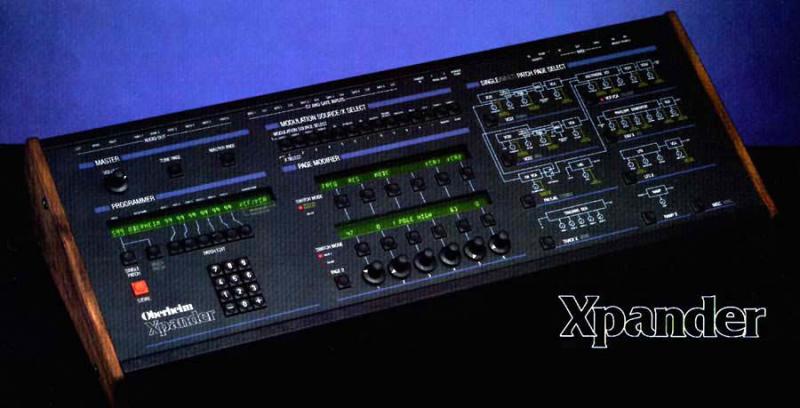
I was wondering why the Xpander, made from 'crummy' Curtis chips, can
out-sound any of the VST soft synths I've heard.
I don´t know what makes you believe Curtis chips are "crummy".
These are nothing else than miniaturized analog circuits and without these you would have never seen any polyphonic analog synth in a compact design.
Or have I just not
heard the best soft synths?
This is possible.
The best analog modelling soft synths technology is replicating analog circuits digitally (algorythms) and combining these "modules" that way, it was done in the originals.
It´s a fact, some anaolog circuits are harder to clone and some easier, depending on the limits of modelling analog behaviour in binary code and in respect of this, the designers all follow different strategys combined w/ their own innovations and experience.
A result of binary code will never be a true analog waveform compared w/ a real analog circuit and it´s well known, the heart of a analog synth, the filter, is one of the hardest to clone modules, this depending on the complexity of the original filter.
So, it´s possible to get a result which is very close and it get´s better in future, no question,- but it´s a different technology w/ different results, disadvantages but also advantages.
Eventually some of the designers follow the right strategy by deciding not to clone technology from the past, but creating totally new synthesizers in software because digital technology can also do things, analog technology couldn´t.
This is sometimes also the case w/ todays hardware synthesizers, which are very often a software controlled DSP based design in a enclosure w/ a hardware user interface.
Depending on the ears of designers or users:
The human ear is more or less easy to fool.
Create a halfway good sounding machine, give it a good looking design and a great innovative name, and the ears of most users believe what they see.
Create a clone which has all the functionality of the original and add some extras, make it sound reletively close to the original but give it a perfect GUI, - the ears will believe what the eyes see,- in most cases.
Another example:
Use a recording software w/ a great GUI and record in 16Bit/44.1K, don´t use the best converters and not the best speakers. The producer won´t care in most cases because his eyes are fixed to the tracks waveforms running in the GUI of the recording softwareand to all the animations,- today the people watch the music unfortunately.
If you listen to the purists, a "chip"-synth is crap and a discrete analog modular is the king,- so don´t ask what these say about software clones.
And yes, there are great sounding clones/synths to find in the market by Sonic Projects, U-HE, Disco DSP, NI, GForce, Way Out Ware and Arturia p.ex.,- I don´t mention the sampling technology based synths/clones here.
But all these suffer from bugs here and there which is quite common w/ software at all and from the fact you´ll have to control these w/ more or less uncomfortable controllers, beginning w/ a standard mouse up to complex USB midi-controller keyboards which all don´t have their knobs and sliders located where you expect ´em for a specific machine as also you need computers and growing calculation power w/ each update of these virtual machines.
In the end, everyone has to decide what´s neccessary for his work w/ synths and to take care on who´s consuming this work.
I don´t believe, the consumers of music will recognize all the differences in a musical context which they like anyway,- they don´t do direct comparisons. They like the music or they don´t like it, they don´t ask how it´s been made.
They listen to mp3 and meanwhile, too much mp3s found their way to CDs, even w/ major company releases ! :-)
Jeremy.