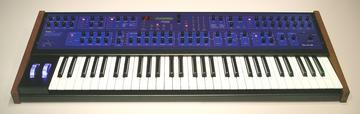
Just wanted to give people an update - I spent quite a bit of time last week working on "The Beginner's Guide To Evolver." The sequencer section is almost done (over 10 pages so far!). I am hoping to be able to post it soon for people to review and comment on. For each section, I try to supplement the manual's descriptions of functions. I am including "practical applications" - what you would use a function for, with a list of suggestions and some "exercises" to help users get comfortable with the functions. Here's most of the Table of Contents so far - it is incomplete but should give you an idea of what I'm doing. Obviously, the sequencer part is the most filled out: Table of Contents Introduction Before We Start The Oscillators Analog Oscillators Digital Oscillators Waveshapes Noise The Envelopes Env1 The Filter Envelope Env2 The Volume Envelope Env3 The Mod Envelope The Filters Lowpass Filter Highpass Filter Modulation LFOs Modulation Slots Ripping Sh*t Up Distortion Feedback Grunge Output Hack The Digital Delay Basic delay Advanced delay making effects Chorus Resonator Master class Karplus-Strong synthesis The Sequencer Traditional "Step Sequencer" Exercise 1: A basic sequence Exercise 2: Faking Polyphony Exercise 3: Rests, a.k.a. oFFs Exercise 4: Sequences with different lengths Exercise 5: Tempo Clock Mod as a destination "Motif/Arpeggiator" live playback function Exercise 1: Changing Pitch Exercise 1A: Fake Arpeggiator Exercise 2: Re-triggering a sequence Exercise 3: One-shot sequences Modulation Source for Sounds Exercise 1: Rhythmic Filter Making Sounds The Analog Basics Drones The 1-Finger Chord Advanced Techniques Using Evolver Effectively - As An Effects Unit Some Best Practices
Message
Beginner's Guide To Evolver: Update
2004-11-09 by Anu Kirk
Attachments
- No local attachments were found for this message.