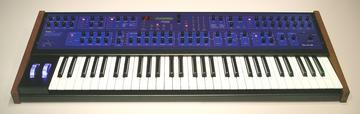
Dave Smith Instruments SYNTHESIZERS group photo

Yahoo Groups archive

Dave Smith Instruments SYNTHESIZERS

Index last updated: 2026-04-28 22:43 UTC

Thread

Beginner's Guide To Evolver: Update

Beginner's Guide To Evolver: Update

2004-11-09 by Anu Kirk

Just wanted to give people an update - I spent quite a bit of time
last week working on "The Beginner's Guide To Evolver."

The sequencer section is almost done (over 10 pages so far!).  I am
hoping to be able to post it soon for people to review and comment on.

For each section, I try to supplement the manual's descriptions of
functions.  I am including "practical applications" - what you would
use a function for, with a list of suggestions and some "exercises" to
help users get comfortable with the functions.

Here's most of the Table of Contents so far - it is incomplete but
should give you an idea of what I'm doing.  Obviously, the sequencer
part is the most filled out:

Table of Contents
Introduction	
Before We Start	
The Oscillators	
	Analog Oscillators	
	Digital Oscillators	
	Waveshapes		
	Noise
The Envelopes
	Env1 – The Filter Envelope	
	Env2 – The Volume Envelope	
	Env3 – The Mod Envelope	
The Filters	
	Lowpass Filter	
	Highpass Filter	
Modulation	
	LFOs
	Modulation Slots
Ripping Sh*t Up
	Distortion	
	Feedback	
	Grunge	
	Output Hack	
The Digital Delay
	Basic delay
	Advanced delay – making effects
		Chorus
		Resonator
	Master class – Karplus-Strong synthesis
The Sequencer
	Traditional "Step Sequencer"
		Exercise 1: A basic sequence	
		Exercise 2: Faking Polyphony	
		Exercise 3: Rests, a.k.a. oFFs
		Exercise 4: Sequences with different lengths
		Exercise 5: Tempo Clock Mod as a destination
	"Motif/Arpeggiator" live playback function
		Exercise 1: Changing Pitch	
		Exercise 1A: Fake Arpeggiator	
		Exercise 2: Re-triggering a sequence
		Exercise 3: One-shot sequences
	Modulation Source for Sounds
		Exercise 1: Rhythmic Filter
Making Sounds
	The Analog Basics
	Drones
	The 1-Finger Chord
	Advanced Techniques
Using Evolver Effectively - As An Effects Unit
Some Best Practices

Re: [Evolver] Beginner's Guide To Evolver: Update

2004-11-09 by Emory Stagmer

Does that make this an "Evolving Beginner's Evolver Guide" ? ;)

This sounds like a great beginning to an essential resource.
Emory

--- Anu Kirk <anukirk@...> wrote:

> 
> 
> Just wanted to give people an update - I spent quite a bit of time
> last week working on "The Beginner's Guide To Evolver."
> 
> The sequencer section is almost done (over 10 pages so far!).  I am
> hoping to be able to post it soon for people to review and comment on.
> 
> For each section, I try to supplement the manual's descriptions of
> functions.  I am including "practical applications" - what you would
> use a function for, with a list of suggestions and some "exercises" to
> help users get comfortable with the functions.
> 
> Here's most of the Table of Contents so far - it is incomplete but
> should give you an idea of what I'm doing.  Obviously, the sequencer
> part is the most filled out:
> 
> Table of Contents
> Introduction	
> Before We Start	
> The Oscillators	
> 	Analog Oscillators	
> 	Digital Oscillators	
> 	Waveshapes		
> 	Noise
> The Envelopes
> 	Env1 \ufffd The Filter Envelope	
> 	Env2 \ufffd The Volume Envelope	
> 	Env3 \ufffd The Mod Envelope	
> The Filters	
> 	Lowpass Filter	
> 	Highpass Filter	
> Modulation	
> 	LFOs
> 	Modulation Slots
> Ripping Sh*t Up
> 	Distortion	
> 	Feedback	
> 	Grunge	
> 	Output Hack	
> The Digital Delay
> 	Basic delay
> 	Advanced delay \ufffd making effects
> 		Chorus
> 		Resonator
> 	Master class \ufffd Karplus-Strong synthesis
> The Sequencer
> 	Traditional "Step Sequencer"
> 		Exercise 1: A basic sequence	
> 		Exercise 2: Faking Polyphony	
> 		Exercise 3: Rests, a.k.a. oFFs
> 		Exercise 4: Sequences with different lengths
> 		Exercise 5: Tempo Clock Mod as a destination
> 	"Motif/Arpeggiator" live playback function
> 		Exercise 1: Changing Pitch	
> 		Exercise 1A: Fake Arpeggiator	
> 		Exercise 2: Re-triggering a sequence
> 		Exercise 3: One-shot sequences
> 	Modulation Source for Sounds
> 		Exercise 1: Rhythmic Filter
> Making Sounds
> 	The Analog Basics
> 	Drones
> 	The 1-Finger Chord
> 	Advanced Techniques
> Using Evolver Effectively - As An Effects Unit
> Some Best Practices
> 
> 
> 
> 
> 
> 
>  
> Yahoo! Groups Links
> 
> 
> 
>  
> 
> 
> 
> 


__________________________________ 
Do you Yahoo!? 
Check out the new Yahoo! Front Page. 
www.yahoo.com

Re: [Evolver] Beginner's Guide To Evolver: Update

2004-11-09 by dhamaryder

> This sounds like a great beginning to an essential resource.
> Emory

Yes, I can't wait to read it.

 
> --- Anu Kirk <anukirk@p...> wrote:
> 
> > 
> > 
> > Just wanted to give people an update - I spent quite a bit of 
time
> > last week working on "The Beginner's Guide To Evolver."
> > 
> > The sequencer section is almost done (over 10 pages so 
far!).  I am
> > hoping to be able to post it soon for people to review and 
comment on.
> > 
> > For each section, I try to supplement the manual's 
descriptions of
> > functions.  I am including "practical applications" - what you 
would
> > use a function for, with a list of suggestions and some 
"exercises" to
> > help users get comfortable with the functions.
> > 
> > Here's most of the Table of Contents so far - it is incomplete 
but
> > should give you an idea of what I'm doing.  Obviously, the 
sequencer
Show quoted textHide quoted text
> > part is the most filled out:
> > 
> > Table of Contents
> > Introduction	
> > Before We Start	
> > The Oscillators	
> > 	Analog Oscillators	
> > 	Digital Oscillators	
> > 	Waveshapes		
> > 	Noise
> > The Envelopes
> > 	Env1 – The Filter Envelope	
> > 	Env2 – The Volume Envelope	
> > 	Env3 – The Mod Envelope	
> > The Filters	
> > 	Lowpass Filter	
> > 	Highpass Filter	
> > Modulation	
> > 	LFOs
> > 	Modulation Slots
> > Ripping Sh*t Up
> > 	Distortion	
> > 	Feedback	
> > 	Grunge	
> > 	Output Hack	
> > The Digital Delay
> > 	Basic delay
> > 	Advanced delay – making effects
> > 		Chorus
> > 		Resonator
> > 	Master class – Karplus-Strong synthesis
> > The Sequencer
> > 	Traditional "Step Sequencer"
> > 		Exercise 1: A basic sequence	
> > 		Exercise 2: Faking Polyphony	
> > 		Exercise 3: Rests, a.k.a. oFFs
> > 		Exercise 4: Sequences with different lengths
> > 		Exercise 5: Tempo Clock Mod as a destination
> > 	"Motif/Arpeggiator" live playback function
> > 		Exercise 1: Changing Pitch	
> > 		Exercise 1A: Fake Arpeggiator	
> > 		Exercise 2: Re-triggering a sequence
> > 		Exercise 3: One-shot sequences
> > 	Modulation Source for Sounds
> > 		Exercise 1: Rhythmic Filter
> > Making Sounds
> > 	The Analog Basics
> > 	Drones
> > 	The 1-Finger Chord
> > 	Advanced Techniques
> > Using Evolver Effectively - As An Effects Unit
> > Some Best Practices
> > 
> > 
> > 
> > 
> > 
> > 
> >  
> > Yahoo! Groups Links
> > 
> > 
> > 
> >  
> > 
> > 
> > 
> > 
> 
> 
> 
> 		
> __________________________________ 
> Do you Yahoo!? 
> Check out the new Yahoo! Front Page. 
> www.yahoo.com

Re: [Evolver] Beginner's Guide To Evolver: Update

2004-11-09 by rickyannotta

I think this table of contents looks superb...The exercises are spot 
on!  

If this came with the Evolver no one would ever sell it (I think the 
only reason anyone ever does is they're newbies who have bitten off 
more than they could chew)

RY       

--- In DSI_Evolver@yahoogroups.com, Emory Stagmer <emory@u...> wrote:
> Does that make this an "Evolving Beginner's Evolver Guide" ? ;)
> 
> This sounds like a great beginning to an essential resource.
> Emory
> 
> --- Anu Kirk <anukirk@p...> wrote:
> 
> > 
> > 
> > Just wanted to give people an update - I spent quite a bit of 
time
> > last week working on "The Beginner's Guide To Evolver."
> > 
> > The sequencer section is almost done (over 10 pages so far!).  I 
am
> > hoping to be able to post it soon for people to review and 
comment on.
> > 
> > For each section, I try to supplement the manual's descriptions 
of
> > functions.  I am including "practical applications" - what you 
would
> > use a function for, with a list of suggestions and 
some "exercises" to
> > help users get comfortable with the functions.
> > 
> > Here's most of the Table of Contents so far - it is incomplete 
but
> > should give you an idea of what I'm doing.  Obviously, the 
sequencer
Show quoted textHide quoted text
> > part is the most filled out:
> > 
> > Table of Contents
> > Introduction	
> > Before We Start	
> > The Oscillators	
> > 	Analog Oscillators	
> > 	Digital Oscillators	
> > 	Waveshapes		
> > 	Noise
> > The Envelopes
> > 	Env1 – The Filter Envelope	
> > 	Env2 – The Volume Envelope	
> > 	Env3 – The Mod Envelope	
> > The Filters	
> > 	Lowpass Filter	
> > 	Highpass Filter	
> > Modulation	
> > 	LFOs
> > 	Modulation Slots
> > Ripping Sh*t Up
> > 	Distortion	
> > 	Feedback	
> > 	Grunge	
> > 	Output Hack	
> > The Digital Delay
> > 	Basic delay
> > 	Advanced delay – making effects
> > 		Chorus
> > 		Resonator
> > 	Master class – Karplus-Strong synthesis
> > The Sequencer
> > 	Traditional "Step Sequencer"
> > 		Exercise 1: A basic sequence	
> > 		Exercise 2: Faking Polyphony	
> > 		Exercise 3: Rests, a.k.a. oFFs
> > 		Exercise 4: Sequences with different lengths
> > 		Exercise 5: Tempo Clock Mod as a destination
> > 	"Motif/Arpeggiator" live playback function
> > 		Exercise 1: Changing Pitch	
> > 		Exercise 1A: Fake Arpeggiator	
> > 		Exercise 2: Re-triggering a sequence
> > 		Exercise 3: One-shot sequences
> > 	Modulation Source for Sounds
> > 		Exercise 1: Rhythmic Filter
> > Making Sounds
> > 	The Analog Basics
> > 	Drones
> > 	The 1-Finger Chord
> > 	Advanced Techniques
> > Using Evolver Effectively - As An Effects Unit
> > Some Best Practices
> > 
> > 
> > 
> > 
> > 
> > 
> >  
> > Yahoo! Groups Links
> > 
> > 
> > 
> >  
> > 
> > 
> > 
> > 
> 
> 
> 
> 		
> __________________________________ 
> Do you Yahoo!? 
> Check out the new Yahoo! Front Page. 
> www.yahoo.com

Re: [Evolver] Beginner's Guide To Evolver: Update

2004-11-09 by niall munnelly

On Tue, Nov 09, 2004 at 04:53:57PM -0000, Anu Kirk wrote:
> 
> 
> Just wanted to give people an update - I spent quite a bit of time
> last week working on "The Beginner's Guide To Evolver."

based on your extensive toc, this was time well spent.

thank you.
-- 
yours,
niall.
.. .  .   .    .     .       .           .             .                 .
aleph null.                             a simple insinuation around silence.
http://syncretism.net
.. .. gpg public key - http://www.aleph-null.net/niall.gpg .. ..

Re: [Evolver] Beginner's Guide To Evolver: Update

2005-01-28 by rickyannotta

Hi all
I was just wondering if this was still being produced. Just looking 
at the contents - this is exactly what I need!

For some reason reverse-engineering sequences only gets me so far 
since it still hard to attribute what's doing what. Sometimes I 
start a sequence & turn down all the Osc's, LFO's and Mod's and 
still hear sounds playing - really makes me scratch my head what's 
triggering it (especially since volume is down on all Osc)!      

I've got the basics covered but faking polyphony and utilizing the 
LFO's, Mod's, rest's - I'm really struggling with. Without all 
these 'tricks' my polyphonic sequences train wreck into eachother!

Any way any info on the tutorials or just general direction would be 
appreciated!

Thanks,


--- In DSI_Evolver@yahoogroups.com, Emory Stagmer <emory@u...> wrote:
> Does that make this an "Evolving Beginner's Evolver Guide" ? ;)
> 
> This sounds like a great beginning to an essential resource.
> Emory
> 
> --- Anu Kirk <anukirk@p...> wrote:
> 
> > 
> > 
> > Just wanted to give people an update - I spent quite a bit of 
time
> > last week working on "The Beginner's Guide To Evolver."
> > 
> > The sequencer section is almost done (over 10 pages so far!).  I 
am
> > hoping to be able to post it soon for people to review and 
comment on.
> > 
> > For each section, I try to supplement the manual's descriptions 
of
> > functions.  I am including "practical applications" - what you 
would
> > use a function for, with a list of suggestions and 
some "exercises" to
> > help users get comfortable with the functions.
> > 
> > Here's most of the Table of Contents so far - it is incomplete 
but
> > should give you an idea of what I'm doing.  Obviously, the 
sequencer
Show quoted textHide quoted text
> > part is the most filled out:
> > 
> > Table of Contents
> > Introduction	
> > Before We Start	
> > The Oscillators	
> > 	Analog Oscillators	
> > 	Digital Oscillators	
> > 	Waveshapes		
> > 	Noise
> > The Envelopes
> > 	Env1 – The Filter Envelope	
> > 	Env2 – The Volume Envelope	
> > 	Env3 – The Mod Envelope	
> > The Filters	
> > 	Lowpass Filter	
> > 	Highpass Filter	
> > Modulation	
> > 	LFOs
> > 	Modulation Slots
> > Ripping Sh*t Up
> > 	Distortion	
> > 	Feedback	
> > 	Grunge	
> > 	Output Hack	
> > The Digital Delay
> > 	Basic delay
> > 	Advanced delay – making effects
> > 		Chorus
> > 		Resonator
> > 	Master class – Karplus-Strong synthesis
> > The Sequencer
> > 	Traditional "Step Sequencer"
> > 		Exercise 1: A basic sequence	
> > 		Exercise 2: Faking Polyphony	
> > 		Exercise 3: Rests, a.k.a. oFFs
> > 		Exercise 4: Sequences with different lengths
> > 		Exercise 5: Tempo Clock Mod as a destination
> > 	"Motif/Arpeggiator" live playback function
> > 		Exercise 1: Changing Pitch	
> > 		Exercise 1A: Fake Arpeggiator	
> > 		Exercise 2: Re-triggering a sequence
> > 		Exercise 3: One-shot sequences
> > 	Modulation Source for Sounds
> > 		Exercise 1: Rhythmic Filter
> > Making Sounds
> > 	The Analog Basics
> > 	Drones
> > 	The 1-Finger Chord
> > 	Advanced Techniques
> > Using Evolver Effectively - As An Effects Unit
> > Some Best Practices
> > 
> > 
> > 
> > 
> > 
> > 
> >  
> > Yahoo! Groups Links
> > 
> > 
> > 
> >  
> > 
> > 
> > 
> > 
> 
> 
> 
> 		
> __________________________________ 
> Do you Yahoo!? 
> Check out the new Yahoo! Front Page. 
> www.yahoo.com

Move to quarantaine

This moves the raw source file on disk only. The archive index is not changed automatically, so you still need to run a manual refresh afterward.