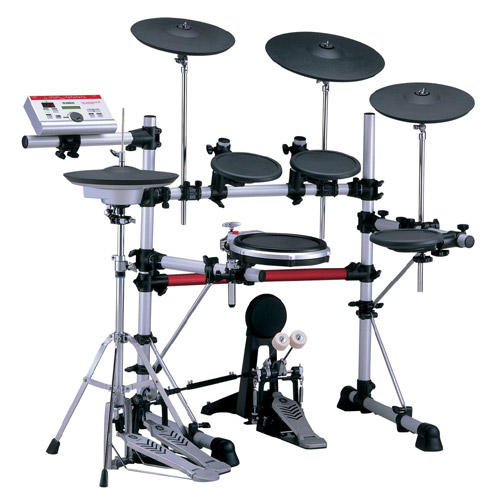
Yamaha DTXpress/DTXplorer/DTXtreme group photo

Yahoo Groups archive

Yamaha DTXpress/DTXplorer/DTXtreme

Index last updated: 2026-04-28 22:44 UTC

Thread

TP65 Miss Triggers

TP65 Miss Triggers

2005-01-31 by swanseadrummer

Hi all, purchased a DTxpress III recently and used it live for the 
first time on Saturday.  Had a problem with the occasional hit of the 
snare pad not triggering.  There was no particular pattern to this 
but was disappointed with this happening.  Has anyone else had this 
problem?  Is it possible to hit the pad too hard?  or maybe I wasn't 
striking the pad acurately enough?

Any views would be appreciated.

Re: TP65 Miss Triggers

2005-01-31 by emf

--- In DTXpress@yahoogroups.com, "swanseadrummer" 
<aeron.kirczey@n...> wrote:
> 
> Hi all, purchased a DTxpress III recently and used it live for the 
> first time on Saturday.  Had a problem with the occasional hit of 
the 
> snare pad not triggering.  There was no particular pattern to this 
> but was disappointed with this happening.  Has anyone else had this 
> problem?  Is it possible to hit the pad too hard?  or maybe I 
wasn't 
> striking the pad acurately enough?

Hi Aeron,

Welcome. Let's keep it simple for a moment. Barring any internal 
damage to the pad, which is highly unlikely, the main reason why the 
snare fails to sound is that something is stopping its signal from 
having the desired effect. Although live playing can involve other 
complications, the most common cause for dropouts is that rejection 
is set too high. A pad's rejection settings in the Trigger Edit Mode 
prevent hits on another pad from creating vibrations that cause it to 
fire accidentally. Essentially, a pad's rejection setting stops it 
from making any noise unless the triggering event--its own or 
anything else's--exceeds the numerical threshold of the setting. The 
higher a pad's rejection number, the more force it requires to do its 
job. Rampant rejection counteracts the very purpose of the kit. 
Reduce the numbers to balance efficient triggering with insulation 
from accidental triggering as best you can. The plain "rejection" 
number provides general protection from other pads; "specific 
rejection" concentrates protection against a particular pad; 
and "self-rejection" keeps a pad from echoing on itself (double 
triggers). They all should only be high enough to minimize the 
problem; otherwise the pads may go on strike. 

Two other settings that impact a pad's triggering are gain and 
minimum velocity. Too high a gain will make a pad more susceptible to 
events on other pads, causing it either to fire accidentally or, if 
rejection rears its ugly head too much above the horizon, to shut 
down. Too low a minimum velocity will also make a pad more 
susceptible to vibrations along the rack. It's also possible that 
pads run at excessive sensitivities, regardless of rejection 
settings, will not be able to recover quickly enough after a first 
strike to process a second. Keep the trigger numbers at moderate 
levels unless experience dictates otherwise. 

The rejection settings apply only to components connected to the 
module. The module has no effect on interference from outside. When 
you play live, keep everyone off your riser, if you have one, and if 
your floor is shaky, keep dancers a safe distance away. Also be aware 
that the bass amp, or just its signals, can resonate enough to damage 
your kit's response.  Many people do extra work on their kits to 
isolate them as much as possible from interference external, as well 
as internal, to the rack.

As bad as the manual is, read about the trigger settings to get a 
feel for what is happening inside the module. Then, if we need to 
troubleshoot further, we won't have to retrace old ground from 
scratch.

Ed

Re: TP65 Miss Triggers

2005-01-31 by swanseadrummer

--- In DTXpress@yahoogroups.com, "emf" <liberatusvirus@y...> wrote:
> 
> --- In DTXpress@yahoogroups.com, "swanseadrummer" 
> <aeron.kirczey@n...> wrote:
> > 
> > Hi all, purchased a DTxpress III recently and used it live for 
the 
> > first time on Saturday.  Had a problem with the occasional hit of 
> the 
> > snare pad not triggering.  There was no particular pattern to 
this 
> > but was disappointed with this happening.  Has anyone else had 
this 
> > problem?  Is it possible to hit the pad too hard?  or maybe I 
> wasn't 
> > striking the pad acurately enough?
> 
> Hi Aeron,
> 
> Welcome. Let's keep it simple for a moment. Barring any internal 
> damage to the pad, which is highly unlikely, the main reason why 
the 
> snare fails to sound is that something is stopping its signal from 
> having the desired effect. Although live playing can involve other 
> complications, the most common cause for dropouts is that rejection 
> is set too high. A pad's rejection settings in the Trigger Edit 
Mode 
> prevent hits on another pad from creating vibrations that cause it 
to 
> fire accidentally. Essentially, a pad's rejection setting stops it 
> from making any noise unless the triggering event--its own or 
> anything else's--exceeds the numerical threshold of the setting. 
The 
> higher a pad's rejection number, the more force it requires to do 
its 
> job. Rampant rejection counteracts the very purpose of the kit. 
> Reduce the numbers to balance efficient triggering with insulation 
> from accidental triggering as best you can. The plain "rejection" 
> number provides general protection from other pads; "specific 
> rejection" concentrates protection against a particular pad; 
> and "self-rejection" keeps a pad from echoing on itself (double 
> triggers). They all should only be high enough to minimize the 
> problem; otherwise the pads may go on strike. 
> 
> Two other settings that impact a pad's triggering are gain and 
> minimum velocity. Too high a gain will make a pad more susceptible 
to 
> events on other pads, causing it either to fire accidentally or, if 
> rejection rears its ugly head too much above the horizon, to shut 
> down. Too low a minimum velocity will also make a pad more 
> susceptible to vibrations along the rack. It's also possible that 
> pads run at excessive sensitivities, regardless of rejection 
> settings, will not be able to recover quickly enough after a first 
> strike to process a second. Keep the trigger numbers at moderate 
> levels unless experience dictates otherwise. 
> 
> The rejection settings apply only to components connected to the 
> module. The module has no effect on interference from outside. When 
> you play live, keep everyone off your riser, if you have one, and 
if 
> your floor is shaky, keep dancers a safe distance away. Also be 
aware 
> that the bass amp, or just its signals, can resonate enough to 
damage 
> your kit's response.  Many people do extra work on their kits to 
> isolate them as much as possible from interference external, as 
well 
> as internal, to the rack.
> 
> As bad as the manual is, read about the trigger settings to get a 
> feel for what is happening inside the module. Then, if we need to 
> troubleshoot further, we won't have to retrace old ground from 
> scratch.
> 
> Ed

Ed,

Many thanks for your quick response.  I have all trigger settings as 
per factory set and all has worked well in practise at home and also 
with the rest of the band.  I will do some experimenting with the 
trigger settings as you suggest but this is going to take some time 
as we do not play every week, so don't be surprised if I don't come 
back for a while.  Interesting your comment about the bass amp as 
this is located next to my left side quite near to the snare, so who 
knows - maybe that was having some influence as you suggested.

Coupled with the snare miss fire was that the second crash cymbal 
that I have added was again occasionally being cut very short so I 
don't know if this all points to something in particular.

I would hope that the kit is suitable for live performance and not 
just  
used 'in the home' for messing about on as seems to be the case with 
quite a few users (or so it seems).  All in all though I must say 
that the drum sounds are very good and I am glad that I purchased.

Thanks again for your comments.

Aeron

Re: TP65 Miss Triggers

2005-01-31 by Nick Carroll

Aeron,

I am having exact same trouble with the TP120S snare on my DTXtreme, 
and it only happens when the bass guitar amp is either too loud and 
boomy, or too close to my kit.  At the last gig, I asked our bass 
player to move his gear off my part of the stage floor and had no 
problem.  Reducing the Gain, which makes the snare pad less 
sensitive, was also helpful to some extent.  However, in the event 
that our bass player is unwilling or unable to comply, I always pack 
my acoustic snare as a standby!

Nick


--- In DTXpress@yahoogroups.com, "swanseadrummer" 
<aeron.kirczey@n...> wrote:
> 
> 
> --- In DTXpress@yahoogroups.com, "emf" <liberatusvirus@y...> wrote:
> > 
> > --- In DTXpress@yahoogroups.com, "swanseadrummer" 
> > <aeron.kirczey@n...> wrote:
> > > 
> > > Hi all, purchased a DTxpress III recently and used it live for 
> the 
> > > first time on Saturday.  Had a problem with the occasional hit 
of 
> > the 
> > > snare pad not triggering.  There was no particular pattern to 
> this 
> > > but was disappointed with this happening.  Has anyone else had 
> this 
> > > problem?  Is it possible to hit the pad too hard?  or maybe I 
> > wasn't 
> > > striking the pad acurately enough?
> > 
> > Hi Aeron,
> > 
> > Welcome. Let's keep it simple for a moment. Barring any internal 
> > damage to the pad, which is highly unlikely, the main reason why 
> the 
> > snare fails to sound is that something is stopping its signal 
from 
> > having the desired effect. Although live playing can involve 
other 
> > complications, the most common cause for dropouts is that 
rejection 
> > is set too high. A pad's rejection settings in the Trigger Edit 
> Mode 
> > prevent hits on another pad from creating vibrations that cause 
it 
> to 
> > fire accidentally. Essentially, a pad's rejection setting stops 
it 
> > from making any noise unless the triggering event--its own or 
> > anything else's--exceeds the numerical threshold of the setting. 
> The 
> > higher a pad's rejection number, the more force it requires to 
do 
> its 
> > job. Rampant rejection counteracts the very purpose of the kit. 
> > Reduce the numbers to balance efficient triggering with 
insulation 
> > from accidental triggering as best you can. The 
plain "rejection" 
> > number provides general protection from other pads; "specific 
> > rejection" concentrates protection against a particular pad; 
> > and "self-rejection" keeps a pad from echoing on itself (double 
> > triggers). They all should only be high enough to minimize the 
> > problem; otherwise the pads may go on strike. 
> > 
> > Two other settings that impact a pad's triggering are gain and 
> > minimum velocity. Too high a gain will make a pad more 
susceptible 
> to 
> > events on other pads, causing it either to fire accidentally or, 
if 
> > rejection rears its ugly head too much above the horizon, to 
shut 
> > down. Too low a minimum velocity will also make a pad more 
> > susceptible to vibrations along the rack. It's also possible 
that 
> > pads run at excessive sensitivities, regardless of rejection 
> > settings, will not be able to recover quickly enough after a 
first 
> > strike to process a second. Keep the trigger numbers at moderate 
> > levels unless experience dictates otherwise. 
> > 
> > The rejection settings apply only to components connected to the 
> > module. The module has no effect on interference from outside. 
When 
> > you play live, keep everyone off your riser, if you have one, 
and 
> if 
> > your floor is shaky, keep dancers a safe distance away. Also be 
> aware 
> > that the bass amp, or just its signals, can resonate enough to 
> damage 
> > your kit's response.  Many people do extra work on their kits to 
> > isolate them as much as possible from interference external, as 
> well 
> > as internal, to the rack.
> > 
> > As bad as the manual is, read about the trigger settings to get 
a 
> > feel for what is happening inside the module. Then, if we need 
to 
> > troubleshoot further, we won't have to retrace old ground from 
> > scratch.
> > 
> > Ed
> 
> Ed,
> 
> Many thanks for your quick response.  I have all trigger settings 
as 
> per factory set and all has worked well in practise at home and 
also 
> with the rest of the band.  I will do some experimenting with the 
> trigger settings as you suggest but this is going to take some 
time 
> as we do not play every week, so don't be surprised if I don't 
come 
> back for a while.  Interesting your comment about the bass amp as 
> this is located next to my left side quite near to the snare, so 
who 
> knows - maybe that was having some influence as you suggested.
> 
> Coupled with the snare miss fire was that the second crash cymbal 
> that I have added was again occasionally being cut very short so I 
> don't know if this all points to something in particular.
> 
> I would hope that the kit is suitable for live performance and not 
> just  
> used 'in the home' for messing about on as seems to be the case 
with 
Show quoted textHide quoted text
> quite a few users (or so it seems).  All in all though I must say 
> that the drum sounds are very good and I am glad that I purchased.
> 
> Thanks again for your comments.
> 
> Aeron

Re: TP65 Miss Triggers

2005-02-01 by swanseadrummer

Nick,

Thanks for your response.  When I bought the kit, I had to move the 
hihat from the extention arm on the snare arm and mounted it on the 
module arm at the top, as a hihat hit was triggering the snare, so 
maybe the gain is a bit high.  When playing the kit at home, I have 
no trouble at all, so the more I think about it, the more convinced I 
am that the Bass may be affecting the snare.

I don't have my accoustic kit anymore so will have to persevere.  One 
of the ways I got the wifes agreement to buy the DTx was to offer her 
some room in the copboard under the stairs for the hoover and ironing 
board, this was only possible by getting rid of the accoustic and 
buying the electronic kit instead as it takes up less room when 
packed away - and it obviously worked!

Have a big gig on Feb 11th, so will see what happens there.

Aeron


--- In DTXpress@yahoogroups.com, "Nick Carroll" <njcarroll56@y...> 
wrote:
> 
> Aeron,
> 
> I am having exact same trouble with the TP120S snare on my 
DTXtreme, 
> and it only happens when the bass guitar amp is either too loud and 
> boomy, or too close to my kit.  At the last gig, I asked our bass 
> player to move his gear off my part of the stage floor and had no 
> problem.  Reducing the Gain, which makes the snare pad less 
> sensitive, was also helpful to some extent.  However, in the event 
> that our bass player is unwilling or unable to comply, I always 
pack 
> my acoustic snare as a standby!
> 
> Nick
> 
> 
> --- In DTXpress@yahoogroups.com, "swanseadrummer" 
> <aeron.kirczey@n...> wrote:
> > 
> > 
> > --- In DTXpress@yahoogroups.com, "emf" <liberatusvirus@y...> 
wrote:
> > > 
> > > --- In DTXpress@yahoogroups.com, "swanseadrummer" 
> > > <aeron.kirczey@n...> wrote:
> > > > 
> > > > Hi all, purchased a DTxpress III recently and used it live 
for 
> > the 
> > > > first time on Saturday.  Had a problem with the occasional 
hit 
> of 
> > > the 
> > > > snare pad not triggering.  There was no particular pattern to 
> > this 
> > > > but was disappointed with this happening.  Has anyone else 
had 
> > this 
> > > > problem?  Is it possible to hit the pad too hard?  or maybe I 
> > > wasn't 
> > > > striking the pad acurately enough?
> > > 
> > > Hi Aeron,
> > > 
> > > Welcome. Let's keep it simple for a moment. Barring any 
internal 
> > > damage to the pad, which is highly unlikely, the main reason 
why 
> > the 
> > > snare fails to sound is that something is stopping its signal 
> from 
> > > having the desired effect. Although live playing can involve 
> other 
> > > complications, the most common cause for dropouts is that 
> rejection 
> > > is set too high. A pad's rejection settings in the Trigger Edit 
> > Mode 
> > > prevent hits on another pad from creating vibrations that cause 
> it 
> > to 
> > > fire accidentally. Essentially, a pad's rejection setting stops 
> it 
> > > from making any noise unless the triggering event--its own or 
> > > anything else's--exceeds the numerical threshold of the 
setting. 
> > The 
> > > higher a pad's rejection number, the more force it requires to 
> do 
> > its 
> > > job. Rampant rejection counteracts the very purpose of the kit. 
> > > Reduce the numbers to balance efficient triggering with 
> insulation 
> > > from accidental triggering as best you can. The 
> plain "rejection" 
> > > number provides general protection from other pads; "specific 
> > > rejection" concentrates protection against a particular pad; 
> > > and "self-rejection" keeps a pad from echoing on itself (double 
> > > triggers). They all should only be high enough to minimize the 
> > > problem; otherwise the pads may go on strike. 
> > > 
> > > Two other settings that impact a pad's triggering are gain and 
> > > minimum velocity. Too high a gain will make a pad more 
> susceptible 
> > to 
> > > events on other pads, causing it either to fire accidentally 
or, 
> if 
> > > rejection rears its ugly head too much above the horizon, to 
> shut 
> > > down. Too low a minimum velocity will also make a pad more 
> > > susceptible to vibrations along the rack. It's also possible 
> that 
> > > pads run at excessive sensitivities, regardless of rejection 
> > > settings, will not be able to recover quickly enough after a 
> first 
> > > strike to process a second. Keep the trigger numbers at 
moderate 
> > > levels unless experience dictates otherwise. 
> > > 
> > > The rejection settings apply only to components connected to 
the 
> > > module. The module has no effect on interference from outside. 
> When 
> > > you play live, keep everyone off your riser, if you have one, 
> and 
> > if 
> > > your floor is shaky, keep dancers a safe distance away. Also be 
> > aware 
> > > that the bass amp, or just its signals, can resonate enough to 
> > damage 
> > > your kit's response.  Many people do extra work on their kits 
to 
> > > isolate them as much as possible from interference external, as 
> > well 
> > > as internal, to the rack.
> > > 
> > > As bad as the manual is, read about the trigger settings to get 
> a 
> > > feel for what is happening inside the module. Then, if we need 
> to 
> > > troubleshoot further, we won't have to retrace old ground from 
> > > scratch.
> > > 
> > > Ed
> > 
> > Ed,
> > 
> > Many thanks for your quick response.  I have all trigger settings 
> as 
> > per factory set and all has worked well in practise at home and 
> also 
> > with the rest of the band.  I will do some experimenting with the 
> > trigger settings as you suggest but this is going to take some 
> time 
> > as we do not play every week, so don't be surprised if I don't 
> come 
> > back for a while.  Interesting your comment about the bass amp as 
> > this is located next to my left side quite near to the snare, so 
> who 
> > knows - maybe that was having some influence as you suggested.
> > 
> > Coupled with the snare miss fire was that the second crash cymbal 
> > that I have added was again occasionally being cut very short so 
I 
> > don't know if this all points to something in particular.
> > 
> > I would hope that the kit is suitable for live performance and 
not 
Show quoted textHide quoted text
> > just  
> > used 'in the home' for messing about on as seems to be the case 
> with 
> > quite a few users (or so it seems).  All in all though I must say 
> > that the drum sounds are very good and I am glad that I purchased.
> > 
> > Thanks again for your comments.
> > 
> > Aeron
Re: TP65 Miss Triggers

2005-02-03 by Nick Carroll

Hey Aeron,

Let me just check with you - this miss-triggering problem happens 
with your TP65 (8-inch 3-zone snare pad)?  I had considered trading 
down to the TP65 thinking it was only an issue with the TP120SD (12-
inch pad).  In any case, please let me know how your next gig goes, 
because I intend to follow this issue very closely.

Nick.

--- In DTXpress@yahoogroups.com, "swanseadrummer" 
<aeron.kirczey@n...> wrote:
> 
> 
> Nick,
> 
> Thanks for your response.  When I bought the kit, I had to move 
the 
> hihat from the extention arm on the snare arm and mounted it on 
the 
> module arm at the top, as a hihat hit was triggering the snare, so 
> maybe the gain is a bit high.  When playing the kit at home, I 
have 
> no trouble at all, so the more I think about it, the more 
convinced I 
> am that the Bass may be affecting the snare.
> 
> I don't have my accoustic kit anymore so will have to persevere.  
One 
> of the ways I got the wifes agreement to buy the DTx was to offer 
her 
> some room in the copboard under the stairs for the hoover and 
ironing 
> board, this was only possible by getting rid of the accoustic and 
> buying the electronic kit instead as it takes up less room when 
> packed away - and it obviously worked!
> 
> Have a big gig on Feb 11th, so will see what happens there.
> 
> Aeron
> 
> 
> 
> --- In DTXpress@yahoogroups.com, "Nick Carroll" <njcarroll56@y...> 
> wrote:
> > 
> > Aeron,
> > 
> > I am having exact same trouble with the TP120S snare on my 
> DTXtreme, 
> > and it only happens when the bass guitar amp is either too loud 
and 
> > boomy, or too close to my kit.  At the last gig, I asked our 
bass 
> > player to move his gear off my part of the stage floor and had 
no 
> > problem.  Reducing the Gain, which makes the snare pad less 
> > sensitive, was also helpful to some extent.  However, in the 
event 
Show quoted textHide quoted text
> > that our bass player is unwilling or unable to comply, I always 
> pack 
> > my acoustic snare as a standby!
> > 
> > Nick
> > 
> > 
> > --- In DTXpress@yahoogroups.com, "swanseadrummer" 
> > <aeron.kirczey@n...> wrote:
> > > 
> > > 
> > > --- In DTXpress@yahoogroups.com, "emf" <liberatusvirus@y...> 
> wrote:
> > > > 
> > > > --- In DTXpress@yahoogroups.com, "swanseadrummer" 
> > > > <aeron.kirczey@n...> wrote:
> > > > > 
> > > > > Hi all, purchased a DTxpress III recently and used it live 
> for 
> > > the 
> > > > > first time on Saturday.  Had a problem with the occasional 
> hit 
> > of 
> > > > the 
> > > > > snare pad not triggering.

Re: [DTXpress] Re: TP65 Miss Triggers

2005-02-03 by Creighton Higgins

As Ed suggests, sound from amplifiers messes up pad response when
playing live. I have found that just turning an amp a bit away from
the kit helps alot and prevents miss-fires and missed hits. Regarding
your crash- if it is one of the choking cymbals; I have found that it
reveals bad technique by quenching itself as it is being hit. These
cymbals require a very quick hit. If you carry over a "playing through
the cymbal" technique from your acoustic days, you will choke the
cymabal as you hit it. This involves a loss of dramatic visual impact
which I have replaced by making faces like Laura Dern in Blue Velvet.


On Thu, 03 Feb 2005 08:36:03 -0000, Nick Carroll
<njcarroll56@...> wrote:
> 
> 
> Hey Aeron,
> 
> Let me just check with you - this miss-triggering problem happens
> with your TP65 (8-inch 3-zone snare pad)?  I had considered trading
> down to the TP65 thinking it was only an issue with the TP120SD (12-
> inch pad).  In any case, please let me know how your next gig goes,
> because I intend to follow this issue very closely.
> 
> Nick.
> 
> --- In DTXpress@yahoogroups.com, "swanseadrummer"
> <aeron.kirczey@n...> wrote:
> >
> >
> > Nick,
> >
> > Thanks for your response.  When I bought the kit, I had to move
> the
> > hihat from the extention arm on the snare arm and mounted it on
> the
> > module arm at the top, as a hihat hit was triggering the snare, so
> > maybe the gain is a bit high.  When playing the kit at home, I
> have
> > no trouble at all, so the more I think about it, the more
> convinced I
> > am that the Bass may be affecting the snare.
> >
> > I don't have my accoustic kit anymore so will have to persevere.
> One
> > of the ways I got the wifes agreement to buy the DTx was to offer
> her
> > some room in the copboard under the stairs for the hoover and
> ironing
> > board, this was only possible by getting rid of the accoustic and
> > buying the electronic kit instead as it takes up less room when
> > packed away - and it obviously worked!
> >
> > Have a big gig on Feb 11th, so will see what happens there.
> >
> > Aeron
> >
> >
> >
> > --- In DTXpress@yahoogroups.com, "Nick Carroll" <njcarroll56@y...>
> > wrote:
> > >
> > > Aeron,
> > >
> > > I am having exact same trouble with the TP120S snare on my
> > DTXtreme,
> > > and it only happens when the bass guitar amp is either too loud
> and
> > > boomy, or too close to my kit.  At the last gig, I asked our
> bass
> > > player to move his gear off my part of the stage floor and had
> no
> > > problem.  Reducing the Gain, which makes the snare pad less
> > > sensitive, was also helpful to some extent.  However, in the
> event
> > > that our bass player is unwilling or unable to comply, I always
> > pack
> > > my acoustic snare as a standby!
> > >
> > > Nick
> > >
> > >
> > > --- In DTXpress@yahoogroups.com, "swanseadrummer"
> > > <aeron.kirczey@n...> wrote:
> > > >
> > > >
> > > > --- In DTXpress@yahoogroups.com, "emf" <liberatusvirus@y...>
> > wrote:
> > > > >
> > > > > --- In DTXpress@yahoogroups.com, "swanseadrummer"
> > > > > <aeron.kirczey@n...> wrote:
> > > > > >
> > > > > > Hi all, purchased a DTxpress III recently and used it live
> > for
> > > > the
> > > > > > first time on Saturday.  Had a problem with the occasional
> > hit
> > > of
> > > > > the
> > > > > > snare pad not triggering.
> 
> 
> Community email addresses:
>   Post message: DTXpress@yahoogroups.com
>   Subscribe:    DTXpress-subscribe@yahoogroups.com
>   Unsubscribe:  DTXpress-unsubscribe@yahoogroups.com
>   List owner:   DTXpress-owner@yahoogroups.com
> 
> Shortcut URL to this page:
>   http://groups.yahoo.com/group/DTXpress
> 
> Alternate DTXpress site:
>   http://www.dtxpressions.com
> Yahoo! Groups Links
> 
> 
> 
> 
> 


-- 
Creighton Higgins

Re: TP65 Miss Triggers

2005-02-03 by swanseadrummer

The pad is actually the TP65S (I forgot to add the 'S').  It is the 
3zone snare pad.  I have had no problems at all when playing at home 
through headphones and no problem during practise.  The triggering 
problem only happened a few times during live playing - I rolled on 
the snare a few times without any problem it was just the ocasional 
hit that didn't sound.

The bass guitar combo was about 2 feet away from the snare and just 
to the rear, I also had my carlsbro powered wedge standing upright 
immediately behind the snare about 1 foot away which I was using as 
my main amp - so maybe that was causing the problem, I don't really 
know.

The cymbal is the PCY65 and does not have chocking, so I am a bit 
stumped as to why that sound was cut very short and sounded on two 
occasions more like a splash than a crash.

I will keep an eye on things and ensure that no amps are too close to 
the kit and see if that sorts it out.

Thanks all for your input.

Aeron


--- In DTXpress@yahoogroups.com, Creighton Higgins <creightonh@g...> 
wrote:
> As Ed suggests, sound from amplifiers messes up pad response when
> playing live. I have found that just turning an amp a bit away from
> the kit helps alot and prevents miss-fires and missed hits. 
Regarding
> your crash- if it is one of the choking cymbals; I have found that 
it
> reveals bad technique by quenching itself as it is being hit. These
> cymbals require a very quick hit. If you carry over a "playing 
through
> the cymbal" technique from your acoustic days, you will choke the
> cymabal as you hit it. This involves a loss of dramatic visual 
impact
> which I have replaced by making faces like Laura Dern in Blue 
Velvet.
> 
> 
> On Thu, 03 Feb 2005 08:36:03 -0000, Nick Carroll
> <njcarroll56@y...> wrote:
> > 
> > 
> > Hey Aeron,
> > 
> > Let me just check with you - this miss-triggering problem happens
> > with your TP65 (8-inch 3-zone snare pad)?  I had considered 
trading
> > down to the TP65 thinking it was only an issue with the TP120SD 
(12-
> > inch pad).  In any case, please let me know how your next gig 
goes,
> > because I intend to follow this issue very closely.
> > 
> > Nick.
> > 
> > --- In DTXpress@yahoogroups.com, "swanseadrummer"
> > <aeron.kirczey@n...> wrote:
> > >
> > >
> > > Nick,
> > >
> > > Thanks for your response.  When I bought the kit, I had to move
> > the
> > > hihat from the extention arm on the snare arm and mounted it on
> > the
> > > module arm at the top, as a hihat hit was triggering the snare, 
so
> > > maybe the gain is a bit high.  When playing the kit at home, I
> > have
> > > no trouble at all, so the more I think about it, the more
> > convinced I
> > > am that the Bass may be affecting the snare.
> > >
> > > I don't have my accoustic kit anymore so will have to persevere.
> > One
> > > of the ways I got the wifes agreement to buy the DTx was to 
offer
> > her
> > > some room in the copboard under the stairs for the hoover and
> > ironing
> > > board, this was only possible by getting rid of the accoustic 
and
> > > buying the electronic kit instead as it takes up less room when
> > > packed away - and it obviously worked!
> > >
> > > Have a big gig on Feb 11th, so will see what happens there.
> > >
> > > Aeron
> > >
> > >
> > >
> > > --- In DTXpress@yahoogroups.com, "Nick Carroll" 
<njcarroll56@y...>
> > > wrote:
> > > >
> > > > Aeron,
> > > >
> > > > I am having exact same trouble with the TP120S snare on my
> > > DTXtreme,
> > > > and it only happens when the bass guitar amp is either too 
loud
> > and
> > > > boomy, or too close to my kit.  At the last gig, I asked our
> > bass
> > > > player to move his gear off my part of the stage floor and had
> > no
> > > > problem.  Reducing the Gain, which makes the snare pad less
> > > > sensitive, was also helpful to some extent.  However, in the
> > event
> > > > that our bass player is unwilling or unable to comply, I 
always
> > > pack
> > > > my acoustic snare as a standby!
> > > >
> > > > Nick
> > > >
> > > >
> > > > --- In DTXpress@yahoogroups.com, "swanseadrummer"
> > > > <aeron.kirczey@n...> wrote:
> > > > >
> > > > >
> > > > > --- In DTXpress@yahoogroups.com, "emf" <liberatusvirus@y...>
> > > wrote:
> > > > > >
> > > > > > --- In DTXpress@yahoogroups.com, "swanseadrummer"
> > > > > > <aeron.kirczey@n...> wrote:
> > > > > > >
> > > > > > > Hi all, purchased a DTxpress III recently and used it 
live
> > > for
> > > > > the
> > > > > > > first time on Saturday.  Had a problem with the 
occasional
Show quoted textHide quoted text
> > > hit
> > > > of
> > > > > > the
> > > > > > > snare pad not triggering.
> > 
> > 
> > Community email addresses:
> >   Post message: DTXpress@yahoogroups.com
> >   Subscribe:    DTXpress-subscribe@yahoogroups.com
> >   Unsubscribe:  DTXpress-unsubscribe@yahoogroups.com
> >   List owner:   DTXpress-owner@yahoogroups.com
> > 
> > Shortcut URL to this page:
> >   http://groups.yahoo.com/group/DTXpress
> > 
> > Alternate DTXpress site:
> >   http://www.dtxpressions.com
> > Yahoo! Groups Links
> > 
> > 
> > 
> > 
> > 
> 
> 
> -- 
> Creighton Higgins

Re: TP65 Miss Triggers

2005-02-12 by swanseadrummer

This is an update on the trigger problem.  Had a good gig last night 
and all went better than my first gig with DTx 3.  I still had one or 
two miss-triggers that seemed to happen when I wasn't thinking 
aboutit, as soon as I payed particular attention to it and looked for 
the triggering problem, it would never happen.  I wonder if it is 
mainly something to do with the angle of the stick when hitting the 
pad, as it did feel a bit spongey when the miss triggers happened, as 
if I had caught the rim and pad at the same time?  No issues with the 
cymbals this time.

I made sure that no speakers were close to the kit this time, but on-
stage volume was quite high.  I went through a 200w HH amp and a pair 
of Marshall cabs with 15 inch Celestion speakers installed - so had 
enough volume.  This was a big venue with over 400 in the audience 
(by the way, they weren't there to see me playing particularly!)

What I did do before the gig, was to prepare a user trigger setup by 
selecting the standard easy setup and turning the gain down for each 
pad, so that if a problem arose, I could swap between setups between 
songs to experiment.  I did swap and certainly didn't have any miss 
triggers for that particular number, however, the standard easy 
trigger setup uses a loud velocity curve and I didn't feel 
particyul;arly happy with the way it changed the feel of the kit, so 
went back to standard medium (the normal setting).

It's early days yet to come to any judjment on any triggering 
problems with this particular TP65s pad.  I need to get a few more 
gigs with it before deciding if there is a problem.  There are so 
many things to consider and so many sensitivity settings to adjust 
the whole process could take some time.  Maybe I'll try another one 
or two user trigger setups and make sure the velocity curve is mote 
to my liking.


--- In DTXpress@yahoogroups.com, "swanseadrummer" 
<aeron.kirczey@n...> wrote:
> 
> The pad is actually the TP65S (I forgot to add the 'S').  It is the 
> 3zone snare pad.  I have had no problems at all when playing at 
home 
> through headphones and no problem during practise.  The triggering 
> problem only happened a few times during live playing - I rolled on 
> the snare a few times without any problem it was just the ocasional 
> hit that didn't sound.
> 
> The bass guitar combo was about 2 feet away from the snare and just 
> to the rear, I also had my carlsbro powered wedge standing upright 
> immediately behind the snare about 1 foot away which I was using as 
> my main amp - so maybe that was causing the problem, I don't really 
> know.
> 
> The cymbal is the PCY65 and does not have chocking, so I am a bit 
> stumped as to why that sound was cut very short and sounded on two 
> occasions more like a splash than a crash.
> 
> I will keep an eye on things and ensure that no amps are too close 
to 
> the kit and see if that sorts it out.
> 
> Thanks all for your input.
> 
> Aeron
> 
> 
> 
> --- In DTXpress@yahoogroups.com, Creighton Higgins 
<creightonh@g...> 
> wrote:
> > As Ed suggests, sound from amplifiers messes up pad response when
> > playing live. I have found that just turning an amp a bit away 
from
> > the kit helps alot and prevents miss-fires and missed hits. 
> Regarding
> > your crash- if it is one of the choking cymbals; I have found 
that 
> it
> > reveals bad technique by quenching itself as it is being hit. 
These
> > cymbals require a very quick hit. If you carry over a "playing 
> through
> > the cymbal" technique from your acoustic days, you will choke the
> > cymabal as you hit it. This involves a loss of dramatic visual 
> impact
> > which I have replaced by making faces like Laura Dern in Blue 
> Velvet.
> > 
> > 
> > On Thu, 03 Feb 2005 08:36:03 -0000, Nick Carroll
> > <njcarroll56@y...> wrote:
> > > 
> > > 
> > > Hey Aeron,
> > > 
> > > Let me just check with you - this miss-triggering problem 
happens
> > > with your TP65 (8-inch 3-zone snare pad)?  I had considered 
> trading
> > > down to the TP65 thinking it was only an issue with the TP120SD 
> (12-
> > > inch pad).  In any case, please let me know how your next gig 
> goes,
> > > because I intend to follow this issue very closely.
> > > 
> > > Nick.
> > > 
> > > --- In DTXpress@yahoogroups.com, "swanseadrummer"
> > > <aeron.kirczey@n...> wrote:
> > > >
> > > >
> > > > Nick,
> > > >
> > > > Thanks for your response.  When I bought the kit, I had to 
move
> > > the
> > > > hihat from the extention arm on the snare arm and mounted it 
on
> > > the
> > > > module arm at the top, as a hihat hit was triggering the 
snare, 
> so
> > > > maybe the gain is a bit high.  When playing the kit at home, I
> > > have
> > > > no trouble at all, so the more I think about it, the more
> > > convinced I
> > > > am that the Bass may be affecting the snare.
> > > >
> > > > I don't have my accoustic kit anymore so will have to 
persevere.
> > > One
> > > > of the ways I got the wifes agreement to buy the DTx was to 
> offer
> > > her
> > > > some room in the copboard under the stairs for the hoover and
> > > ironing
> > > > board, this was only possible by getting rid of the accoustic 
> and
> > > > buying the electronic kit instead as it takes up less room 
when
> > > > packed away - and it obviously worked!
> > > >
> > > > Have a big gig on Feb 11th, so will see what happens there.
> > > >
> > > > Aeron
> > > >
> > > >
> > > >
> > > > --- In DTXpress@yahoogroups.com, "Nick Carroll" 
> <njcarroll56@y...>
> > > > wrote:
> > > > >
> > > > > Aeron,
> > > > >
> > > > > I am having exact same trouble with the TP120S snare on my
> > > > DTXtreme,
> > > > > and it only happens when the bass guitar amp is either too 
> loud
> > > and
> > > > > boomy, or too close to my kit.  At the last gig, I asked our
> > > bass
> > > > > player to move his gear off my part of the stage floor and 
had
> > > no
> > > > > problem.  Reducing the Gain, which makes the snare pad less
> > > > > sensitive, was also helpful to some extent.  However, in the
> > > event
> > > > > that our bass player is unwilling or unable to comply, I 
> always
> > > > pack
> > > > > my acoustic snare as a standby!
> > > > >
> > > > > Nick
> > > > >
> > > > >
> > > > > --- In DTXpress@yahoogroups.com, "swanseadrummer"
> > > > > <aeron.kirczey@n...> wrote:
> > > > > >
> > > > > >
> > > > > > --- In DTXpress@yahoogroups.com, "emf" 
<liberatusvirus@y...>
Show quoted textHide quoted text
> > > > wrote:
> > > > > > >
> > > > > > > --- In DTXpress@yahoogroups.com, "swanseadrummer"
> > > > > > > <aeron.kirczey@n...> wrote:
> > > > > > > >
> > > > > > > > Hi all, purchased a DTxpress III recently and used it 
> live
> > > > for
> > > > > > the
> > > > > > > > first time on Saturday.  Had a problem with the 
> occasional
> > > > hit
> > > > > of
> > > > > > > the
> > > > > > > > snare pad not triggering.
> > > 
> > > 
> > > Community email addresses:
> > >   Post message: DTXpress@yahoogroups.com
> > >   Subscribe:    DTXpress-subscribe@yahoogroups.com
> > >   Unsubscribe:  DTXpress-unsubscribe@yahoogroups.com
> > >   List owner:   DTXpress-owner@yahoogroups.com
> > > 
> > > Shortcut URL to this page:
> > >   http://groups.yahoo.com/group/DTXpress
> > > 
> > > Alternate DTXpress site:
> > >   http://www.dtxpressions.com
> > > Yahoo! Groups Links
> > > 
> > > 
> > > 
> > > 
> > > 
> > 
> > 
> > -- 
> > Creighton Higgins

Move to quarantaine

This moves the raw source file on disk only. The archive index is not changed automatically, so you still need to run a manual refresh afterward.