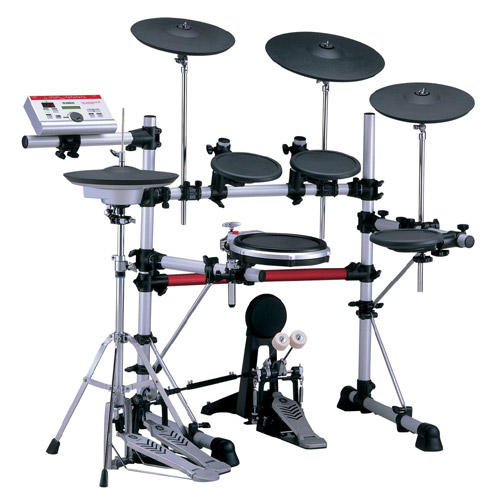
Yamaha DTXpress/DTXplorer/DTXtreme group photo

Yahoo Groups archive

Yamaha DTXpress/DTXplorer/DTXtreme

Index last updated: 2026-04-28 22:44 UTC

Thread

Yamaha DIY EDrums, Discrete Trigger Box

Yamaha DIY EDrums, Discrete Trigger Box

2005-03-12 by captainbingo

Hello All,
I've finally had a chance to put some pictures up on my Yamaha DIY 
EDrum set. I'll be posting more detailed information on the site 
describing each picture soon. I'm trying to give back to the DIY 
community as I have learned much from a zillion people, posts and 
sources out here on the 'net.

My main question is a call for help/review on my Discrete Trigger 
Box circuit that I have built for the DTXpress III. I know there 
were discussions regarding a "Magic Box" a while back, but I haven't 
seen much more about it, so I decided to go ahead and try building 
one of my own design. I'll be the first confess that I'm an 
electronics "novice hack", so I'd be happy to get some feedback from 
those much wiser than I on the circuit design I have posted on my 
site.

I've built the DTB (discrete trigger box) and it 
seems to work great, with only a couple of minor oddities. For 
example, sometimes the input from the main trigger pizeo will seem 
to "overpower" the circuit and cause a secondary trigger to fire. 
(probably 'cause these 35mm piezos seem to hit 40V if smacked hard) 
I've handled this by putting a potentiometer on the main piezo to 
lower the output, but I'd like to find out if there is a better way 
to isolate it in the circuit. Thanks for any feedback.

You can checkout my DIY drums here:
http://www.htmediaservices.com

Regards,
- Rudy (captainbingo)

Re: Yamaha DIY EDrums, Discrete Trigger Box

2005-03-12 by emf

--- In DTXpress@yahoogroups.com, "captainbingo" <captainbingo@s...> 
wrote:
 
> Hello All,
> I've built the DTB (discrete trigger box) and it 
> seems to work great, with only a couple of minor oddities. For 
> example, sometimes the input from the main trigger pizeo will seem 
> to "overpower" the circuit and cause a secondary trigger to fire. 
> (probably 'cause these 35mm piezos seem to hit 40V if smacked hard) 
> I've handled this by putting a potentiometer on the main piezo to 
> lower the output, but I'd like to find out if there is a better way 
> to isolate it in the circuit. Thanks for any feedback.

Hi Rudy,

How ya doin. Keith1200rs is the member who's worked long and hard on 
the magic box. OGD and Stewart (where art thou?) have put in long 
hours as beta testers and comrades in arms. Maybe you and Keith can 
chat about it.

Ed

Re: Yamaha DIY EDrums, Discrete Trigger Box

2005-03-12 by captainbingo

Ed,
Thanks. Yes, without knowing his circuit I'm sure Keith1200rs' magic 
box is MUCH more sophisticated than what I came up with, and I 
completely understand Keith1200rs keeping his under wraps. As a die-
hard DIYer, I wanted to make the most use out of my DTX module, 
which is outstanding (despite the rather cumbersome user interface), 
but I suspect my circuit has "bad grammar" and needs 
the "punctuation" fixed. :)

Having fun hitting the drum!
- Rudy

--- In DTXpress@yahoogroups.com, "emf" <liberatusvirus@y...> wrote:
> 
> --- In DTXpress@yahoogroups.com, "captainbingo" 
<captainbingo@s...> 
> wrote:
>  
> > Hello All,
> > I've built the DTB (discrete trigger box) and it 
> > seems to work great, with only a couple of minor oddities. For 
> > example, sometimes the input from the main trigger pizeo will 
seem 
> > to "overpower" the circuit and cause a secondary trigger to 
fire. 
> > (probably 'cause these 35mm piezos seem to hit 40V if smacked 
hard) 
> > I've handled this by putting a potentiometer on the main piezo 
to 
> > lower the output, but I'd like to find out if there is a better 
way 
> > to isolate it in the circuit. Thanks for any feedback.
> 
> Hi Rudy,
> 
> How ya doin. Keith1200rs is the member who's worked long and hard 
on 
> the magic box. OGD and Stewart (where art thou?) have put in long 
> hours as beta testers and comrades in arms. Maybe you and Keith 
can 
Show quoted textHide quoted text
> chat about it.
> 
> Ed

Re: Yamaha DIY EDrums, Discrete Trigger Box

2005-03-14 by Keith

--- In DTXpress@yahoogroups.com, "captainbingo" <captainbingo@s...> wrote:
> 
> Ed,
> Thanks. Yes, without knowing his circuit I'm sure Keith1200rs' magic 
> box is MUCH more sophisticated than what I came up with, and I 
> completely understand Keith1200rs keeping his under wraps. As a die-
> hard DIYer, I wanted to make the most use out of my DTX module, 
> which is outstanding (despite the rather cumbersome user interface), 
> but I suspect my circuit has "bad grammar" and needs 
> the "punctuation" fixed. :)
> 

Sorry for the delay - I have been out of circulation for the last few
days.  I spend all week on my computer so often at the weekends I
don't even turn it on so I get a break!

If you want to email me I am happy to help where I can.  

Looking at your trigger circuit, I would suggest increasing the
operating voltage to 24V from your current 9V.  As you have found, the
piezos can give out a fair voltage.  I have tended to use 100k as the
input resistance, rather than 1M, capacitively coupled it to an
internally generated +12V point (the circuitry is running on +24V). 
This is really just to give me the headroom I need to handle big
signals.  The problem with your circuit is that it is referenced to
ground so you will be chopping off the negative going part of the
piezo signal (and giving your LM324 a hard time with the negative
spikes - they may well blow up).

To add two signals together, you cannot just connect the outputs of
two opamps together (not with predicatable results). Take a resistor
from each opamp output to a summing node - 1k to 10k from each would
do.  I would imagine your rim trigger from input B is not very
sensitive.  If you like I can send you a better circuit.  On the 4066,
you will need a pull down resistor on pins 5 & 13.

Ed/OGD - I need to decide soon what to do about the "magic box".  My
current feeling from the feedback I have had is that while it works,
setup is tricky.  I seem to be able to get it set up better than
anyone else, but then I understand exactly what the circuitry is
doing.  My feeling is that it will be difficult to turn it into a
simple commercial product.  More adjustments will just make it harder
to set up.  If you think that is a fair assessment, I will post the
circuits here so anyone can play around who has the inclination.  I
will make my fortuen elsewhere ;-)

Keith.

Re: Yamaha DIY EDrums, Discrete Trigger Box

2005-03-14 by captainbingo

Keith,
Wow, thanks for the great info! I'll try to incorporate your 
suggestions, and of course, I'd be happy to see any circuit 
corrections.

BTW, I'm actually not trying sum the outputs from A and B. I'm 
trying to use the op amp as a buffer/voltage follower to keep input 
A from triggering input B. The way I have it setup I expect A and B 
(and D) to actually not be hit at the same time. Turns out trigger B 
and D are a almost too sensitive. With the single piezo mounted on 
the shell, I can hit anywhere on the rim and the piezo would 
trigger, but sometimes whacking on the mesh would shake the shell 
enough to trigger it also (esp. on rack mount), so I've added a gain 
reduction pot on the rim piezo and it eliminated the cross talk 
problem with the mesh. The one thing is, the dynamic range of the 
rim hit is a little narrow, which I think is due to a combination of 
how it is incorporated on the shell the velocity needed to cause the 
switch to trigger, and possibly the circuit. The main trigger seems 
to maintain the full dynamic range without any problems.

Also I have noticed that the polarity of the pizeo can made a big 
difference, probably due to the ground reference you mentioned. And 
I found it odd that on the 4066, for the D input, the resistance 
wasn't 10K, but something less was need to make it work. I had 
assumed that the 4066 added it's own internal resistance...hmm.

Thanks again for your help.
- Rudy

--- In DTXpress@yahoogroups.com, "Keith" <keith@k...> wrote:
> 
> --- In DTXpress@yahoogroups.com, "captainbingo" 
<captainbingo@s...> wrote:
> > 
> > Ed,
> > Thanks. Yes, without knowing his circuit I'm sure Keith1200rs' 
magic 
> > box is MUCH more sophisticated than what I came up with, and I 
> > completely understand Keith1200rs keeping his under wraps. As a 
die-
> > hard DIYer, I wanted to make the most use out of my DTX module, 
> > which is outstanding (despite the rather cumbersome user 
interface), 
> > but I suspect my circuit has "bad grammar" and needs 
> > the "punctuation" fixed. :)
> > 
> 
> Sorry for the delay - I have been out of circulation for the last 
few
> days.  I spend all week on my computer so often at the weekends I
> don't even turn it on so I get a break!
> 
> If you want to email me I am happy to help where I can.  
> 
> Looking at your trigger circuit, I would suggest increasing the
> operating voltage to 24V from your current 9V.  As you have found, 
the
> piezos can give out a fair voltage.  I have tended to use 100k as 
the
> input resistance, rather than 1M, capacitively coupled it to an
> internally generated +12V point (the circuitry is running on 
+24V). 
> This is really just to give me the headroom I need to handle big
> signals.  The problem with your circuit is that it is referenced to
> ground so you will be chopping off the negative going part of the
> piezo signal (and giving your LM324 a hard time with the negative
> spikes - they may well blow up).
> 
> To add two signals together, you cannot just connect the outputs of
> two opamps together (not with predicatable results). Take a 
resistor
> from each opamp output to a summing node - 1k to 10k from each 
would
> do.  I would imagine your rim trigger from input B is not very
> sensitive.  If you like I can send you a better circuit.  On the 
4066,
> you will need a pull down resistor on pins 5 & 13.
> 
> Ed/OGD - I need to decide soon what to do about the "magic box".  
My
> current feeling from the feedback I have had is that while it 
works,
> setup is tricky.  I seem to be able to get it set up better than
> anyone else, but then I understand exactly what the circuitry is
> doing.  My feeling is that it will be difficult to turn it into a
> simple commercial product.  More adjustments will just make it 
harder
Show quoted textHide quoted text
> to set up.  If you think that is a fair assessment, I will post the
> circuits here so anyone can play around who has the inclination.  I
> will make my fortuen elsewhere ;-)
> 
> Keith.
Re: Yamaha DIY EDrums, Discrete Trigger Box

2005-03-14 by Keith

> BTW, I'm actually not trying sum the outputs from A and B. I'm 
> trying to use the op amp as a buffer/voltage follower to keep input 
> A from triggering input B.

But the circuit you have connects the output of IC1A, IC1B and IC1D
together.  Given they can each sink/source around 50mA, you will have
a battle on your hands when they all try to do something different.

> Also I have noticed that the polarity of the pizeo can made a big 
> difference, probably due to the ground reference you mentioned. 

From my experience they tend to respond to the positive going pulse. 
If the piezo is the wrong way round you will miss that and only catch
the next half cycle of the waveform which can be considerably smaller
depending on the pad (I am thinking of the Yamaha pads here).  I
assume you don't have an oscilloscope to see what is going on?

> And 
> I found it odd that on the 4066, for the D input, the resistance 
> wasn't 10K, but something less was need to make it work. I had 
> assumed that the 4066 added it's own internal resistance...hmm.
> 

The resistance should be zero for rim switch one and 10k for rim
switch two.  The 4066 resistance should only be a few hundred ohms at
most, so I am surprised you need to drop your series resistor so much.
 Are you sure you want it to be rim switch two, and not rim switch one?


Keith.

Re: Yamaha DIY EDrums, Discrete Trigger Box

2005-03-14 by captainbingo

Hey Keith,

>But the circuit you have connects the output of IC1A, IC1B and IC1D
>together. Given they can each sink/source around 50mA, you will have
>a battle on your hands when they all try to do something different.

I have it setup based on a few circuits/documents on the web that 
talked about using an op amp as an impedance buffer, allowing the 
input to be "isolated" from the output. Before I added the op amp 
buffer, banging on A would trigger B. If I hit A/B/D simultaneously, 
B always wins. But you are correct, it would be much better to 
properly isolate each trigger.

>From my experience they tend to respond to the positive going pulse.
>If the piezo is the wrong way round you will miss that and only 
>catch
>the next half cycle of the waveform which can be considerably 
>smaller
>depending on the pad (I am thinking of the Yamaha pads here). I
>assume you don't have an oscilloscope to see what is going on?

I agree, I always thought the postive => pulse, but I found it odd 
that the TP120SD has the black wire (the one going to the brass 
plate on the piezo) going to the tip on the plug. I also noticed 
that when I switched my piezos on my toms to have the black go to 
the tip (ignoring the DTB, going straight to the module), the gain 
was much higher. I thought that was interesting.

Yes, I wish I had an oscilloscope (hmmm, I've always wanted one, got 
to figure out how to hide that from the wife, heh).

>The resistance should be zero for rim switch one and 10k for rim
>switch two. The 4066 resistance should only be a few hundred ohms at
>most, so I am surprised you need to drop your series resistor so 
>much.
>Are you sure you want it to be rim switch two, and not rim switch 
>one?

Yes, this was strange. I settled on the low resistance based on 
empirical testing. When I had it set to 10K, input D would "choke" 
out, like the switch was staying "latched" too long. I put a pot on 
it and played with the resistance until it triggered reliably, at it 
was at 5K. I just checked to make sure: Input B triggers R1 and 
Input D triggers R2.

Thanks again for your help! - Rudy

Move to quarantaine

This moves the raw source file on disk only. The archive index is not changed automatically, so you still need to run a manual refresh afterward.