> ________________________________________________________________________
>    Date: Tue, 12 Nov 2002 21:01:56 -0000
>    From: "gowman9" <gowman9@...>
>
> Sorry I'm no MIDI expert - can you do more than change program number
> and volume when you control a sound module from the SD-1?
>
> I specifically want to select a patch bank on a JV1010 (it has six
> banks of 128 patches).

I've been controlling a JV-1080 as an external module for a few years
now, which I belive should be exactly the same from the midi cable
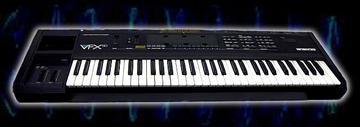
point of view as a JV-1010.  I'm using a VFX or a VFX-SD (I have one
of each), not an SD-1.

More below.

> ________________________________________________________________________
>    Date: Tue, 12 Nov 2002 16:40:10 EST
>    From: ffort2@...
>
> Greetings.  From my limited knowledge of the SD1 I believe it is limited in
> that it does not have the ability to select banks. That was part of the
> upgrade to the TS.
>
> On programmable modules your best bet is to customize your best
> sounds into the first 60 slots of the user bank.  The SD1 can access
> the first 60 sounds of a midi module easily.  The manual has
> workarounds for higher numbers up to 120, I believe, but I've not
> had personal success learning the commands on that.

The work arounds you're referring to are for controlling the SD-1
through it's MIDI in port -- it has 180 internal sounds, but there are
only 128 program change numbers, and patch bank select did not exist
at the time -- and have little to do with controlling an external
module from the SD-1.  You can send any program change (1-128) from
the VFX to an external module just fine.

However, the recommendation about gathering the sounds you want into
the user bank is a good one; this is the way I operate.  (although
it's much easier when you can copy from one of the ROM banks to the
user bank via the front pannel, which I'm not sure can be done with
the JV-1010).

It is true that without external hardware of some sort, you can't get
a bank change message out of the VFX.

You can get all 128 program change messages out, though, and on any of
the 16 channels.  I've been using the 3-voice "presets" for this sort
of control, because they exist in both the VFX-SD and the Vanilla
VFX.  Presumably, you could do the same thing with a song or sequence,
using it as an "uber preset."  With the added advantage that you can
give it a name on the VFX display, rather than "*EXT MIDI CH 1*" or
whatever it is I see in my display -- which could be important with
the JV-1010, as the sound names aren't listed on the front pannel like
they are on my JV-1080.

Using the presets, I have found that when you select a preset, the
program changes listed in the preset are sent in order from left to
right, regardless of whether the part is "active" or not (I.e. it's
the same whether there's a solid underline, blinking underline, or no
underline).  At least, that's the way I remember it working.  If you
then select one of the 3 sounds, it's program change is sent again.

Some presets I use have program changes for 3 similar or related
sounds, on the same midi channel; the rightmost one is the one that
comes up selected; then I can choose either of the other two sounds by
pressing its soft button.

So, knowing that, return to the JV and what it can do given a program
change.  There are, more or less, two modes that the JV can be in,
patch mode and performance mode.

Patch mode receives on one channel, and program changes select a sound
within the current bank, and all the effects parameters from the sound
load into the effects.  Loading all your desired patches into the user
bank and using patch mode is one way to go, and the one I use mostly,
because I mostly play live, single sounds or layers, and rarely use
multi-timbral sequences.

Performace mode is multi-timbral, up to 16 parts, one of which (part
10) must be drums.  Each part's receive channel can be set
independently.  You can have each part on its own channel, or you can
have more than one part on a single channel for splits and layers.
Assuming you leave each part on its own channel, you can send program
change messages to a part and it will select a new program -- from the
CURRENT bank for that program.

If you're catching my drift, you could set up a performance where part
1 is on midi channel 1 and has a patch from the user bank, part 2 on
midi channel 2 has a patch from preset bank A, part 3 on midi 3 has a
patch from preset bank B, and so on; then you can select any patch
from 15 banks of the JV by altering both the midi channel and program
change number you send.

However, like the VFX, the JV's multitimbral mode only has one effects
unit, and you won't usually get the effects stored with the patch.

There are ways to partially get around this also, but I fear I'm
already quite off-topic, and also long winded.  If you understand what
I've said so far, and read up on what the JV can do, you'll probably
figure out the rest (hint: one program change to change the
performance, followed by another to change the patch).

One last note:  It's my guess that the velocity curve that Roland
keyboards send doesn't match the VFX or SD-1 very well.  I find that I
often want to edit the velocity curve of the Roland patches;
therefore, they end up in the User patch bank anyway.  (The User bank
on the Roland is like the RAM bank on the Ensoniq -- the only place
you can store your own changes).

--> Steve
Message
Re: controlling a JV1010 from an SD1
2002-11-14 by Steve Wahl
Attachments
- No local attachments were found for this message.