Yahoo Groups archive

Homebrew PCBs

Index last updated: 2026-04-28 23:05 UTC

Thread

Drilling circuit boards on the cheap:

Drilling circuit boards on the cheap:

2016-02-14 by bobledoux@...


While I can find resharpened carbide bits, those cheap, bench drill presses tend to have too much runout. They also run too slow for carbide. As a result carbide bits tend to break.

I prefer to use high speed steel bits. They don't break. They do wear quickly, but I can finish a typical board with just one bit. My preferred size is 1/32 (.032) inch as these tend to cost less than numbered bits. Places like Enco sell these at 65 cents a piece in lots of a dozen plus postage, of course.

Looking for a local, and lower cost supply, I looked to Harbor Freight. They sell a 30 piece drill bit set for $3.99. The set is metric sized, but very useful. Converted to inches the set includes five each of .020, .024, ,031; three size .039; and two each of .047, .059, .071, .079, .093 and 118.

For circuit board work, the 18 bits less than .040 size are a bargain at 22 cents each.

In keeping with the K7QO experimental mindset, I'll buy some tomorrow and report back.

bob-N7SUR


Re: [Homebrew_PCBs] Drilling circuit boards on the cheap:

2016-02-14 by Stefan Trethan

You can easily resharpen HSS bits, even the very small ones. Don't fuss about the correct geometry, almost anything will melt through FR4. You can just touch them against a dremel wheel or grinder at what you imagine might be the correct angle and you are good to go for another couple dozen holes. I didn't even take them out of the drill to sharpen, gives you something to hold onto.

As for carbide, they do work great in a fast running drill in a precision stand. There are several ways to make a stand using a pivoting arm or flexures. Highly recommended if you make a lot of PCBs because of the clean holes they cut.

BigClive (.com and youtube) uses carbide drills handheld, but then he has hands the size of manhole covers, and is a scot....


ST
Show quoted textHide quoted text
On Sun, Feb 14, 2016 at 7:59 PM, bobledoux@... [Homebrew_PCBs] <Homebrew_PCBs@yahoogroups.com> wrote:


While I can find resharpened carbide bits, those cheap, bench drill presses tend to have too much runout. They also run too slow for carbide. As a result carbide bits tend to break.

I prefer to use high speed steel bits. They don't break. They do wear quickly, but I can finish a typical board with just one bit. My preferred size is 1/32 (.032) inch as these tend to cost less than numbered bits. Places like Enco sell these at 65 cents a piece in lots of a dozen plus postage, of course.

Looking for a local, and lower cost supply, I looked to Harbor Freight. They sell a 30 piece drill bit set for $3.99. The set is metric sized, but very useful. Converted to inches the set includes five each of .020, .024, ,031; three size .039; and two each of .047, .059, .071, .079, .093 and 118.

For circuit board work, the 18 bits less than .040 size are a bargain at 22 cents each.

In keeping with the K7QO experimental mindset, I'll buy some tomorrow and report back.

bob-N7SUR


Re: Drilling circuit boards on the cheap:

2016-02-15 by AncelB

I use resharpened carbide in my dremel 395 with 1/8" shanks for PCB 
work.  They work fine....I go down to around 0.31 mm. I can go smaller 
but bit breaking happens every 10 holes or so.

Re: [Homebrew_PCBs] Re: Drilling circuit boards on the cheap:

2016-02-15 by Harvey White

On Mon, 15 Feb 2016 00:36:34 -0400, you wrote:

>I use resharpened carbide in my dremel 395 with 1/8" shanks for PCB 
>work.  They work fine....I go down to around 0.31 mm. I can go smaller 
>but bit breaking happens every 10 holes or so.

The Dremel has enough runout that the bit wobbles and, as you noticed,
breaks.

I use a Proxxon, and have drilled hundreds of holes with the same bit
(it goes dull eventually) and have not broken a bit due to wobble.

I did use a Dremel, and that was insufficient.

Harvey

Re: [Homebrew_PCBs] Re: Drilling circuit boards on the cheap:

2016-02-15 by Stefan Trethan

Is that a serious question?
Do you really think they make the tools interchangeable?

I would not go for this proxxon model, it is the worst of the lot
because it comes with a jacobs type chuck rather than collets.
You can buy the hardened steel collets separately, but I don't know if
the unit is then as good in terms of runout as the others.

Instead I would recommend one of the following:
<http://www.proxxon.com/en/micromot/28481.php?list>
<http://www.proxxon.com/en/micromot/28485.php?list>
<http://www.proxxon.com/en/micromot/28440.php?list>
(Note that these are 230V models and you might have to find the 115V version).


Even the 12V Micromot units are easily powerful enough for PCB
drilling, and generally less than half the cost.
<http://www.proxxon.com/en/micromot/28500.php?list>
<http://www.proxxon.com/en/micromot/28512.php?list>

I have a separate 12V micromot in the PCB drill press, because I got
tired of taking out the IB/E to use it for other tasks.

ST

On Mon, Feb 15, 2016 at 11:54 AM, AncelB mosaicmerc@...
[Homebrew_PCBs] <Homebrew_PCBs@yahoogroups.com> wrote:
Show quoted textHide quoted text
> Would a Proxxon like this fit the Dremel Press?
> Ebay # 121708044834
>
>
> ------------------------------------
> Posted by: AncelB <mosaicmerc@...>
> ------------------------------------
>
> Be sure to visit the group home and check for new Links, Files, and Photos:
> http://groups.yahoo.com/group/Homebrew_PCBs
> ------------------------------------
>
> Yahoo Groups Links
>
>
>

Re: [Homebrew_PCBs] Re: Drilling circuit boards on the cheap:

2016-02-15 by DJ Delorie

"AncelB mosaicmerc@... [Homebrew_PCBs]"
> I use resharpened carbide in my dremel 395 with 1/8" shanks for PCB 
> work.  They work fine....I go down to around 0.31 mm. I can go smaller 
> but bit breaking happens every 10 holes or so.

Me too, but I rarely break bits since I switched to a home-brew drill
stand that seems to eliminate any "hand wobble" from causing breakage.

My CNC machine can drill lots of holes with resharpened carbide and a
Grizzly pencil-style die grinder.

Perhaps rigidity in the holding of the dremel is more important than
runout?  Or at least, *lack* of rigidity is more common as a cause of
breakage?

Re: [Homebrew_PCBs] Re: Drilling circuit boards on the cheap:

2016-02-15 by Harvey White

On Mon, 15 Feb 2016 13:05:41 -0500, you wrote:

>
>"AncelB mosaicmerc@... [Homebrew_PCBs]"
>> I use resharpened carbide in my dremel 395 with 1/8" shanks for PCB 
>> work.  They work fine....I go down to around 0.31 mm. I can go smaller 
>> but bit breaking happens every 10 holes or so.
>
>Me too, but I rarely break bits since I switched to a home-brew drill
>stand that seems to eliminate any "hand wobble" from causing breakage.

So does mine, so that's a big help.
>
>My CNC machine can drill lots of holes with resharpened carbide and a
>Grizzly pencil-style die grinder.
>

I happen to use a Proxxon 12 volt tool in my drill.  The bearings and
collet are far better than Dremel.  That said, I do use a dremel, but
not for drilling precise holes.

>Perhaps rigidity in the holding of the dremel is more important than
>runout?  Or at least, *lack* of rigidity is more common as a cause of
>breakage?

Lack of rigidity in mounting the tool is likely the number one cause
of disaster (get a 1/8 inch high speed bit to wobbling and it will eat
a 3/8 inch irregular hole in PC board.... don't ask how I know
this...)

Once that's taken care of, the next problem will be runout on the
drill itself (notably the chuck and bearings).  While this is likely
to break smaller drills (say as a guess #70 and above), the most
likely consequence in my opinion is a lack of precision in the actual
hole location.  Less of a problem if you have a donut pad with a clear
hole to guide the drill.

I've not had a problem that I could attribute to the drill bit itself,
other than dull.

Oh, and my "drill" holder is on a set of reasonably high quality (not
cabinet drawer pulls) linear bearings, so that does make a substantial
difference.


Harvey

Re: Drilling circuit boards on the cheap:

2016-02-15 by me@...

What is a Grizzly pencil style grinder?

Do you use it to mill?

I have not been able to get good results with milling. I think I might need to try leveling software. For now I will be happy to just have the CNC drill holes. That is the hard part of the job.

Re: Drilling circuit boards on the cheap:

2016-02-15 by me@...

I had horrible issues with run out. I sent my drill back to Dremel and they fixed it under warranty. I have not had a chance to try it.

My cheap CNC drills really accurate holes.

Re: [Homebrew_PCBs] Re: Drilling circuit boards on the cheap:

2016-02-15 by <n0tt1@...>

"AncelB mosaicmerc@... [Homebrew_PCBs]"
> I use resharpened carbide in my dremel 395 with 1/8" shanks for PCB 
> work. They work fine....I go down to around 0.31 mm. I can go smaller 
> but bit breaking happens every 10 holes or so.
 
>Me too, but I rarely break bits since I switched to a home-brew drill
stand that seems to eliminate any "hand wobble" from causing breakage.
 
>My CNC machine can drill lots of holes with resharpened carbide and a
Grizzly pencil-style die grinder.
 
>Perhaps rigidity in the holding of the dremel is more important than
runout? Or at least, *lack* of rigidity is more common as a cause of
breakage?
 
>Posted by: DJ Delorie <dj@...>
 
I purchased a drill stand from Sears quite a few years ago.  It
had run-out, but I cured that by tightening/adjusting all the
critical screws that caused the run-out.  Works just fine since
then, and no breakage of carbide drill bits either.  I'm using
a Dremmel with the collets, mostly the 1/8" size.  I gotta say
though that the stand sure is CHEAPLY made....lots of plastic
parts.  Once when using the stand, the sector gear that raises/lowers
the drill carriage broke!!  (Cheap plastic!!!)  I made another gear out
of some thick aluminum and it's been good ever since.
 
My bigest problem is positioning the PC board on the exact
center of the pads.  My drilling is close but most of the time not
dead-on especially if the pad's center holes don't get etched
away.  I installed a 12v light bulb under the stand and
that helps to illuminate the pad locations, but still.....
 
On my drill stand I made a larger platform out of some
1/8" smooth hardboard so I could use a homebrew 
moveable fence that clamps to the edges of the hardboard.  
Using that sure made drilling easy when I needed to neatly drill 
holes in a row like for IC's.
 
Charlie

Re: [Homebrew_PCBs] Re: Drilling circuit boards on the cheap:

2016-02-15 by Harvey White

On Mon, 15 Feb 2016 20:21:52 +0000, you wrote:

> "AncelB mosaicmerc@... [Homebrew_PCBs]"
>> I use resharpened carbide in my dremel 395 with 1/8" shanks for PCB 
>> work. They work fine....I go down to around 0.31 mm. I can go smaller 
>> but bit breaking happens every 10 holes or so.
> 
>>Me too, but I rarely break bits since I switched to a home-brew drill
>stand that seems to eliminate any "hand wobble" from causing breakage.
> 
>>My CNC machine can drill lots of holes with resharpened carbide and a
>Grizzly pencil-style die grinder.
> 
>>Perhaps rigidity in the holding of the dremel is more important than
>runout? Or at least, *lack* of rigidity is more common as a cause of
>breakage?
> 
>>Posted by: DJ Delorie <dj@...>
> 
>I purchased a drill stand from Sears quite a few years ago.  It
>had run-out, but I cured that by tightening/adjusting all the
>critical screws that caused the run-out.  Works just fine since
>then, and no breakage of carbide drill bits either.  I'm using
>a Dremmel with the collets, mostly the 1/8" size.  I gotta say
>though that the stand sure is CHEAPLY made....lots of plastic
>parts.  Once when using the stand, the sector gear that raises/lowers
>the drill carriage broke!!  (Cheap plastic!!!)  I made another gear out
>of some thick aluminum and it's been good ever since.
> 
>My bigest problem is positioning the PC board on the exact
>center of the pads.  My drilling is close but most of the time not
>dead-on especially if the pad's center holes don't get etched
>away.  I installed a 12v light bulb under the stand and
>that helps to illuminate the pad locations, but still.....

You're looking at parallax as a problem.  You're not looking straight
down on where the hole should be.

One option would be to put a webcam under the board, illuminate the
bottom, and drill from there.  Your only problem would be the swarf
from the board.

Mine is upside down, with the camera above and the drill from the
bottom.  It's a bit more complicated mechanically, and involves some
programming and a stepper motor.

However, a top drill press with a bottom view (and a vacuum sucking
off the swarf) would be a possible good idea.  

You drill from the side where the pads are.  

A good set of movable crosshairs (if there's any play) and a test hole
when the drill is changed ought to get you very very close.

Harvey
Show quoted textHide quoted text
> 
>On my drill stand I made a larger platform out of some
>1/8" smooth hardboard so I could use a homebrew 
>moveable fence that clamps to the edges of the hardboard.  
>Using that sure made drilling easy when I needed to neatly drill 
>holes in a row like for IC's.
> 
>Charlie

Re: [Homebrew_PCBs] Re: Drilling circuit boards on the cheap:

2016-02-16 by <n0tt1@...>

Thanks for the advice Harvey...I'll look into the methods
you suggested.

Yeah, the swarf  from the board is a problem...have a vacuum
at hand, but some kind of automatic "vac as you go" method
would be best.

Charlie

mosaicmerc@... [Homebrew_PCBs]"
>> I use resharpened carbide in my dremel 395 with 1/8" shanks for PCB 
>> work. They work fine....I go down to around 0.31 mm. I can go smaller 
>> but bit breaking happens every 10 holes or so.
> 
>>Me too, but I rarely break bits since I switched to a home-brew drill
>stand that seems to eliminate any "hand wobble" from causing breakage.
> 
>>My CNC machine can drill lots of holes with resharpened carbide and a
>Grizzly pencil-style die grinder.
> 
>>Perhaps rigidity in the holding of the dremel is more important than
>runout? Or at least, *lack* of rigidity is more common as a cause of
>breakage?
> 
>>Posted by: DJ Delorie <dj@...>
> 
>I purchased a drill stand from Sears quite a few years ago. It
>had run-out, but I cured that by tightening/adjusting all the
>critical screws that caused the run-out. Works just fine since
>then, and no breakage of carbide drill bits either. I'm using
>a Dremmel with the collets, mostly the 1/8" size. I gotta say
>though that the stand sure is CHEAPLY made....lots of plastic
>parts. Once when using the stand, the sector gear that raises/lowers
>the drill carriage broke!! (Cheap plastic!!!) I made another gear out
>of some thick aluminum and it's been good ever since.
> 
>My bigest problem is positioning the PC board on the exact
>center of the pads. My drilling is close but most of the time not
>dead-on especially if the pad's center holes don't get etched
>away. I installed a 12v light bulb under the stand and
>that helps to illuminate the pad locations, but still.....

You're looking at parallax as a problem. You're not looking straight
down on where the hole should be.

One option would be to put a webcam under the board, illuminate the
bottom, and drill from there. Your only problem would be the swarf
from the board.

Mine is upside down, with the camera above and the drill from the
bottom. It's a bit more complicated mechanically, and involves some
programming and a stepper motor.

However, a top drill press with a bottom view (and a vacuum sucking
off the swarf) would be a possible good idea. 

You drill from the side where the pads are. 

A good set of movable crosshairs (if there's any play) and a test hole
when the drill is changed ought to get you very very close.

Harvey

> 
>On my drill stand I made a larger platform out of some
>1/8" smooth hardboard so I could use a homebrew 
>moveable fence that clamps to the edges of the hardboard. 
>Using that sure made drilling easy when I needed to neatly drill 
>holes in a row like for IC's.
> 
>Charlie


-------------------------------------------------------------------------
-------
Posted by: Harvey White <madyn@...> 
-------------------------------------------------------------------------
-------

Reply via web post  \ufffd Reply to sender  \ufffd Reply to group  \ufffd Start a New
Topic  \ufffd Messages in this topic (13)  

Be sure to visit the group home and check for new Links, Files, and
Photos:
http://groups.yahoo.com/group/Homebrew_PCBs 
Visit Your Group New Members 2 
 \ufffd Privacy \ufffd Unsubscribe \ufffd Terms of Use 

.

Re: [Homebrew_PCBs] Re: Drilling circuit boards on the cheap:

2016-02-16 by Harvey White

On Tue, 16 Feb 2016 00:02:26 +0000, you wrote:

>Thanks for the advice Harvey...I'll look into the methods
>you suggested.

I have a very quiet vacuum, so it is on all the time with an air scoop
to remove the board swarf.


>
>Yeah, the swarf  from the board is a problem...have a vacuum
>at hand, but some kind of automatic "vac as you go" method
>would be best.

I have a very crude (but quite workable) air scoop made from the
crevice tool of a regular vacuum.  Works surprisingly well.

You can get very very close with a vertical alignment drill press, and
not so close when you have to match the hole at an extreme angle.

Harvey
Show quoted textHide quoted text
>
>Charlie
>
>mosaicmerc@... [Homebrew_PCBs]"
>>> I use resharpened carbide in my dremel 395 with 1/8" shanks for PCB 
>>> work. They work fine....I go down to around 0.31 mm. I can go smaller 
>>> but bit breaking happens every 10 holes or so.
>> 
>>>Me too, but I rarely break bits since I switched to a home-brew drill
>>stand that seems to eliminate any "hand wobble" from causing breakage.
>> 
>>>My CNC machine can drill lots of holes with resharpened carbide and a
>>Grizzly pencil-style die grinder.
>> 
>>>Perhaps rigidity in the holding of the dremel is more important than
>>runout? Or at least, *lack* of rigidity is more common as a cause of
>>breakage?
>> 
>>>Posted by: DJ Delorie <dj@...>
>> 
>>I purchased a drill stand from Sears quite a few years ago. It
>>had run-out, but I cured that by tightening/adjusting all the
>>critical screws that caused the run-out. Works just fine since
>>then, and no breakage of carbide drill bits either. I'm using
>>a Dremmel with the collets, mostly the 1/8" size. I gotta say
>>though that the stand sure is CHEAPLY made....lots of plastic
>>parts. Once when using the stand, the sector gear that raises/lowers
>>the drill carriage broke!! (Cheap plastic!!!) I made another gear out
>>of some thick aluminum and it's been good ever since.
>> 
>>My bigest problem is positioning the PC board on the exact
>>center of the pads. My drilling is close but most of the time not
>>dead-on especially if the pad's center holes don't get etched
>>away. I installed a 12v light bulb under the stand and
>>that helps to illuminate the pad locations, but still.....
>
>You're looking at parallax as a problem. You're not looking straight
>down on where the hole should be.
>
>One option would be to put a webcam under the board, illuminate the
>bottom, and drill from there. Your only problem would be the swarf
>from the board.
>
>Mine is upside down, with the camera above and the drill from the
>bottom. It's a bit more complicated mechanically, and involves some
>programming and a stepper motor.
>
>However, a top drill press with a bottom view (and a vacuum sucking
>off the swarf) would be a possible good idea. 
>
>You drill from the side where the pads are. 
>
>A good set of movable crosshairs (if there's any play) and a test hole
>when the drill is changed ought to get you very very close.
>
>Harvey
>
>> 
>>On my drill stand I made a larger platform out of some
>>1/8" smooth hardboard so I could use a homebrew 
>>moveable fence that clamps to the edges of the hardboard. 
>>Using that sure made drilling easy when I needed to neatly drill 
>>holes in a row like for IC's.
>> 
>>Charlie
>
>
>
>
>
>-------------------------------------------------------------------------
>-------
>Posted by: Harvey White <madyn@...> 
>-------------------------------------------------------------------------
>-------
>
>Reply via web post  \ufffd Reply to sender  \ufffd Reply to group  \ufffd Start a New
>Topic  \ufffd Messages in this topic (13)  
>
>Be sure to visit the group home and check for new Links, Files, and
>Photos:
>http://groups.yahoo.com/group/Homebrew_PCBs 
>Visit Your Group New Members 2 
> \ufffd Privacy \ufffd Unsubscribe \ufffd Terms of Use 
>
>.
> 
>

Re: [Homebrew_PCBs] Re: Drilling circuit boards on the cheap:

2016-02-16 by Mark Lerman

While not exactly "on the cheap", I think my 
modified version of Harvey's "solution" is very 
cost effective. 
<http://www.instructables.com/id/Motorized-Plunge-PCB-Drill-Using-a-USB-Microscope/>. 
It uses a USB microscope to be sure the drill is 
placed correctly. It can be built for 
approximately $100 USD, including the drill.

Mark


At 07:22 PM 2/15/2016, you wrote:
Show quoted textHide quoted text
>On Tue, 16 Feb 2016 00:02:26 +0000, you wrote:
>
> >Thanks for the advice Harvey...I'll look into the methods
> >you suggested.
>
>I have a very quiet vacuum, so it is on all the time with an air scoop
>to remove the board swarf.
>
>
> >
> >Yeah, the swarf  from the board is a problem...have a vacuum
> >at hand, but some kind of automatic "vac as you go" method
> >would be best.
>
>I have a very crude (but quite workable) air scoop made from the
>crevice tool of a regular vacuum.  Works surprisingly well.
>
>You can get very very close with a vertical alignment drill press, and
>not so close when you have to match the hole at an extreme angle.
>
>Harvey
>
>
> >
> >Charlie
> >
> >mosaicmerc@... [Homebrew_PCBs]"
> >>> I use resharpened carbide in my dremel 395 with 1/8" shanks for PCB
> >>> work. They work fine....I go down to around 0.31 mm. I can go smaller
> >>> but bit breaking happens every 10 holes or so.
> >>
> >>>Me too, but I rarely break bits since I switched to a home-brew drill
> >>stand that seems to eliminate any "hand wobble" from causing breakage.
> >>
> >>>My CNC machine can drill lots of holes with resharpened carbide and a
> >>Grizzly pencil-style die grinder.
> >>
> >>>Perhaps rigidity in the holding of the dremel is more important than
> >>runout? Or at least, *lack* of rigidity is more common as a cause of
> >>breakage?
> >>
> >>>Posted by: DJ Delorie <dj@...>
> >>
> >>I purchased a drill stand from Sears quite a few years ago. It
> >>had run-out, but I cured that by tightening/adjusting all the
> >>critical screws that caused the run-out. Works just fine since
> >>then, and no breakage of carbide drill bits either. I'm using
> >>a Dremmel with the collets, mostly the 1/8" size. I gotta say
> >>though that the stand sure is CHEAPLY made....lots of plastic
> >>parts. Once when using the stand, the sector gear that raises/lowers
> >>the drill carriage broke!! (Cheap plastic!!!) I made another gear out
> >>of some thick aluminum and it's been good ever since.
> >>
> >>My bigest problem is positioning the PC board on the exact
> >>center of the pads. My drilling is close but most of the time not
> >>dead-on especially if the pad's center holes don't get etched
> >>away. I installed a 12v light bulb under the stand and
> >>that helps to illuminate the pad locations, but still.....
> >
> >You're looking at parallax as a problem. You're not looking straight
> >down on where the hole should be.
> >
> >One option would be to put a webcam under the board, illuminate the
> >bottom, and drill from there. Your only problem would be the swarf
> >from the board.
> >
> >Mine is upside down, with the camera above and the drill from the
> >bottom. It's a bit more complicated mechanically, and involves some
> >programming and a stepper motor.
> >
> >However, a top drill press with a bottom view (and a vacuum sucking
> >off the swarf) would be a possible good idea.
> >
> >You drill from the side where the pads are.
> >
> >A good set of movable crosshairs (if there's any play) and a test hole
> >when the drill is changed ought to get you very very close.
> >
> >Harvey
> >
> >>
> >>On my drill stand I made a larger platform out of some
> >>1/8" smooth hardboard so I could use a homebrew
> >>moveable fence that clamps to the edges of the hardboard.
> >>Using that sure made drilling easy when I needed to neatly drill
> >>holes in a row like for IC's.
> >>
> >>Charlie
> >
> >
> >
> >
> >
> >-------------------------------------------------------------------------
> >-------
> >Posted by: Harvey White <madyn@dragonworks.info>
> >-------------------------------------------------------------------------
> >-------
> >
> >Reply via web post  • Reply to sender  • Reply to group  • Start a New
> >Topic  • Messages in this topic (13)
> >
> >Be sure to visit the group home and check for new Links, Files, and
> >Photos:
> >http://groups.yahoo.com/group/Homebrew_PCBs
> >Visit Your Group New Members 2
> > • Privacy • Unsubscribe • Terms of Use
> >
> >.
> >
> >
>
>
>
>------------------------------------
>Posted by: Harvey White <madyn@...>
>------------------------------------
>
>Be sure to visit the group home and check for new Links, Files, and Photos:
>http://groups.yahoo.com/group/Homebrew_PCBs
>------------------------------------
>
>Yahoo Groups Links
>
>
>

Re: [Homebrew_PCBs] Re: Drilling circuit boards on the cheap:

2016-02-16 by DJ Delorie

"me@... [Homebrew_PCBs]" <Homebrew_PCBs@yahoogroups.com>
writes:
> What is a Grizzly pencil style grinder? 

http://www.grizzly.com/products/Micro-Air-Grinder-17-pc-Kit/H8212
http://www.delorie.com/photos/cnc/img_2604.html
https://www.youtube.com/watch?v=SR1y6Eq19EU

> Do you use it to mill?

I don't mill PCBs, I use UV film.  The CNC machine also has a holder for
my Port-Cable router motor so I can mill wood :-)

I *can* use a milling bit to cut out the outline of a pcb:

http://www.delorie.com/photos/cnc/127-63-disk.html

http://www.delorie.com/photos/cnc/

Re: [Homebrew_PCBs] Re: Drilling circuit boards on the cheap:

2016-02-16 by <n0tt1@...>

OK on the quiet vacuum and the dust scoop, Harvey.

I looked at the drill press/camera device and found it
interesting.  I downloaded the info and will take a good
look at it.  Thanks!

Charlie
 
>Thanks for the advice Harvey...I'll look into the methods
>you suggested.

>I have a very quiet vacuum, so it is on all the time with an air scoop
to remove the board swarf.

>
>Yeah, the swarf from the board is a problem...have a vacuum
>at hand, but some kind of automatic "vac as you go" method
>would be best.

I have a very crude (but quite workable) air scoop made from the
crevice tool of a regular vacuum. Works surprisingly well.

You can get very very close with a vertical alignment drill press, and
not so close when you have to match the hole at an extreme angle.

Harvey
Show quoted textHide quoted text
>
>Charlie
>
>mosaicmerc@... [Homebrew_PCBs]"
>>> I use resharpened carbide in my dremel 395 with 1/8" shanks for PCB 
>>> work. They work fine....I go down to around 0.31 mm. I can go smaller

>>> but bit breaking happens every 10 holes or so.
>> 
>>>Me too, but I rarely break bits since I switched to a home-brew drill
>>stand that seems to eliminate any "hand wobble" from causing breakage.
>> 
>>>My CNC machine can drill lots of holes with resharpened carbide and a
>>Grizzly pencil-style die grinder.
>> 
>>>Perhaps rigidity in the holding of the dremel is more important than
>>runout? Or at least, *lack* of rigidity is more common as a cause of
>>breakage?
>> 
>>>Posted by: DJ Delorie <dj@...>
>> 
>>I purchased a drill stand from Sears quite a few years ago. It
>>had run-out, but I cured that by tightening/adjusting all the
>>critical screws that caused the run-out. Works just fine since
>>then, and no breakage of carbide drill bits either. I'm using
>>a Dremmel with the collets, mostly the 1/8" size. I gotta say
>>though that the stand sure is CHEAPLY made....lots of plastic
>>parts. Once when using the stand, the sector gear that raises/lowers
>>the drill carriage broke!! (Cheap plastic!!!) I made another gear out
>>of some thick aluminum and it's been good ever since.
>> 
>>My bigest problem is positioning the PC board on the exact
>>center of the pads. My drilling is close but most of the time not
>>dead-on especially if the pad's center holes don't get etched
>>away. I installed a 12v light bulb under the stand and
>>that helps to illuminate the pad locations, but still.....
>
>You're looking at parallax as a problem. You're not looking straight
>down on where the hole should be.
>
>One option would be to put a webcam under the board, illuminate the
>bottom, and drill from there. Your only problem would be the swarf
>from the board.
>
>Mine is upside down, with the camera above and the drill from the
>bottom. It's a bit more complicated mechanically, and involves some
>programming and a stepper motor.
>
>However, a top drill press with a bottom view (and a vacuum sucking
>off the swarf) would be a possible good idea. 
>
>You drill from the side where the pads are. 
>
>A good set of movable crosshairs (if there's any play) and a test hole
>when the drill is changed ought to get you very very close.
>
>Harvey
>
>> 
>>On my drill stand I made a larger platform out of some
>>1/8" smooth hardboard so I could use a homebrew 
>>moveable fence that clamps to the edges of the hardboard. 
>>Using that sure made drilling easy when I needed to neatly drill 
>>holes in a row like for IC's.
>> 
>>Charlie
>
>

Re: Drilling circuit boards on the cheap:

2016-02-16 by AncelB

I use a 395 Dremel, which has workable 'runout' and is more robust.
I don't use it for  side cutting tiles etc. to wear the bearings. I do 
use it with cutoff blades for machine screws or scoring PCBs.
The problem is with the Dremel press wobble.

Anyhow I ordered the FBS115 Proxxon tool, mini machine vise,  and 
matched CNC machined press as a 'upgrade' . I have the x-y  table on 
hand already, to do a bit of slotting for RF PCBs or SPADE connector 
slotting as required.
The dremel will get used for the cutoff blades or the > 1.2mm holes.

I got a 4" table saw with a diamond blade that rips through PCBs (1/16" 
blade) and dumps the dust at the bottom.
The solution with fine dust is to wet the PCB before drilling/cutting; 
lowers wear on the bits as well. A vaseline wipe works as well and  
evaporates during soldering.
I back light the PCB with a pair of hi brightness white LEDs before 
drilling. No missed holes or vias as I etch the donuts.
I also donut pad the 6-32 machine screw holes to centre punch with a 1mm 
drill before the 3mm.

I did try laser cutting/drilling FR1 phenolic but it carbonizes and 
requires multiple low power passes.

RE: [Homebrew_PCBs] Re: Drilling circuit boards on the cheap: [1 Attachment]

2016-02-16 by Jeff Heiss

Where was the drill purchased?


From: Homebrew_PCBs@yahoogroups.com [mailto:Homebrew_PCBs@yahoogroups.com] 
Sent: Tuesday, February 16, 2016 9:58 AM
To: Homebrew_PCBs@yahoogroups.com
Subject: [Homebrew_PCBs] Re: Drilling circuit boards on the cheap: [1 Attachment]


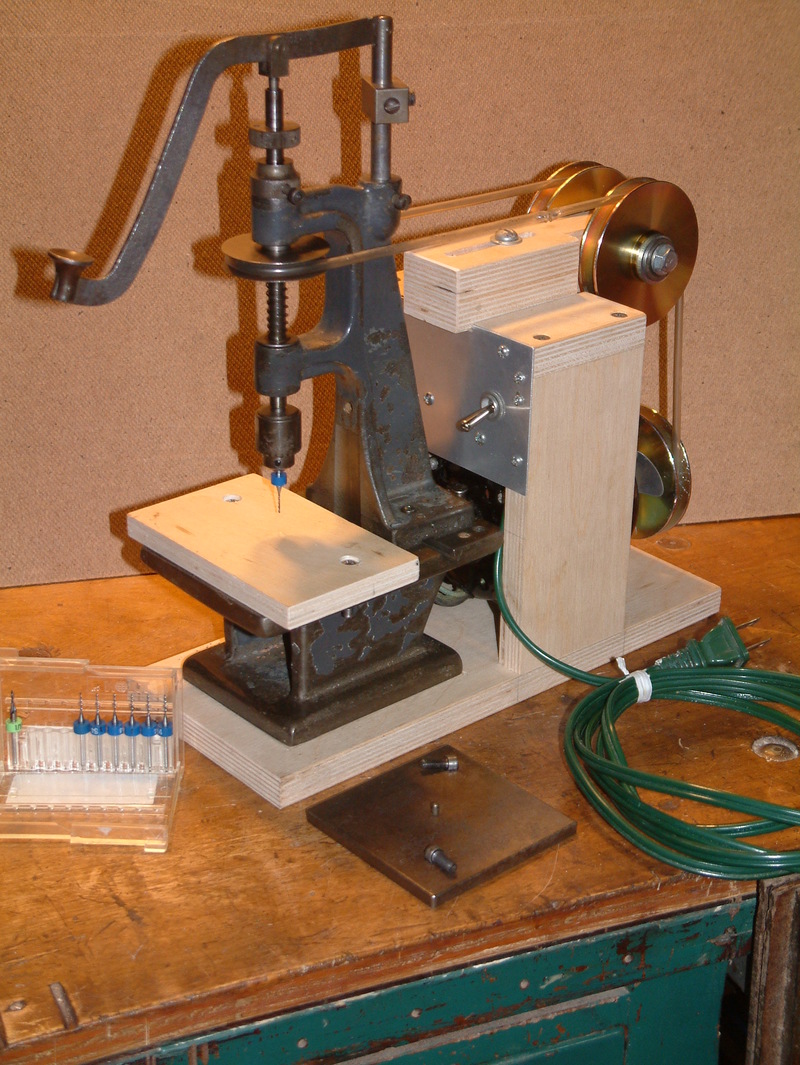
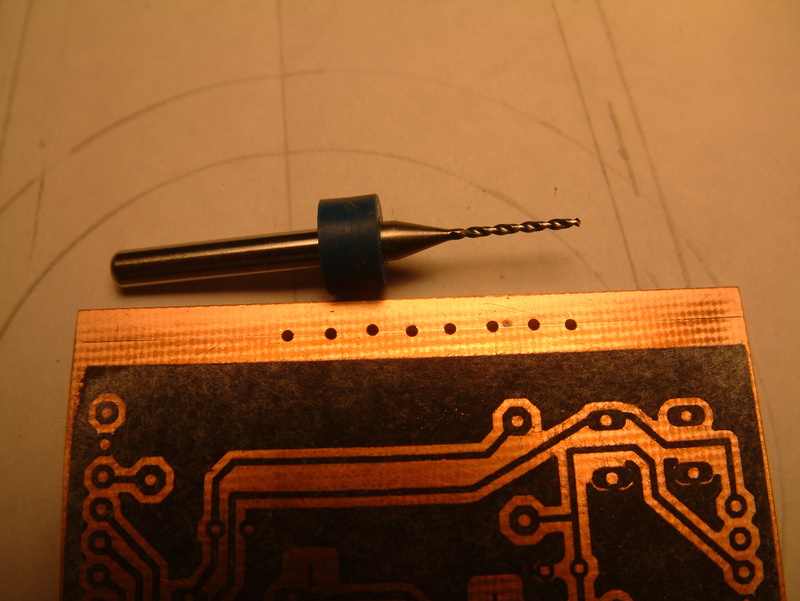
This is what I use for small boards. It only has about an inch and a half throat but is very stable. I think it was used by clock makers but there is no information available for it.

RE: [Homebrew_PCBs] Re: Drilling circuit boards on the cheap: [1 Attachment]

2016-02-17 by keith printy

A friend of mine used to use something called a unimat to drill his boards. It was belt drive,but also converted into a lathe. I borrowed it when I did some boards a long time ago


From: Homebrew_PCBs@yahoogroups.com [mailto:Homebrew_PCBs@yahoogroups.com] 
Sent: Tuesday, February 16, 2016 9:58 AM
To: Homebrew_PCBs@yahoogroups.com
Subject: [Homebrew_PCBs] Re: Drilling circuit boards on the cheap: [1 Attachment]


This is what I use for small boards. It only has about an inch and a half throat but is very stable. I think it was used by clock makers but there is no information available for it.

Re: [Homebrew_PCBs] Re: Drilling circuit boards on the cheap:

2016-02-17 by Harvey White

On Tue, 16 Feb 2016 19:52:19 -0500, you wrote:

>A friend of mine used to use something called a unimat to drill his boards. It was belt drive,but also converted into a lathe. I borrowed it when I did some boards a long time ago
>

It's very precise, a combination of lathe, drill press, and almost
anything else.  It's also quite expensive since it is a collector's
item at this point.  

Its weak point is also the strong point, versatility.  However, every
setup needs to be squared and trued.  It has minimal capacity, but can
do beautiful work when properly adjusted.

The belts have limited life and are somewhat annoying to find
replacements for.

It can be a very high speed drill press, about 15K RPM IIRC.


Harvey
Show quoted textHide quoted text
> 
>
>From: Homebrew_PCBs@yahoogroups.com [mailto:Homebrew_PCBs@yahoogroups.com] 
>Sent: Tuesday, February 16, 2016 9:58 AM
>To: Homebrew_PCBs@yahoogroups.com
>Subject: [Homebrew_PCBs] Re: Drilling circuit boards on the cheap: [1 Attachment]
>
> 
>
>  
>
>This is what I use for small boards. It only has about an inch and a half throat but is very stable. I think it was used by clock makers but there is no information available for it.
>
>
RE: [Homebrew_PCBs] Re: Drilling circuit boards on the cheap:

2016-02-17 by keith printy

I have used O rings for belts they can work in a pinch
Show quoted textHide quoted text
From: Homebrew_PCBs@yahoogroups.com [mailto:Homebrew_PCBs@yahoogroups.com] 
Sent: Tuesday, February 16, 2016 8:48 PM
To: Homebrew_PCBs@yahoogroups.com
Cc: Homebrew_PCBs@yahoogroups.com
Subject: Re: [Homebrew_PCBs] Re: Drilling circuit boards on the cheap:


On Tue, 16 Feb 2016 19:52:19 -0500, you wrote:

>A friend of mine used to use something called a unimat to drill his boards.
It was belt drive,but also converted into a lathe. I borrowed it when I did
some boards a long time ago
>

It's very precise, a combination of lathe, drill press, and almost
anything else. It's also quite expensive since it is a collector's
item at this point. 

Its weak point is also the strong point, versatility. However, every
setup needs to be squared and trued. It has minimal capacity, but can
do beautiful work when properly adjusted.

The belts have limited life and are somewhat annoying to find
replacements for.

It can be a very high speed drill press, about 15K RPM IIRC.

Harvey

> 
>
>From: Homebrew_PCBs@yahoogroups.com [mailto:Homebrew_PCBs@yahoogroups.com] 
>Sent: Tuesday, February 16, 2016 9:58 AM
>To: Homebrew_PCBs@yahoogroups.com
>Subject: [Homebrew_PCBs] Re: Drilling circuit boards on the cheap: [1
Attachment]
>
> 
>
> 
>
>This is what I use for small boards. It only has about an inch and a half
throat but is very stable. I think it was used by clock makers but there is
no information available for it.
>
>

Re: [Homebrew_PCBs] Re: Drilling circuit boards on the cheap:

2016-02-17 by Harvey White

On Tue, 16 Feb 2016 21:28:47 -0500, you wrote:

>I have used O rings for belts they can work in a pinch

The problem I've had with them is that they expand at higher speeds
and fly off the drive pulleys.  (or almost)

The original plastic belts are available through McMaster (or at
least, a substitute).  However, I don't remember the exact size.

That, however, is a project for later, I have enough to do right
now...

Harvey
Show quoted textHide quoted text
>
> 
>
> 
>
>From: Homebrew_PCBs@yahoogroups.com [mailto:Homebrew_PCBs@yahoogroups.com] 
>Sent: Tuesday, February 16, 2016 8:48 PM
>To: Homebrew_PCBs@yahoogroups.com
>Cc: Homebrew_PCBs@yahoogroups.com
>Subject: Re: [Homebrew_PCBs] Re: Drilling circuit boards on the cheap:
>
> 
>
>  
>
>On Tue, 16 Feb 2016 19:52:19 -0500, you wrote:
>
>>A friend of mine used to use something called a unimat to drill his boards.
>It was belt drive,but also converted into a lathe. I borrowed it when I did
>some boards a long time ago
>>
>
>It's very precise, a combination of lathe, drill press, and almost
>anything else. It's also quite expensive since it is a collector's
>item at this point. 
>
>Its weak point is also the strong point, versatility. However, every
>setup needs to be squared and trued. It has minimal capacity, but can
>do beautiful work when properly adjusted.
>
>The belts have limited life and are somewhat annoying to find
>replacements for.
>
>It can be a very high speed drill press, about 15K RPM IIRC.
>
>Harvey
>
>> 
>>
>>From: Homebrew_PCBs@yahoogroups.com [mailto:Homebrew_PCBs@yahoogroups.com] 
>>Sent: Tuesday, February 16, 2016 9:58 AM
>>To: Homebrew_PCBs@yahoogroups.com
>>Subject: [Homebrew_PCBs] Re: Drilling circuit boards on the cheap: [1
>Attachment]
>>
>> 
>>
>> 
>>
>>This is what I use for small boards. It only has about an inch and a half
>throat but is very stable. I think it was used by clock makers but there is
>no information available for it.
>>
>>
>
>

Re: [Homebrew_PCBs] Re: Drilling circuit boards on the cheap:

2016-02-17 by Stefan Trethan

Once I saw an ad for a used lathe, with an Unimat sitting on top of the ways.
The seller had no idea that the Unimat was not part of the larger
lathe. At 250eur the large lathe would have been cheap, and I could
have sold the Unimat to get my money back, but as always happens it
was already taken when I saw it....

Otherwise not affordable at all, even in Austria, where they were made.

ST

On Wed, Feb 17, 2016 at 2:47 AM, Harvey White madyn@...
[Homebrew_PCBs] <Homebrew_PCBs@yahoogroups.com> wrote:
Show quoted textHide quoted text
> On Tue, 16 Feb 2016 19:52:19 -0500, you wrote:
>
>>A friend of mine used to use something called a unimat to drill his boards. It was belt drive,but also converted into a lathe. I borrowed it when I did some boards a long time ago
>>
>
> It's very precise, a combination of lathe, drill press, and almost
> anything else.  It's also quite expensive since it is a collector's
> item at this point.
>
> Its weak point is also the strong point, versatility.  However, every
> setup needs to be squared and trued.  It has minimal capacity, but can
> do beautiful work when properly adjusted.
>
> The belts have limited life and are somewhat annoying to find
> replacements for.
>
> It can be a very high speed drill press, about 15K RPM IIRC.
>
>
> Harvey
>
>
>>
>>
>>From: Homebrew_PCBs@yahoogroups.com [mailto:Homebrew_PCBs@yahoogroups.com]
>>Sent: Tuesday, February 16, 2016 9:58 AM
>>To: Homebrew_PCBs@yahoogroups.com
>>Subject: [Homebrew_PCBs] Re: Drilling circuit boards on the cheap: [1 Attachment]
>>
>>
>>
>>
>>
>>This is what I use for small boards. It only has about an inch and a half throat but is very stable. I think it was used by clock makers but there is no information available for it.
>>
>>
>
>
>
> ------------------------------------
> Posted by: Harvey White <madyn@...>
> ------------------------------------
>
> Be sure to visit the group home and check for new Links, Files, and Photos:
> http://groups.yahoo.com/group/Homebrew_PCBs
> ------------------------------------
>
> Yahoo Groups Links
>
>
>

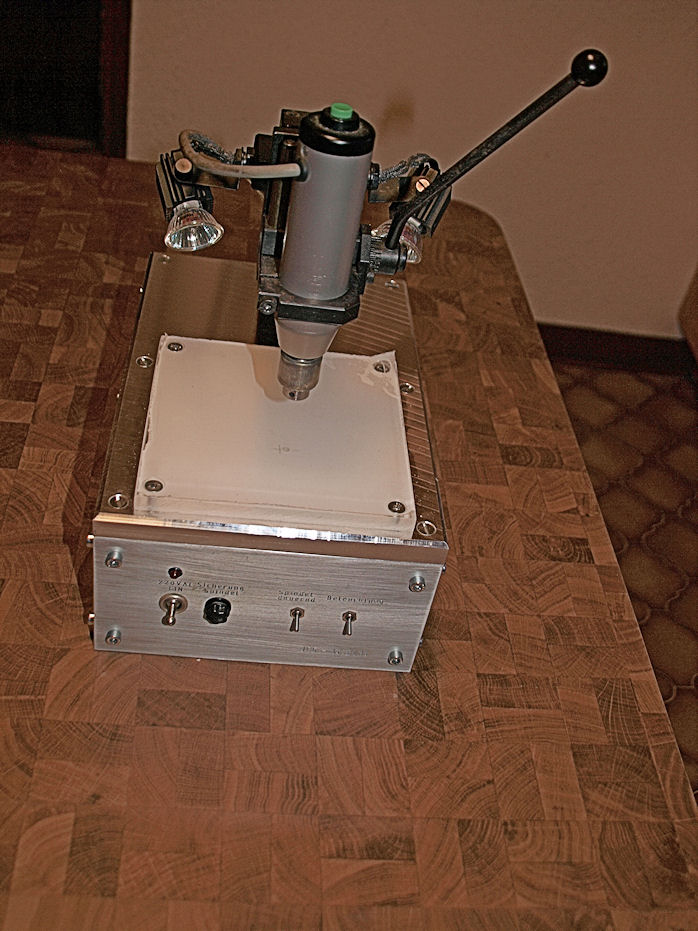
Re: [Homebrew_PCBs] Re: Drilling circuit boards on the cheap: [1 Attachment]

2016-02-17 by casy_ch@tbwil.ch

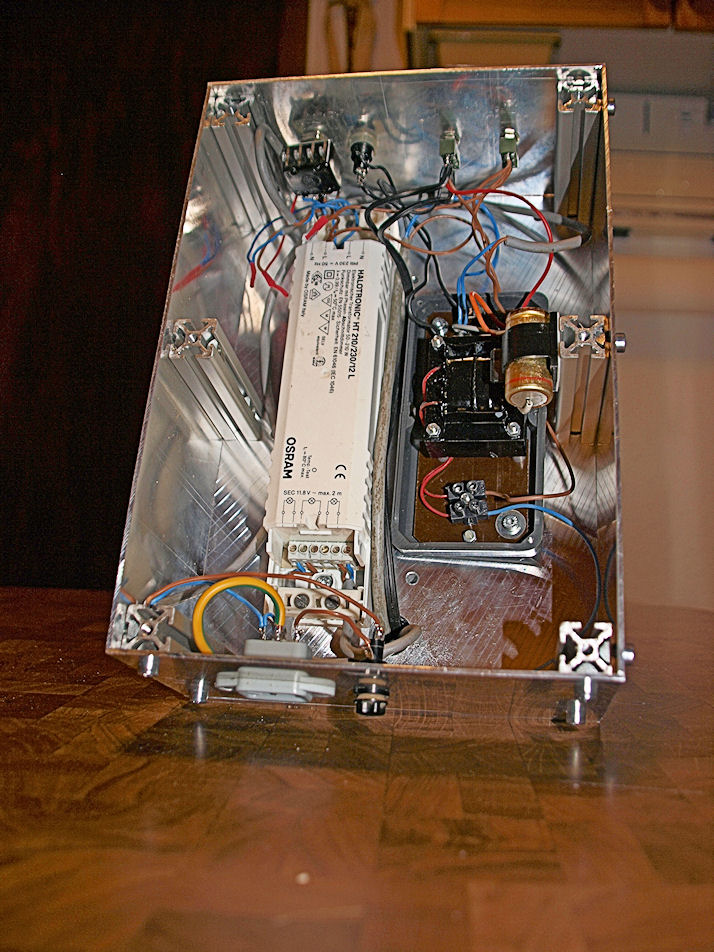
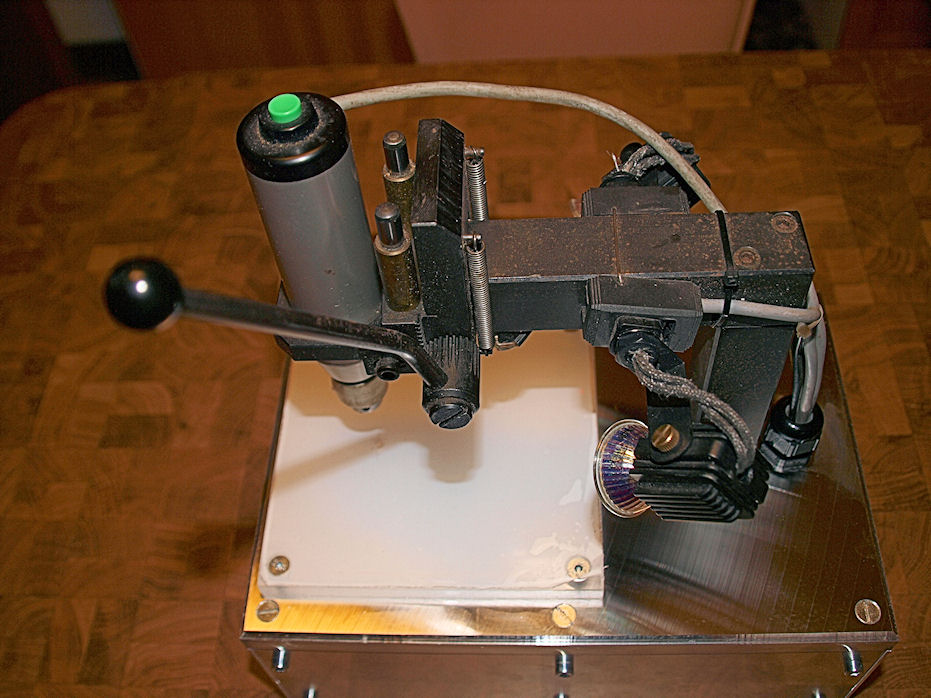
Before a friend ham wanted to throw it to the scrapyard, I could get a 
hold on it. The needed trafos for the spindle motor and the bulbs were 
just hanging around so I made an aluminum case to hold them. The spindle 
height lever automatically switches the spindle on as soon as lowered. 
May be someone gets some ideas to make his own.

Jean-Claude, HB3YDH


Am 16.02.2016 um 15:57 schrieb wb8nbs@... [Homebrew_PCBs]:
Show quoted textHide quoted text
>
> This is what I use for small boards. It only has about an inch and a 
> half throat but is very stable. I think it was used by clock makers 
> but there is no information available for it.
>
> 
>

Attachments

Re: [Homebrew_PCBs] Re: Drilling circuit boards on the cheap:

2016-02-17 by Malcolm Parker-Lisberg

Jean-Claude

Thank you for your kind comments.  Must go and use it for an add on PCB I am making to add feedback to a cheap ebay triac lamp dimmer so that the motor speed does not vary with load.  Drives either permanent magnet DC or universal motors. 2 diodes, two resistors, a capacitor and a pot is all that is needed.
I will add it to YouTube when finished.

Malcolm

I don't suffer from insanity I enjoy it! 
Mene, mene, tekel, upharsin 
The writing is on the wall. 
Ha-ktovet al ha-kir

--------------------------------------------
On Wed, 2/17/16, 'casy_ch@...' casy_ch@... [Homebrew_PCBs] <Homebrew_PCBs@yahoogroups.com> wrote:
Show quoted textHide quoted text
 Subject: Re: [Homebrew_PCBs] Re: Drilling circuit boards on the cheap:
 To: Homebrew_PCBs@yahoogroups.com
 Date: Wednesday, February 17, 2016, 3:05 PM


     Congratulation Malcom for this extended work. Really
 nice.


     Jean-Claude


     Am
 17.02.2016 um 15:21 schrieb Malcolm
       Parker-Lisberg mparkerlisberg@yahoo.com
 [Homebrew_PCBs]:


             That is very simillar to the one I made,
 see:
 
               <https://www.youtube.com/watch?v=AhlRkO0EcFo>
 
               https://www.youtube.com/watch?v=AhlRkO0EcFo


               Malcolm


               I don't suffer from insanity I enjoy it!
 
 
               Mene, mene, tekel, upharsin 
 
               The writing is on the wall. 
 
               Ha-ktovet al ha-kir


 --------------------------------------------
 
               On Wed, 2/17/16, 'casy_ch@...'
 casy_ch@...
               [Homebrew_PCBs] <Homebrew_PCBs@yahoogroups.com>
               wrote:


               Subject: Re: [Homebrew_PCBs] Re: Drilling
 circuit boards
               on the cheap: [3 Attachments]
 
               To: Homebrew_PCBs@yahoogroups.com
 
               Date: Wednesday, February 17, 2016, 9:21 AM


               Before a friend ham wanted to throw it to the
 scrapyard,
 
               I could get
 
               a hold on it. The needed trafos for the
 spindle motor
 
               and the bulbs
 
               were just hanging around so I made an aluminum
 case to
 
               hold them.
 
               The spindle height lever automatically
 switches the
 
               spindle on as
 
               soon as lowered. May be someone gets some
 ideas to make
 
               his own.


               Jean-Claude, HB3YDH


 #yiv3794009179 #yiv3794009179 --

Re: [Homebrew_PCBs] Re: Drilling circuit boards on the cheap:

2016-02-17 by pierreraymondrondelle

on eBay, you can find nylon wire specifically made for belt building. Choose a 5mm dia, green color this the best one for the Unimat lathes. It doesn't expand like the genuine rubber ones do.

Follow this URL, it's a typical example: http://www.ebay.com/itm/1-meter-green-Watchmaker-Lathe-Transmission-Belt-/321156538194?var=&hash=item4ac66bdf52:m:mkPRJr72969WaERlVx3rWrw

Cut a length compatible with your pulley set plus 1 mm. It's preferable to measure on the lathe than to copy a broken belt. Melt the ends together with a small flat metal piece mounted into a soldering iron. I made one from a stainless steel broken knife and I'm using an old 100W soldering iron. 60W might be enough.

Put it in between the two ends of the nylon wire, gently pressing them together and when a small ridge begins to grow, remove quickly the hot metal tip, pushing the ends together, maintaining the pressure between the two ends during 20 to 30 s. With a little bit of practice, you'll be able to perfectly align the ends. When done, cut the ridge and file it or sand it.

I've been using these home-made belts for years, not only for the lathe and I had only one failed, the first belt I made. The iron was probably not hot enough. I repaired it, Still alive !

Now I've hacked a pliers to deal with several diameters and ease the job.
Show quoted textHide quoted text
On 17.02.16 02:47, Harvey White madyn@... [Homebrew_PCBs] wrote:

On Tue, 16 Feb 2016 19:52:19 -0500, you wrote:

>A friend of mine used to use something called a unimat to drill his boards. It was belt drive,but also converted into a lathe. I borrowed it when I did some boards a long time ago
>

It's very precise, a combination of lathe, drill press, and almost
anything else. It's also quite expensive since it is a collector's
item at this point.

Its weak point is also the strong point, versatility. However, every
setup needs to be squared and trued. It has minimal capacity, but can
do beautiful work when properly adjusted.

The belts have limited life and are somewhat annoying to find
replacements for.

It can be a very high speed drill press, about 15K RPM IIRC.

Harvey

>
>
>From: Homebrew_PCBs@yahoogroups.com [mailto:Homebrew_PCBs@yahoogroups.com]
>Sent: Tuesday, February 16, 2016 9:58 AM
>To: Homebrew_PCBs@yahoogroups.com
>Subject: [Homebrew_PCBs] Re: Drilling circuit boards on the cheap: [1 Attachment]
>
>
>
>
>
>This is what I use for small boards. It only has about an inch and a half throat but is very stable. I think it was used by clock makers but there is no information available for it.
>
>


RE: [Homebrew_PCBs] Re: Drilling circuit boards on the cheap:

2016-02-18 by Tony Smith

Huh, the world is full of things you didn’t know exists.


I wanted something like that a few years ago when I needed a custom belt.


Does it have an actual name, and does the colour mean anything?


Thanks!


Tony


From: Homebrew_PCBs@yahoogroups.com [mailto:Homebrew_PCBs@yahoogroups.com] 
Sent: Thursday, 18 February 2016 9:17 AM
To: Homebrew_PCBs@yahoogroups.com
Subject: Re: [Homebrew_PCBs] Re: Drilling circuit boards on the cheap:


on eBay, you can find nylon wire specifically made for belt building. Choose a 5mm dia, green color this the best one for the Unimat lathes. It doesn't expand like the genuine rubber ones do.

Follow this URL, it's a typical example: http://www.ebay.com/itm/1-meter-green-Watchmaker-Lathe-Transmission-Belt-/321156538194?var= <http://www.ebay.com/itm/1-meter-green-Watchmaker-Lathe-Transmission-Belt-/321156538194?var=&hash=item4ac66bdf52:m:mkPRJr72969WaERlVx3rWrw> &hash=item4ac66bdf52:m:mkPRJr72969WaERlVx3rWrw

Cut a length compatible with your pulley set plus 1 mm. It's preferable to measure on the lathe than to copy a broken belt. Melt the ends together with a small flat metal piece mounted into a soldering iron. I made one from a stainless steel broken knife and I'm using an old 100W soldering iron. 60W might be enough.

Put it in between the two ends of the nylon wire, gently pressing them together and when a small ridge begins to grow, remove quickly the hot metal tip, pushing the ends together, maintaining the pressure between the two ends during 20 to 30 s. With a little bit of practice, you'll be able to perfectly align the ends. When done, cut the ridge and file it or sand it.

I've been using these home-made belts for years, not only for the lathe and I had only one failed, the first belt I made. The iron was probably not hot enough. I repaired it, Still alive !

Now I've hacked a pliers to deal with several diameters and ease the job.


On 17.02.16 02:47, Harvey White madyn@... [Homebrew_PCBs] wrote:


On Tue, 16 Feb 2016 19:52:19 -0500, you wrote:

>A friend of mine used to use something called a unimat to drill his boards. It was belt drive,but also converted into a lathe. I borrowed it when I did some boards a long time ago
>

It's very precise, a combination of lathe, drill press, and almost
anything else. It's also quite expensive since it is a collector's
item at this point. 

Its weak point is also the strong point, versatility. However, every
setup needs to be squared and trued. It has minimal capacity, but can
do beautiful work when properly adjusted.

The belts have limited life and are somewhat annoying to find
replacements for.

It can be a very high speed drill press, about 15K RPM IIRC.

Harvey
Show quoted textHide quoted text
> 
>
>From: Homebrew_PCBs@yahoogroups.com [mailto:Homebrew_PCBs@yahoogroups.com] 
>Sent: Tuesday, February 16, 2016 9:58 AM
>To: Homebrew_PCBs@yahoogroups.com
>Subject: [Homebrew_PCBs] Re: Drilling circuit boards on the cheap: [1 Attachment]
>
> 
>
> 
>
>This is what I use for small boards. It only has about an inch and a half throat but is very stable. I think it was used by clock makers but there is no information available for it.
>
>

Re: [Homebrew_PCBs] Re: Drilling circuit boards on the cheap:

2016-02-18 by pierreraymondrondelle

The color seems to be related to the material the belt is made of but this seems as well to be changing from one manufacturer to the other one !
Some years ago, I browsed the net and the result was rather misleading. About the Chinese belt, I think that there are not so numerous manufacturers to make it and the green one with a rough surface is sold for that use. I'm satisfied with it, My opinion is that you can go safely with it.
I'm quite embarrassed to give it a name ! Sellers are saying "belt sold per meter".

This belt is often listed in the conveyor replacement parts on their catalogs.

Regards
Show quoted textHide quoted text
On 18.02.16 10:12, 'Tony Smith' ajsmith1968@... [Homebrew_PCBs] wrote:

Huh, the world is full of things you didn\u2019t know exists.

I wanted something like that a few years ago when I needed a custom belt.

Does it have an actual name, and does the colour mean anything?

Thanks!

Tony

From: Homebrew_PCBs@yahoogroups.com [mailto:Homebrew_PCBs@yahoogroups.com]
Sent: Thursday, 18 February 2016 9:17 AM
To: Homebrew_PCBs@yahoogroups.com
Subject: Re: [Homebrew_PCBs] Re: Drilling circuit boards on the cheap:


on eBay, you can find nylon wire specifically made for belt building. Choose a 5mm dia, green color this the best one for the Unimat lathes. It doesn't expand like the genuine rubber ones do.

Follow this URL, it's a typical example: http://www.ebay.com/itm/1-meter-green-Watchmaker-Lathe-Transmission-Belt-/321156538194?var=&hash=item4ac66bdf52:m:mkPRJr72969WaERlVx3rWrw

Cut a length compatible with your pulley set plus 1 mm. It's preferable to measure on the lathe than to copy a broken belt. Melt the ends together with a small flat metal piece mounted into a soldering iron. I made one from a stainless steel broken knife and I'm using an old 100W soldering iron. 60W might be enough.

Put it in between the two ends of the nylon wire, gently pressing them together and when a small ridge begins to grow, remove quickly the hot metal tip, pushing the ends together, maintaining the pressure between the two ends during 20 to 30 s. With a little bit of practice, you'll be able to perfectly align the ends. When done, cut the ridge and file it or sand it.

I've been using these home-made belts for years, not only for the lathe and I had only one failed, the first belt I made. The iron was probably not hot enough. I repaired it, Still alive !

Now I've hacked a pliers to deal with several diameters and ease the job.


On 17.02.16 02:47, Harvey White madyn@... [Homebrew_PCBs] wrote:

On Tue, 16 Feb 2016 19:52:19 -0500, you wrote:

>A friend of mine used to use something called a unimat to drill his boards. It was belt drive,but also converted into a lathe. I borrowed it when I did some boards a long time ago
>

It's very precise, a combination of lathe, drill press, and almost
anything else. It's also quite expensive since it is a collector's
item at this point.

Its weak point is also the strong point, versatility. However, every
setup needs to be squared and trued. It has minimal capacity, but can
do beautiful work when properly adjusted.

The belts have limited life and are somewhat annoying to find
replacements for.

It can be a very high speed drill press, about 15K RPM IIRC.

Harvey

>
>
>From: Homebrew_PCBs@yahoogroups.com [mailto:Homebrew_PCBs@yahoogroups.com]
>Sent: Tuesday, February 16, 2016 9:58 AM
>To: Homebrew_PCBs@yahoogroups.com
>Subject: [Homebrew_PCBs] Re: Drilling circuit boards on the cheap: [1 Attachment]
>
>
>
>
>
>This is what I use for small boards. It only has about an inch and a half throat but is very stable. I think it was used by clock makers but there is no information available for it.
>
>


Re: [Homebrew_PCBs] Re: Drilling circuit boards on the cheap: Drive Belts

2016-02-22 by symons391@...

I have a miniature Unimat 3 lathe & I put a file together some time ago about using the drive belt material & making the joins
.
The Unimat 3 & 4 lathes originally actually just used O Rings for drive belts but users found that high quality belts that last almost for ever can be made from the Polyurethane or Urethane drive belt material that you buy in cut lengths from suppliers. For small applications the O Rings can work fine - they do on the baby lathes - so I gave some details about O Ring sizing but the drive belt material works better & last just about forever.

While my file was written specifically for the Unimat 3, I gave it a tidy & quick rewrite to make the information less Unimat focused. It is applicable for any custom belt job - especially for small pulleys & belts of the size likely to be used for drills for drilling PCBs.

Regards,
Brian.

Re: [Homebrew_PCBs] Re: Drilling circuit boards on the cheap: Drive Belts

2016-02-22 by Harvey White

On 22 Feb 2016 10:22:26 -0800, you wrote:

>I have a miniature Unimat 3 lathe & I put a file together some time ago about using the drive belt material & making the joins .  

The 3 was (IIRC) a slightly bigger version of the SL with improvements
in the ways.

Have you a link to the file?  I'd like to get mine back up and
running.  I have a larger one, but I need to do a bit of work on the
motor (belville washers are toast) and naturally, it needs new belts.

I've got an idea how to non-destructively CNC the lathe, which ought
to be interesting.

Although I've got something better for it, the CNC ability could be
used for small panels and etching PC boards.

Harvey
Show quoted textHide quoted text
> The Unimat 3 & 4 lathes originally actually just used O Rings for drive belts but users found that high quality belts that last almost for ever can be made from the Polyurethane or Urethane drive belt material that you buy in cut lengths from suppliers.  For small applications the O Rings can work fine - they do on the baby lathes - so I gave some details about O Ring sizing but the drive belt material works better & last just about forever.   
>While my file was written specifically for the Unimat 3, I gave it a tidy & quick rewrite to make the information less Unimat focused.  It is applicable for any custom belt job - especially for small pulleys & belts of the size likely to be used for drills for drilling PCBs.
> 
> Regards,
> Brian.
>

RE: [Homebrew_PCBs] Re: Drilling circuit boards on the cheap:

2016-02-24 by Tony Smith

Thanks, I’ll go buy some.  Cheap enough to experiment with.


As usual the eBay sellers have no idea what they’re selling, someone does have a listing for some red stuff.


I needed a belt for a table lift and it was a bit hard to get one that was the right length ‘off the shelf’.  Only light duty stuff needed so this looks like it’s work just fine.


Tony


From: Homebrew_PCBs@yahoogroups.com [mailto:Homebrew_PCBs@yahoogroups.com] 
Sent: Friday, 19 February 2016 10:45 AM
To: Homebrew_PCBs@yahoogroups.com
Subject: Re: [Homebrew_PCBs] Re: Drilling circuit boards on the cheap:


The color seems to be related to the material the belt is made of but this seems as well to be changing from one manufacturer to the other one !
Some years ago, I browsed the net and the result was rather misleading. About the Chinese belt, I think that there are not so numerous manufacturers to make it and the green one with a rough surface is sold for that use. I'm satisfied with it, My opinion is that you can go safely with it. 
I'm quite embarrassed to give it a name ! Sellers are saying "belt sold per meter".

This belt is often listed in the conveyor replacement parts on their catalogs.

Regards


On 18.02.16 10:12, 'Tony Smith' ajsmith1968@... [Homebrew_PCBs] wrote:


Huh, the world is full of things you didn’t know exists.


I wanted something like that a few years ago when I needed a custom belt.


Does it have an actual name, and does the colour mean anything?


Thanks!


Tony


From: Homebrew_PCBs@yahoogroups.com [mailto:Homebrew_PCBs@yahoogroups.com] 
Sent: Thursday, 18 February 2016 9:17 AM
To: Homebrew_PCBs@yahoogroups.com
Subject: Re: [Homebrew_PCBs] Re: Drilling circuit boards on the cheap:


on eBay, you can find nylon wire specifically made for belt building. Choose a 5mm dia, green color this the best one for the Unimat lathes. It doesn't expand like the genuine rubber ones do.

Follow this URL, it's a typical example: http://www.ebay.com/itm/1-meter-green-Watchmaker-Lathe-Transmission-Belt-/321156538194?var= <http://www.ebay.com/itm/1-meter-green-Watchmaker-Lathe-Transmission-Belt-/321156538194?var=&hash=item4ac66bdf52:m:mkPRJr72969WaERlVx3rWrw> &hash=item4ac66bdf52:m:mkPRJr72969WaERlVx3rWrw

Cut a length compatible with your pulley set plus 1 mm. It's preferable to measure on the lathe than to copy a broken belt. Melt the ends together with a small flat metal piece mounted into a soldering iron. I made one from a stainless steel broken knife and I'm using an old 100W soldering iron. 60W might be enough.

Put it in between the two ends of the nylon wire, gently pressing them together and when a small ridge begins to grow, remove quickly the hot metal tip, pushing the ends together, maintaining the pressure between the two ends during 20 to 30 s. With a little bit of practice, you'll be able to perfectly align the ends. When done, cut the ridge and file it or sand it.

I've been using these home-made belts for years, not only for the lathe and I had only one failed, the first belt I made. The iron was probably not hot enough. I repaired it, Still alive !

Now I've hacked a pliers to deal with several diameters and ease the job.


On 17.02.16 02:47, Harvey White madyn@... [Homebrew_PCBs] wrote:


On Tue, 16 Feb 2016 19:52:19 -0500, you wrote:

>A friend of mine used to use something called a unimat to drill his boards. It was belt drive,but also converted into a lathe. I borrowed it when I did some boards a long time ago
>

It's very precise, a combination of lathe, drill press, and almost
anything else. It's also quite expensive since it is a collector's
item at this point. 

Its weak point is also the strong point, versatility. However, every
setup needs to be squared and trued. It has minimal capacity, but can
do beautiful work when properly adjusted.

The belts have limited life and are somewhat annoying to find
replacements for.

It can be a very high speed drill press, about 15K RPM IIRC.

Harvey
Show quoted textHide quoted text
> 
>
>From: Homebrew_PCBs@yahoogroups.com [mailto:Homebrew_PCBs@yahoogroups.com] 
>Sent: Tuesday, February 16, 2016 9:58 AM
>To: Homebrew_PCBs@yahoogroups.com
>Subject: [Homebrew_PCBs] Re: Drilling circuit boards on the cheap: [1 Attachment]
>
> 
>
> 
>
>This is what I use for small boards. It only has about an inch and a half throat but is very stable. I think it was used by clock makers but there is no information available for it.
>
>

Move to quarantaine

This moves the raw source file on disk only. The archive index is not changed automatically, so you still need to run a manual refresh afterward.