At 06:09 PM 3/1/03 -0500, you wrote:
>
> I tend to agree with this for the moment. BUT in Logic 6, this argument
> loses steam since you can freeze a ton of tracks thereby converting CPU load
> to disk load. A 36-64 track mix with all frozen tracks would definitely
> benefit from a RAID, but your right. It's not normally needed if you've got
> a 10,000rpm.


The other advantage or RAID for big sample libraries is the extra space. SCSI
10K drives are typically pretty modest in size. RAID level 0 arrays (2 or more
drives, no data redundancy) have excellent read performance but are more
vulnerable to data loss than single drives. If one drive fails you lose the
entire array.  So, if you are using them for your own audio files, you really
need to back your data up religiously.

However, if they are just for streaming samples from sample libaries you have
on DVD or CD the risk is not such a big deal -- if a drive goes down, replace
it and rebuild the array. If your business depends on them buy a spare drive(s)
when you buy the original disks.

You can also use four drives for a RAID 0 +1 array and have mirroring of all
data (greater security). This would get very expensive with SCSI drives --
remembering the I in RAID stands for "Inexpensive". Personally I would go RAID
O with a hardware RAID controller and some big 60 - 80 GB per platter ATA 7200
or (soon to be available) 10k RPM ATA drives.

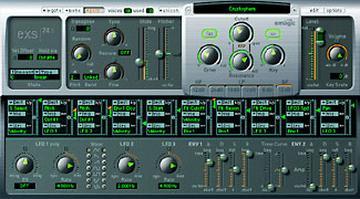
A great improvement to the EXS24 would be the facility where you could assign
individual instruments to use the disk streaming feature. I often have mixes
where huge instruments (> 1 GB) are combined with much smaller percussion
instruments (for example) that still use many voices. I could make better use
of my RAM and CPU resources if I could assign the small busy instruments to the
normal "RAM resident" state and let my bigger instruments stream up from the
hard drives. This would save both disk and CPU load because instruments loaded
in 32 bit format don't need to be converted to 32 bit float on the fly but
streaming instruments do.

Regards,
Murray
Message
Re: [exs] RAID set ups + optional streaming per instrument
2003-03-02 by Murray McDowall
Attachments
- No local attachments were found for this message.