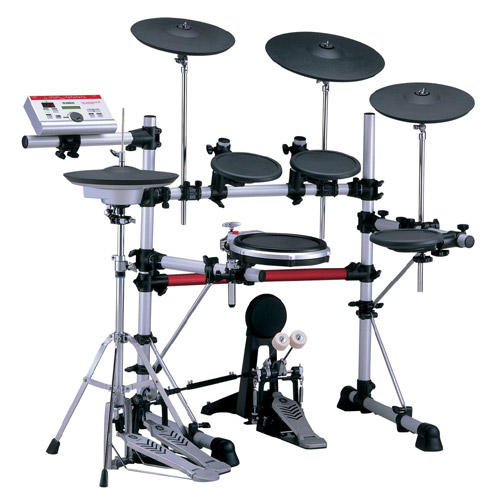
Yamaha DTXpress/DTXplorer/DTXtreme group photo

Yahoo Groups archive

Yamaha DTXpress/DTXplorer/DTXtreme

Index last updated: 2026-04-28 22:44 UTC

Thread

Quick Recording question

Quick Recording question

2004-11-06 by Farkus Gwenadon

Hello all!
Quick question:  Is it possible to play along with an MP3 playing from
my PC (through my dtxpress2's "aux in" function), and record my
drumming (through my pc's microphone jack), WITHOUT having the mp3 be
recorded along with my drumming?

Basically I want to play with a song, but not have the actual song be
recorded.  Just the drums.

Of course I can play my music through my portable cd player and stick
the headphone buds in my ears while I play, but it feels like a poor
alternative.  I figured there must be SOME way to do this.

Any way to mute the "aux in" channel from going through the line out?
 Any help would be appreciated!
-R

Re: Quick Recording question

2004-11-06 by emf

--- In DTXpress@yahoogroups.com, "Farkus Gwenadon" <my_email_00@y...> 
wrote:
> 
> Hello all!
> Quick question:  Is it possible to play along with an MP3 playing 
from
> my PC (through my dtxpress2's "aux in" function), and record my
> drumming (through my pc's microphone jack), WITHOUT having the mp3 
be
> recorded along with my drumming?
> 
> Basically I want to play with a song, but not have the actual song 
be
> recorded.  Just the drums.
> 
> Of course I can play my music through my portable cd player and 
stick
> the headphone buds in my ears while I play, but it feels like a poor
> alternative.  I figured there must be SOME way to do this.
> 
> Any way to mute the "aux in" channel from going through the line 
out?
>  Any help would be appreciated!

Unless I'm mistaken, one of the abiding complaints about the DTXpress 
module from the beginning has been that it will not filter the 
auxiliary feed from the output. One cheap way to get around the 
problem would be to buy one of those outdated, but still very useful, 
cassette multitrack recorders from Fostex et al, which are usually 
available on ebay for as little as $40 or so. If in reasonable 
condition, they tend to have versatile mixing sections for 4 to 8 
tracks (you can also use them as mixers w/o recording), allowing you 
to block the mp3 from the tape. But the recordings on them will sound 
much better than anything you can do via a mic from your PC. You 
could do all of your monitoring through headphones. 

I'm assuming that you don't want to spend much cash on this project, 
but if you have a little more to spend ($100 or so), you could invest 
in one of the newer, simpler portable recorders, which basically do 
what the analog ones do, but keep all of the processing in the 
digital domain, which isn't necessarily a sonic advantage at the 
lower end. But you will definitely get more flexibility for your 
money with an old cassette recorder than an inexpensive current 
digital one. "Analog" is not a dirty word.

There are various ways to record from your PC as well, but they might 
run you into more complication and more money. By the way, however 
you decide to do it, recording yourself is a valuable way to get 
insight into your drumming--timing, touch, and degree of difficulty--
not to mention into the wonders of recording. If you can make drums 
sound good recorded, you've done something.

Ed

Re: Quick Recording question

2004-11-07 by Farkus Gwenadon

> Unless I'm mistaken, one of the abiding complaints about the DTXpress 
> module from the beginning has been that it will not filter the 
> auxiliary feed from the output. One cheap way to get around the 
> problem would be to buy one of those outdated, but still very useful, 
> cassette multitrack recorders from Fostex et al, which are usually 
> available on ebay for as little as $40 or so. If in reasonable 
> condition, they tend to have versatile mixing sections for 4 to 8 
> tracks (you can also use them as mixers w/o recording), allowing you 
> to block the mp3 from the tape. But the recordings on them will sound 
> much better than anything you can do via a mic from your PC. You 
> could do all of your monitoring through headphones. 
> 
> I'm assuming that you don't want to spend much cash on this project, 
> but if you have a little more to spend ($100 or so), you could invest 
> in one of the newer, simpler portable recorders, which basically do 
> what the analog ones do, but keep all of the processing in the 
> digital domain, which isn't necessarily a sonic advantage at the 
> lower end. But you will definitely get more flexibility for your 
> money with an old cassette recorder than an inexpensive current 
> digital one. "Analog" is not a dirty word.
> 
> There are various ways to record from your PC as well, but they might 
> run you into more complication and more money. By the way, however 
> you decide to do it, recording yourself is a valuable way to get 
> insight into your drumming--timing, touch, and degree of difficulty--
> not to mention into the wonders of recording. If you can make drums 
> sound good recorded, you've done something.
> 
> Ed

Thank you, Ed, for your insightful reply!

I'll definately look in to the portable recorders.  They seem to be
what I'm looking for.

In the meantime, my roomate is running a Macintosh computer with a
program called Garage Band installed.  We found out that it is
possible with this program to record my drumming on a separate track
from the mp3 while it is playing.  Very cool stuff.  Mind you, we were
forced to play the mp3 through the computer speakers rather than
through the DTX brain, but it allowed me to accomplish what I was
trying to do with my recording.  This should work fine for the time
being, but I'll do some more research with your suggestions as well.

And you're totally right about listenening to yourself playing the
drums after they've been recorded.  I obviously have a lot of work
ahead of me, but it should be a fun ride :)

Thanks again!  I really love this message board!

-Matt
Move to quarantaine

This moves the raw source file on disk only. The archive index is not changed automatically, so you still need to run a manual refresh afterward.