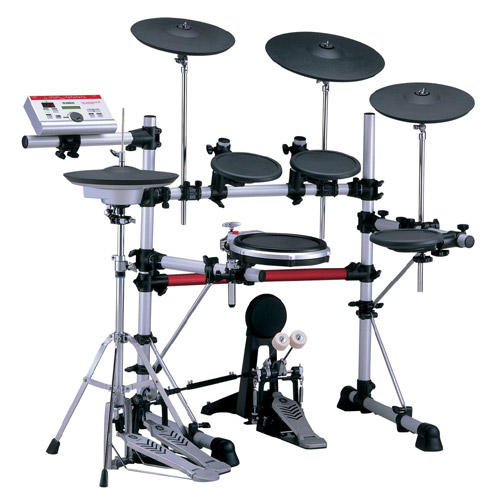
--- In DTXpress@yahoogroups.com, "moosetication" <moosetication@y...>
wrote:
> --- Jerry Davis wrote:
> > Can I flip up the #6 switch *and achive a stronger
> > Ride sound now with the stock Yamaha PCY65 Ride
>
> I think you need to be careful here, as you're rushing into things.

JD,

Sorry I left you hanging, but I was out of town nowhere near a
computer. I want to add one thing to Stewart's helpful post. The Visu-
lite ride doesn't have a particularly weak signal (in fact, it's
pretty strong). To my mind, however, Stewart is right on the money
about the DIP switches. Before you mess with them, you have to get to
know firsthand what the module's internal settings can do and what
they can't do. Climbing the e-drum learning curve is absolutely
essential to feeing in control and getting the most out of the
equipment. The sensitivity parameters are not volume controls. The
DIP switches are mainly to boost the signal of triggered acoustic
drums to the point at which gain can be set to allow decent dynamic
range. But they can also help with mesh head pads, as well as any e-
drum components that could benefit from a little goosing. They will
not, however, compensate for any pad that is completely mismatched
with Yamaha electronics for anatomical reasons, such as the Hart ECII
ride.

What I should have said about saving the bow of the ride for input 6
is that such a strategy will always allow you the option to flip the
switch up if you prefer (I had all of mine up because my pads were
non-Yamaha cymbals and woven pads). But that is a secondary matter.
First square away the settings in the voice and trigger menus of all
pads, and see what you've got. When you've done this grunt work (and
checked in here), then you can start looking for extraneous ways to
improve response if need be, or for components that are more to your
liking. Case in point: Lots of experienced people on this board who
use the Pintech mesh snare find that the Xpress module tends to
compress its dynamic range. One method suggested for resolving the
problem is to insert a 200k pot in the cable between the head output
and the module input, attenuating the signal until only the hardest
hits register the most gain. Unless you know the characteristics of
the module and the pad in question, the solution is just a matter of
faith.

I can't stress enough the importance of learning firsthand the
strengths and limitations of the equipment that you own. The desire
to take shortcuts--even with "good" advice--can leave you vulnerable,
frustrated, and disillusioned. The more you understand, the more
confident we can be about our answers and the less you'll feel like
you're at someone else's mercy. You've barely had your DTXpress, and
here I am recommending the Visu-lite ride before you have any idea of
whether, or how, it could fit into your situation. I stand by my
recommendation, but in some respects, I'm getting ahead of you.

Ed

Ed