In a message dated 4/12/01 2:36:09 PM, HELP@... writes:

>> 4. get rid of hard coded limitations... for example, there is no way
>> to have a sound get softer as you play harder.  Sample start point
>> can't be set to move closer to the beginning of the file as you play
>> softer etc... there are probably 10 other artificial constraints like
>> this that seem arbitrary and pointless...

Agree wholeheartedly with most of the suggestions except this one. Part of
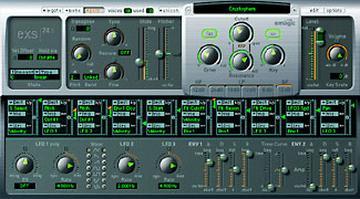
what makes the EXS so cool is its interface, which is intentionally limited
in a very musical and intelligent way. (Notice that -except for sample
mapping- all the parameters fit on one page!) To me, it's the Minimoog of
samplers....very simple, but also very powerful and musical in its layout.
This is the opposite approach of a matrix modulation system like Kurzweil,
Emu, SampleCell or Reactor, which are more powerful, but much more difficult
and time-consuming to use.

Why do you actually need reverse velocity dynamics anyway? What are you
trying to do musically? If you really need it, this can easily be
accomplished already through the Transform functions in the environment.
(Same with your reverse Start point idea).

>This would be a dream come true for strings and such...

Actually, for strings, the current system is more ideal as slow attacks
without the real bow strike (Start point offset) can be played with soft
velocities (and a velocity attack time), while harder velocities bring in the
start point and the attack time in to the hear the real bow attack (marcato).
Having it reverse for strings sounds good only in theory, fast/hard velocity
attacks with the front of the samples snipped off sounds very artificial.

I'm all for flexibility, but not at the expense of a great interface. The
limitations imposed in the EXS are not arbitrary or pointless at all. It's
clear that a great deal of thought and musical thinking went into it. Think
about it....how exactly would you accomplish this esoteric option with the
current interface? You really can't do that kind of stuff without a complete
redesign of the interface....and redesigning the interface is a big deal.

Ultimate flexibility often comes at the expense of the interface.....(see
Reactor). Both types of approaches are certainly valid, but I think that the
"most-useful functions+great interface" approach is what makes for an
inspiring and long-lasting instrument. Don't fix it if it ain't broke....

My two cents...

-EP
Message
Re: [exs] EXS24 Improvements desired
2001-04-12 by PersingEP@aol.com
Attachments
- No local attachments were found for this message.