COMMENTS ON KEYMAP
2008-08-04 by Tom McLaughlin
Message posted by Tom McLaughlin <tommclaughlin75@...>:

KEYMAP COMMENTS AND SUGGESTIONS
Tom McLaughlin

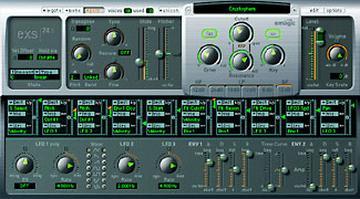
Keymap is an important software suite. It is based around creating sample
sets (instruments) for Logic\ufffds EXS24 sampler. There are many algorithms and
concepts within Keymap that are unique to the world of sample editing and
Redmatica are to be applauded for its creativity, thoughtfulness and
innovation.

What follows are some of my observations and comments after having Keymap
for several months and editing and looping thousands of samples with it,
simple and complex. Some of the problems I\ufffdve encountered may be a result of
\ufffduser error\ufffd or not being able to extract proper usage information from the
manual.

Keymap is an excellent piece of software and anyone serious about sample and
sound design should consider buying it no matter what sampler they use.

____________________________________________________

When typing values into a numeric field I expect to be able to hit the ENTER
key and have that data entered. I recently found, through much trial and
error, that typing the \ufffdENTER\ufffd and then the \ufffdESCAPE\ufffd key enters typed data.
In my experience with computers typing \ufffdENTER\ufffd is the norm. A friend of mine
who is a Logic instructor for Apple said he has never heard of such a thing.
Is there a reason for this variance from the norm?

When editing samples I expect a sample to play from the beginning to the end
of a selected (highlighted) area. When I select ALL I expect the sample to
play from the beginning until the end (or loop) when I hit the space bar.
The Slider on the Sample Editor page is innovative and visually attractive
and works well with individual samples, but it is difficult to use with
multisample recordings as, with so much information to cram into the time
line, the resolution for individual notes / samples is small.

SAMPLE PLAY FROM START button on SAMPLE EDITOR page is at the very bottom of
the page, far away from the loop screen. This requires much going
back-and-forth with the mouse when editing loops and auditioning . Likewise,
HARMONIC RESYNTHESIS parameters on the SAMPLE EDIT page are at the bottom of
the field. Could these be raised to the upper most portion of the fields? My
mouse is getting tired.

EDITING OUT PORTIONS OF SAMPLES  When selecting an unwanted portion of
audio, other editors allow being able to choose a cross-fade length and
curve, select CUT or DELETE and have that data removed leaving a smooth
crossfade through the join point. This sample editing feature is important
when looping samples to get rid of out-of-tune portions, clicks, pops,
unwanted noises and performance artifacts. It is also important when merging
the attack portion to a looped portion of a sample, cutting out all but the
attack and the loop to save storage space or get \ufffdstraight to the point\ufffd of
the sound being designed if the loop is the focal point. (Sometimes you have
to crossfade through a lot of material to get the loop you want.) An
\ufffdOPTIMIZE SLICE CROSSFADE\ufffd option would be very helpful in this respect to
keep the data phase-coherent. And \ufffdSNAP TO ZERO CROSSING\ufffd would help too. I
am getting used to doing this on the SLICES page, but simply selecting and
highlighting an area displayed audio to be deleted and crossfaded through
the remainder is more intuitive through past experience with other sample
editors and looping software. Is it possible for SLICE VOLUME to be able to
increase volume in addition to reducing volume as it does now? And maybe
even NORMALIZE SLICE? The Slice XFade In and Out Length could be longer ...
as much as the data within a \ufffdsub-sample\ufffd of a multisample recording will
permit without encroaching upon a loop. I know many people will use the
SLICES page for rhythm and performance loops (which is not my forte\ufffd, but I
do look into exploring this) but for creating sustain loops in pitched
samples all this would really be of help.

dB markers at start and end of sample BLOCK THE VIEW OF SAMPLE DATA. I find
it hard to believe that sample editing software would block important attack
transients from view.

Loops with crossfades through very end of sample render with audible click.

Can samples be rendered and saved individually without having to create an
EXS instrument.

Rendering samples SEQUENTIALLY seems to number samples randomly with no
relation to their placement on the virtual keyboard. This has happened so
many times that I\ufffdve ruled out \ufffduser error\ufffd. I expect samples in a
multi-sample to be numbered sequentially, from low to high as mapped out on
the virtual keyboard. Also, sequentially numbered samples are always in
1,000\ufffds. Software should analyze the number of samples to be rendered and
then use the lowest number of digits needed to execute that sequence of
samples ... to save on characters. Also, a series of samples I rendered (97
samples C1 - C8) to be numbered sequentially AND with note names rendered
all samples with the prefix 0001. This required me to manually rename each
rendered sample with its proper number, a process that took considerable
time. When undoing a \ufffdslice remove\ufffd, it would be convenient to have the
sample zoom out automatically to the original magnification.

Selecting Render at -6db does not seem to increase sample level by +6db
after rendering. Sample sets I have rendered at -6db remain at -6db.

Loop View Display shows a bad loop join ... until loop join is examined
under a higher magnification. Not that the loop join is actually bad, it
just looks that way in the display.

Hitting green dot on Instrument Page should center page on computer vdu
screen as it does with other pages.

When playing sample while looping on instrument page and going to move loop
point or crossfade point, if you aren\ufffdt careful to direct the mouse EXACTLY
onto cursor points the sample is triggered to open in looping page!
Ordinarily this requires a double-click. To my experience, cursor \ufffdnodes\ufffd
could be a little bigger.

I rendered a chromatic set of velocity switching samples - soft, medium,
loud. 255 samples. The soft set came out with a suffix of \ufffd1\ufffd, medium \ufffd0\ufffd,
and loud \ufffd2\ufffd !!?? What happened? It would have been more convenient to have
them numbered 1, 2, 3 or 3, 2, 1. Is this possible? Actually ... it would be
most convenient to have each velocity set delivered to its own Folder. Is
this possible? This would make porting velocity switching samples to other
samplers, like Reason, easier.

Is there a way to have the data after a loop discarded when rendering loops?


MANUAL

New users want to be able to use software as quickly as possible without
reading any more of a manual than necessary. Not just Keymap, any piece of
software. I found it very frustrating that I had to sit down and thoroughly
read the manual (and sometime re-read sections a number of times) before I
could make use of the software. I have had Keymap for months now and am just
getting to grips with using it somewhat effectively.

In the current version of the manual it is often necessary to read through a
lengthy explanation of the benefits of a process or parameter, often
mentioned more than once, before the reader finds information on how to
actually use it. There are several facilities in Keymap that to date I
cannot locate in the manual how to use, and I\ufffdve had to find out how to use
others by trial and error. FIX: briefly mention the process or parameter,
explain HOW to use it, point out keyboard shortcuts, then go into a more
thorough explanation of the benefits and applications. A good model is the
Logic manual.

The index really does want to be expanded to include specifics rather than
only page numbers on which a topic appears.

I estimate that about 1/5 - 1/4 of the manual could be edited out for
clarity. An American or British Editor could help make the language used in
the Manual easier to read in English.

Having done audio engineering and sound design professionally, I found Logic
instantly useable. With Keymap I feel like I\ufffdve had to learn another
language.

____________________________________________________

wish list:

Loop Crossfade continuously variable between linear and equal power.

Individual notch filters for cutting out annoying harmonics that are
reinforced in group samples such as strings and choirs. Better yet, a
HARMONIC COMPRESSOR or LIMITER to level out these annoying harmonics. This
would be a combination of a tight band equalizer and a compressor / limiter.

Make the High Pass Filter sharper - as it is it sounds like a 6db or 12db
per octave filter.

A filter for removing 50/60 Hz mains hum with their respective harmonics
would be nice.

LOOP BLEND - similar to the facility in the old INFINITY looping software,
which put the data contained in a loop through the equivalent of a blender
(liquidizer in UK) thus homogenizing it and crossfading the result through
the attack portion of the sample by a specified amount.

CROSSFADE LOOP THROUGH ATTACK PORTION OF SOUND.

CROSSFADE LOOP THROUGH RELEASE PORTION OF SOUND for samplers that can deal
with \ufffdRelease Loops\ufffd.

Non-destructive editing is fine ... up to a point. Creating multisample
recordings with adequate space between adjacent samples so as not to have
the reverb tail from the previous note spill over to the following note eats
up disk space. (Using a noise gate is not an answer. Reverb tails can often
be useful data to crossfade through.) An algorithm to delete the blank space
between notes and re-save the data as a new file would be helpful. I have
quite a number of sample sets in progress and they are eating up my hard
drive space.

Peak Level Meter

Auto-Phase All or Selected Samples

Loudness Arc Superimpose over Keyboard Position

Copy Loudness Curve and Superimpose over Sample

Copy Pitch Curve and Superimpose over Sample

Tighten up several harmonic resynthesis algorithms for better accuracy ...
namely Polyphonate and HR Pitch correction adjust. I am disappointed with
Polyphonate, a tool I had hoped would be of more use. Its transposition
range is much narrower than I had expected and it produces glitches at the
upper extreme of its narrow range.

HIGH PASS FILTER FREQUENCY ROOT NOTE TRACK - For eliminating low frequency
garbage, for creative sound design.  As there is a root note analysis
algorithm present in the system it should be relatively simple to
incorporate an algorithm to set the High Pass Filter Frequency to track the
frequency of the root note of pitched samples.

Could \ufffdSave\ufffd be transparent, like Logic? Now hitting the \ufffdsave\ufffd key stops
the \ufffdplay\ufffd function, which then resumes once save has been completed.

Disable play on instrument page when changing to loop edit page - or -
transfer play from previous page until stopped by user. Now when a sample is
played by hitting the \ufffdspace bar\ufffd on the Instrument page and that sample is
opened in the Loop Edit page, the sample remains playing from the Instrument
page and if space bar is hit again BOTH the sample on the Instrument page
AND the sample on the Loop Edit page will play simultaneously. Now it
requires closing the Loop Edit page, returning to the Instrument page and
stopping \ufffdplay\ufffd before being able to return to editing on the Loop Edit
page.

Harmonic Resynthesis ought to calculate max amplitude of sample to be
rendered if over 100% and recalculate rendering to 0db or db set by user
(say -0.1db) to prevent clipping.

View ENTIRE WAVEFORM - an area where the entire waveform of a multisample
can be viewed would be of help.

____________________________________________________________________

The Zone Audio FX page contains some of my favorite facilities. They are
simple, but very useful in sound design. The Saturator 1 and 2, Stereo
Width, Low Pass Filter and High Pass Filter are a welcome set of tools. Used
in moderation the Saturators can add focus to samples, a bit more adds grit
to polite samples, and pushed harder offer a range of distortion colors any
metalhead would find useful. In practice, I rarely push Saturator 1 higher
than 0.04 and Saturator 2 higher than 0.5. I\ufffdve used Stereo Width to narrow
the stereo spread of a number of sample sets that, after auditioning by
mapping and playing from a keyboard through Keymap, were a bit too wide to
my taste. Although I\ufffdve used the High Pass Filter to get rid of low
frequency \ufffdgrunge\ufffd and reverb \ufffdboom\ufffd, I find it most useful in minimizing
the fundamental of synth sounds where it is too prominent - something that I
only find out when playing sample sets on Keymap with a music track. As
mentioned above, having a facility for this filter to automatically track
the fundamental harmonic of notes in a multisample would be a great help ...
I\ufffdve had to look up the fundamental frequency of each note on the handy
chart provided at the end of the Manual and type that into the numeric field
of the filter ... this can take a LOT of time with multisamples containing
dozens of samples.

I use the Zone HR Amp/Dynamics page all the time. Especially the HR
Normalization Amount - it helps even out levels of samples that, for one
reason or another, ended up lower than the rest of a set. And the HR Freeze
Decay is invaluable in helping to find loops in the decay portion of
percussive samples such as pianos and bells.

Keymap\ufffds pitch detection is great. It has problems from time to time with
octaves but it is far better than Reason\ufffds pitch detection, which
consistently calculates pitches sharper the higher the note ... C-6
invariably comes out 35-36 cents sharp with Reason.

LOOPS: The main reason I bought Keymap was for its looping facilities. Its
mapping and layering facilities are an added bonus for me and a genuine
help. Like Dino, I\ufffdve been using samplers since the 8 bit days, long before
the advent of the visual display of audio data - when looping samples was
accomplished solely by ear and much trial and error. There was a time when
in the time it took a sampler to calculate a loop crossfade you could go off
and make a cup of tea or coffee. We\ufffdve come a long way since then and Keymap
elevates sample editing and looping to a whole new level.

Although Keymap can automate locating loop points in a variety of ways,
rarely have I used loops as calculated. Many of these loops would be OK for
many users and could be fine when used in a track. But I\ufffdm a bit particular
when it comes to sample loops.

What Keymap does provide me with, and it is invaluable in this respect, are
excellent starting points for manually looping sounds aided by some
excellent looping tools. More often than not, High or Low Res Autoloop finds
a loop that is too short to my taste and the Double Loop Length, Shift Loop
Left / Right and Optimize Loop Crossfade are great helps in finding the best
loop length and position. When all else fails in creating a loop that is
pleasing to my ears, I turn to Add Optimized Crossfades To Loops - in the
Loop sub-menu in the Zones main menu.

All of this said, Keymap has some wonderful attributes and facilities. It
still crashes from time to time, but I work it very hard. Keymap\ufffds scope is
truly awesome and there are some facilities I haven\ufffdt gotten into yet. I
wasn\ufffdt a great fan of Logic\ufffds EXS-24 sampler, but thanks to Keymap I\ufffdm
warming up to it.

I feel Keymap is far too important a sample editor, looper and mapper to
limit itself to just the EXS24. Maybe introducing an additional \ufffdUNIVERSAL
MODE\ufffd could be the answer.

Many loops rendered using Keymap exhibit a \ufffdsymphony of harmonics\ufffd,
something I\ufffdve never encountered with any other software before. And you may
quote me on that. This is something you must hear to experience.

I thank Redmatica for it\ufffds forward vision and, undoubtedly, countless hours
of calculating and programming. Be assured that Keymap may just change the
way the world makes samples.

copyright Tom McLaughlin July 2008